



Historic Seascape
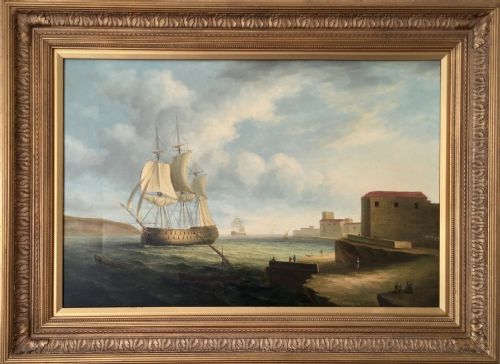
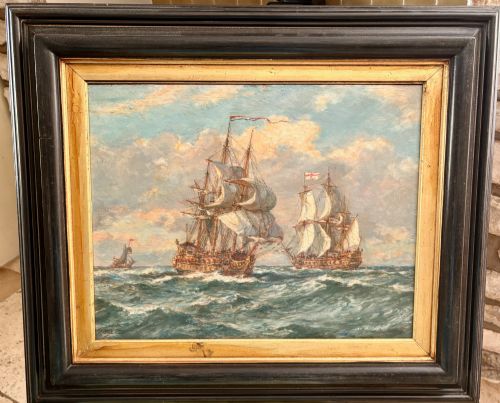
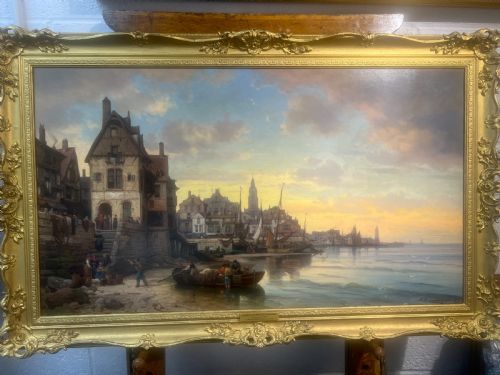
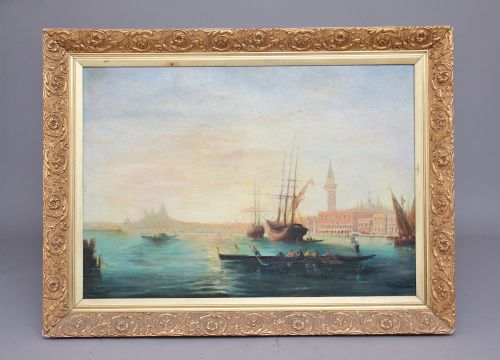
Historic seascape paintings capture maritime action and coastal views in oil and watercolour across centuries of naval and merchant history.
Historic Seascape
A historic seascape brings maritime heritage into a room, showing naval engagements, merchant vessels, and quiet coastal water.
The pieces on this page span from the Georgian era through the Victorian period, Edwardian times, and into the mid-twentieth century.
Subjects range from grand warship portraits and battle scenes to tranquil Venetian lagoons and bustling views of the River Thames.
Materials and technique
Artists relied primarily on oil paint applied to canvas, panel, or paper, capturing the translucent quality of water and the heavy timber of ships.
Watercolour appears in works depicting atmospheric coastal light, while gilded gold leaf often frames the finished pieces to enhance the depth of the painting.
Historic Seascape Retail Price Guide 2026
Typical asking prices for historic seascape among the pieces listed under this phrase on Sellingantiques today, from the lower quarter to the upper quarter. They describe what is for sale here now, not the wider market.
Keep a magnifying glass handy to spot tiny hidden sailors waving from the riggings of nineteenth-century warship portraits.
Judging quality
Quality rests in the precision of the maritime rigging, the movement of the waves, and the atmospheric perspective of the sky.
Skilled hands render naval architecture and coastal topography with exactness, whereas lesser examples lose proportion in the hulls and fail to capture the weight of the sea.
James Hardy·Bernard Gribble·Charles Euphraisie Kuasseg·Charles William Wyllie·Dion Pears·Joseph Heard·Edward Fletcher·John D. Walker·R I Barrow
The Historic Seascape Glossary
- Panel
- A flat piece of wood used as a rigid support for oil painting instead of stretched canvas. Artists often favoured this surface for smaller works.
- Maritime
- Pertaining to the sea, ships, and seafaring life. This term covers both naval warfare and commercial shipping.
- Watercolour
- A paint consisting of pigment suspended in a water-soluble vehicle. It creates transparent washes of light on paper.
- Gilded
- Covered with a thin layer of gold leaf. This finish frames many period maritime artworks.
Historic Seascape: Frequently Asked Questions
What is a ship portrait?
A ship portrait is a specialised marine painting commissioned to record a specific vessel with technical accuracy. These works emphasise the rigging, flags, and hull of the named ship.
Owners often commissioned them to celebrate a specific vessel's service or maiden voyage.
How do I hang a maritime painting?
Maritime paintings suit rooms with traditional timber furniture or neutral walls that complement the deep blues and golds of the canvas. Keep them out of direct sunlight to protect the oil pigments.
Ensure sturdy fixings support the weight of the wooden frames.
How do I date a seascape?
Dating relies on the style of the vessels, the clothing of figures on deck, and the framing techniques used. Naval architecture changed rapidly between the eighteenth and twentieth centuries.
Signatures, artist dates, and inscriptions on the reverse often provide exact years.
What subjects are common in these paintings?
Common subjects include naval battles, lighthouse approaches, merchant shipping, and quiet river scenes like the Thames. Artists recorded actual historical events alongside routine coastal trade.
Venetian lagoons and naval dockyards also appear frequently.