



Historic Seascape Artwork
Historic seascape artwork captures the power of the sea and naval history through oils and watercolours spanning the Georgian era to the mid-twentieth century.
Historic Seascape Artwork
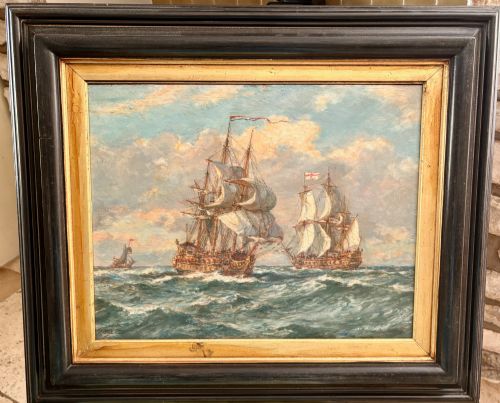
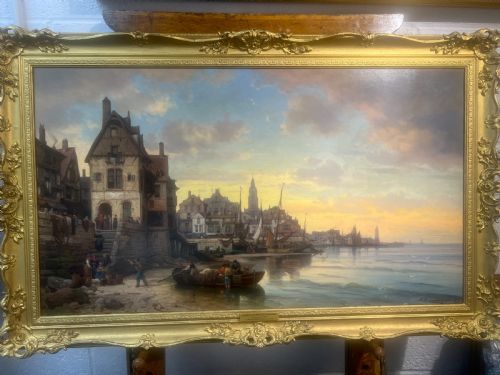
Historic seascape artwork encompasses maritime paintings, ship portraits and coastal views created across the nineteenth and twentieth centuries. These pieces record naval engagements, bustling river traffic and solitary lighthouses against shifting tides.
Buyers browsing this selection encounter oil paintings on canvas or panel alongside traditional watercolours. The examples range from grand nineteenth-century marine canvases to Edwardian depictions of naval vessels and mid-century realist scenes.
The subjects draw heavily on British and European maritime history, featuring named vessels, coastal fortifications and commercial shipping lanes. Each piece serves as both a decorative focal point and a historical record of seafaring life.
Materials and methods
Painters relied primarily on oil paint applied to stretched canvas or wooden panels, building rich textures to represent turbulent water and billowing sails. Watercolour on paper served artists who sought lighter, more luminous atmospheric effects.
Historic Seascape Artwork Retail Price Guide 2026
Typical asking prices for historic seascape artwork among the pieces listed under this phrase on Sellingantiques today, from the lower quarter to the upper quarter. They describe what is for sale here now, not the wider market.
Listings span from the eighteenth-century depiction of HMS Swift through Victorian maritime scenes to mid-century marine realism.
Judging quality in marine pieces
Quality rests upon the artist's command of maritime architecture and rigging, where correct proportions of masts, sails and hull structures separate accomplished works from naive efforts. The convincing movement of waves and the play of light across water further distinguish superior paintings.
The condition of the original paint layer and the presence of contemporary or period-appropriate framing influence the desirability of a piece. Works that retain their original canvas support and stable pigment without excessive restoration hold greater appeal for collectors.
Bernard Gribble·Charles Euphraisie Kuasseg·Charles William Wyllie·Dion Pears·Joseph Heard·Edward Fletcher·John D. Walker
The Historic Seascape Artwork Glossary
- Ship portrait
- A specialised painting commissioned to record a specific vessel with technical accuracy. These works emphasise the rigging, flags and hull details of named ships.
- Marine art
- Depictions of the sea, ships, and coastal views. This broad category encompasses everything from naval battles to calm river scenes.
- Panel painting
- An artwork executed on a rigid wooden support rather than flexible canvas. This technique was frequently utilised for smaller works or panels requiring a smooth surface.
- Watercolour
- A paint medium consisting of colour pigments suspended in a water-soluble vehicle. Artists used paper as the primary support for these fluid, translucent compositions.
Historic Seascape Artwork: Frequently Asked Questions
How do I date a historic seascape?
Dating relies on the maritime technology depicted in the painting, such as the transition from sail to steam power, alongside signatures and framing styles.
Period costumes, naval uniforms and documented ship launch dates provide further chronological anchors for identifying when the work was created.
Where should I hang a marine painting?
Historic sea paintings suit well-lit spaces away from direct sunlight, which can fade watercolours and damage older oil pigments.
Pairing these works with traditional period interiors or contrasting them against neutral modern walls allows the maritime subject to stand out.
What is the difference between a ship portrait and a seascape?
A ship portrait focuses strictly on the accurate representation of a named vessel, often commissioned by its captain or owner. General seascapes prioritize the atmospheric mood of the ocean, weather conditions or coastal scenery over a specific boat.
How do I care for an oil painting on canvas?
Keep the canvas away from extreme temperature fluctuations and high humidity to prevent cracking in the paint layer and warping of the wooden stretcher.
Dust the surface gently with a soft, dry brush and avoid using liquid cleaners or commercial solvents on historic pigments.