



Historic Sailing Art
Historic sailing art captures the drama of maritime life on canvas and paper, offering a direct window into bygone seafaring eras.
Historic Sailing Art
Historic sailing art encompasses maritime paintings, watercolours, and prints depicting ships, naval battles, and coastal rivers. These works range from detailed ship portraits to atmospheric scenes of lighthouses and harbours, created across multiple centuries.
The pieces on this page span several distinct periods, including the Georgian, Victorian, Edwardian, and mid-century eras. Buyers will encounter both grand oil paintings on canvas or panel and delicate works on paper, such as watercolours and signed etchings.
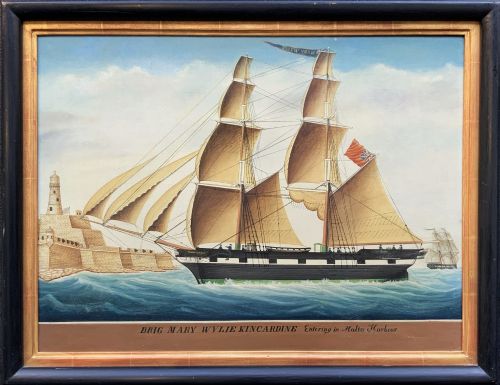
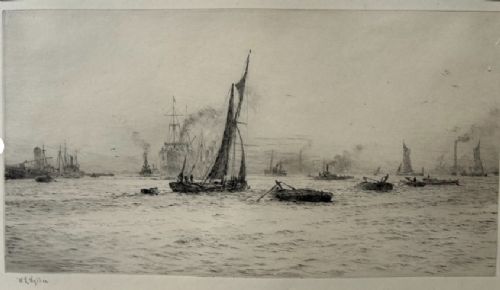
Subjects frequently record specific vessels, such as brigs and galleons, alongside historic waterways like the River Thames and foreign ports like Malta and Seville. This variety reflects the broad scope of maritime subject matter collected by enthusiasts.
Materials and Methods
Artists working in historic sailing art relied primarily on traditional media such as oil paint applied to canvas or wood panels, alongside watercolours and ink on paper. Many surviving works retain their original framing materials, including wood and gold leaf, which complement the maritime subject matter.
Techniques range from meticulous realism in capturing rigging and hull architecture to freer brushwork in depicting turbulent seas and coastal atmosphere. Printmakers also contributed original pencil-signed etchings, showcasing fine line work on paper protected by glass.
Historic Sailing Art Retail Price Guide 2026
Typical asking prices for historic sailing art among the pieces listed under this phrase on Sellingantiques today, from the lower quarter to the upper quarter. They describe what is for sale here now, not the wider market.
Several ships immortalised on canvas had to contend with choppy waters, distant lighthouses, and the occasional strategic Trafalgar detour.
Judging Quality and Execution
Quality in these maritime works rests upon the artist's command of perspective, water movement, and nautical accuracy in depicting vessel rigging and structure. Finer pieces demonstrate a rigorous attention to maritime detail combined with skilful handling of light and atmospheric conditions.
The medium and preservation also dictate the standing of a piece, with sustained clarity in oil on canvas or panel, and crisp execution in watercolours and etchings, marking the distinction between standard decorative works and accomplished fine art.
Bernard Gribble·William Lionel Wyllie·Dion Pears·Joseph Heard·Robert Anderson·Edward Fletcher
The Historic Sailing Art Glossary
- Oil on canvas
- Pigment mixed with drying oil applied to a stretched woven fabric support. This traditional medium allowed artists to build rich layers of colour and texture for deep seascapes.
- Panel painting
- Art executed on a rigid wooden support rather than fabric. Panels provide a smooth, stable surface often favored for detailed marine portraits.
- Etching
- A printmaking method where lines are bitten into a metal plate with acid before being inked and pressed onto paper. Signed editions carry the artist's handwritten approval.
- Watercolour
- A paint consisting of pigment suspended in a water-based solution, typically applied to paper. It yields translucent washes well suited to atmospheric river and coastal scenes.
- Ship portrait
- A specialised genre of maritime art focusing on the accurate representation of a named vessel. These works often place the ship in distinct coastal waters or near prominent lighthouses.
Historic Sailing Art: Frequently Asked Questions
What periods do these paintings cover?
The works span from the eighteenth century through the Victorian and Edwardian eras up to mid-century modern interpretations. Each period brings distinct stylistic conventions to the depiction of maritime subjects.
Collectors can trace the evolution of marine painting techniques across these centuries, observing shifts in palette, atmosphere, and compositional focus.
How were these maritime scenes displayed?
Historic artworks were traditionally framed in wood, sometimes incorporating gold leaf accents to complement the scene within. They served as prominent wall displays in domestic and maritime settings.
Today, placing these pieces in a home involves considering light exposure to protect sensitive mediums like watercolours on paper and oil on canvas.
Are all the vessels depicted real?
Many works record specific named vessels, such as historical brigs and warships engaged in voyages or battles. Other compositions feature generic sail craft navigating recognisable rivers and coastal landmarks.
Identifying specific ships often depends on accompanying inscriptions, signal flags, or the detailed accuracy of the rigging rendered by the artist.
What differentiates watercolours from oils here?
Watercolours utilise a water-based pigment on paper, producing lighter, more translucent atmospheric effects. Oil paintings employ pigment bound in oil on canvas or panel, offering greater depth and texture.
Both mediums were favoured by different artists depending on whether they sought the fluid lightness of a river scene or the heavy drama of a sea battle.