

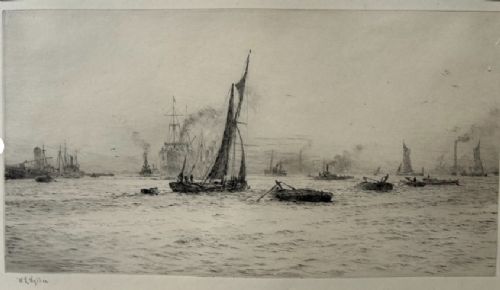


Historic River Artwork
Historic river artwork captures waterways, bridges and quaysides through the brush of past painters.
Historic River Artwork
Historic river artwork encompasses paintings, watercolours, etchings and prints depicting waterways, canals, ports and urban river views. When you search for historic river artwork, you find depictions ranging from the River Thames in London to continental scenes in Paris and Seville. These works record maritime activity, historic bridges and riverbanks as artists observed them decades ago.
The pieces appearing on this page span from the mid-nineteenth century through the Edwardian era into the mid-twentieth century. You will encounter Victorian maritime scenes, Edwardian watercolours and British landscape traditions alongside specific topographical views. Most examples capture working rivers filled with shipping or calm waters beside historic castles and cityscapes.
Subjects stretch from well-known English rivers such as the Thames and the River Hull to international waterways. Artists rendered these scenes using oil on canvas, delicate watercolour washes, ink and pencil etchings. Each piece offers a window into how historic waterways looked before modern industrial changes altered their banks.
Materials and techniques
Artists utilised watercolour on paper for detailed topographical and architectural studies, capturing soft light on water and stone. These works often combine pencil underdrawing with transparent washes to define river craft and distant buildings.
Oil painters employed oil on canvas or wood panels, building rich textures to represent turbulent river water, shipping and overcast skies. This medium allowed creators to apply gold leaf or deep pigments for dramatic light effects on the Thames and other major waterways.
Etchers worked directly onto metal plates with ink on paper, producing fine linear details that define rigging, warehouses and bridge stonework. Framing typically involved wood and glass to protect fragile paper surfaces from moisture and light damage.
Historic River Artwork Retail Price Guide 2026
Typical asking prices for historic river artwork among the pieces listed under this phrase on Sellingantiques today, from the lower quarter to the upper quarter. They describe what is for sale here now, not the wider market.
Subject matter spans British maritime scenes, European cityscapes, canals and historical landmarks beside water.
Variations in quality
Quality rests upon the artist's ability to handle perspective, water reflections and atmospheric light. Superior works convey a convincing sense of movement in the water and accurate architectural proportions in distant buildings or shipping.
The handling of the medium distinguishes standard decorative views from accomplished fine art. In watercolours, skilled pigment control avoids muddy washes, while oil paintings show confident brushwork rather than rigid, flat applications of colour.
Condition and framing also separate examples, with well-preserved paper retaining original vibrancy beneath protective glass, whereas faded pigments or poor past restoration diminish a piece's visual impact.
William Lionel Wyllie·Charles William Wyllie·Henry Barlow Carter·Noel Harry Leaver·Robert Anderson·Fred Stead·Edward Fletcher
The Historic River Artwork Glossary
- Etching
- A printmaking technique where an artist uses acid to cut into a metal plate to hold ink. This method produces fine, precise lines suited to architectural and maritime details.
- Topographical
- Depicting specific, recognizable places accurately rather than inventing an imaginary landscape. These views often record historic buildings and bridges that have since changed.
- Wash
- A thin, semi-transparent layer of diluted watercolour paint applied to paper. Artists use washes to build up skies, water and atmospheric haze.
- Framed
- Enclosed in a protective border of wood and often glass. Original period frames help preserve the artwork from environmental wear.
Historic River Artwork: Frequently Asked Questions
What subjects appear in historic river artwork?
These works depict busy working rivers, sailing barges, historic bridges and urban cityscapes along waterways. Artists recorded specific locations including the Thames, Windsor Castle, Paris and Seville.
Scenes range from calm rural riverbanks to bustling commercial ports filled with shipping vessels and dockside warehouses.
How should I display these watercolours?
Watercolours and works on paper require protection from direct sunlight to prevent the pigments from fading over time. Mount them behind glass using acid-free materials to keep the paper away from the glazing.
Place them on interior walls where room temperature and humidity remain relatively stable throughout the year.
How do I identify the date of a piece?
Dates often appear in the artist's signature, listing inscriptions or exhibition labels on the reverse of the frame. Costume details, shipping types and architectural styles visible in the scene also help narrow down the period.
Many works originate from the nineteenth and early twentieth centuries, reflecting the clothing and vessels typical of those decades.
What is the difference between oil and watercolour river views?
Oil paintings utilise thick pigments on canvas or wood panels, offering rich textures and deep tones suitable for dramatic skies and water. Watercolours rely on translucent washes on paper, creating lighter, more luminous atmospheric effects.
Oils generally require sturdy wooden frames without glass, whereas watercolours need glazing to protect the paper surface.