

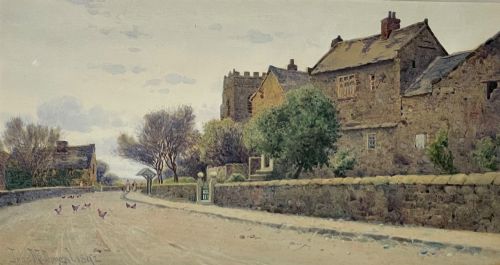


Historic Paper Painting
Historic paper painting works bring subjects from Georgian, Victorian, and early twentieth-century life directly into modern rooms through delicate washes and ink lines.
Historic Paper Painting
Historic paper painting examples span portraits, townscapes, architectural views, and coastal scenes created across the nineteenth and early twentieth centuries. Buyers searching this phrase will find works ranging from early nineteenth-century portrayals and Regency figures to British Impressionism and Edwardian townscapes.
The most common formats on this page are watercolour paintings on paper, often framed under glass in wood or gilt wood surrounds. Subjects frequently capture specific British locations, from London landmarks and Yorkshire landscapes to continental riverside views.
Materials and construction
Artists executed these pieces primarily using watercolour pigment and ink applied to paper surfaces, capturing fine details in portraiture and landscape settings. Finished works were frequently mounted behind protective glass and housed within wooden frames, sometimes finished with gilt details.
The combination of water-soluble pigments and paper required steady control, allowing painters to build transparent washes for skies and architectural elements alongside sharp ink definitions.
Historic Paper Painting Retail Price Guide 2026
Typical asking prices for historic paper painting among the pieces listed under this phrase on Sellingantiques today, from the lower quarter to the upper quarter. They describe what is for sale here now, not the wider market.
Several artists clearly painted through heavy British weather, capturing rain-slicked London streets and windswept northern lighthouses with cheerful persistence.
Distinctions in quality
Quality rests in the precision of the draughtsmanship, the preservation of pigment vibrancy against fading, and the sensitivity of the brushwork across landscape or portrait subjects. Stronger examples demonstrate confident handling of light and perspective, particularly in complex architectural or maritime compositions.
The integration between the work and its period framing also influences character, as original gilt wood or timber surrounds complement the age and visual weight of the paper beneath.
John McDougal·Percy Robertson·John Augustus Atkinson·Rowland Henry Hill·Henry Barlow Carter·David Small·Fred Stead·Noel Harry Leaver·Robert Anderson·Beatrice Parsons·Henry Edridge·Margaret Thompson
The Historic Paper Painting Glossary
- Watercolour
- A painting method where fine pigment is suspended in a water-based solution and applied to paper. This technique creates translucent washes of colour that allow the white of the paper to reflect light through the paint layer.
- Gilt wood
- Timber framing coated with a thin layer of gold leaf or metallic gilt finish. It was frequently utilised during the Victorian and Regency periods to enhance the presentation of fine artworks.
- British Impressionism
- A late nineteenth and early twentieth-century painting movement focused on capturing light, atmosphere, and everyday scenes with loose brushwork. Works in this style prioritise mood and immediate visual experience over rigid academic detail.
Historic Paper Painting: Frequently Asked Questions
How should I hang a historic paper painting?
Keep these works away from direct sunlight and damp environments to protect the paper and pigments from fading or moisture damage over time.
Ensure the frame hangs securely on a stable wall, using appropriate fixings to support the weight of the wood and glass assembly.
Are these paintings original works?
The pieces listed are original hand-painted works created directly by artists using watercolour and ink on paper during their respective periods.
They are distinct from modern mass-produced prints or mechanical reproductions, carrying individual brush marks and artist signatures where recorded.
How do I identify the period of a watercolour?
Dating relies on stylistic clues within the subject matter, clothing styles in portraits, architectural details in townscapes, and framing materials typical of eras like the Regency or Victorian period.
Signatures, inscriptions on the reverse, and artist exhibition records also help narrow down the decade of creation.
Can I reframe an antique watercolour?
Retaining original framing maintains historical integrity, but conservation-grade reframing using acid-free materials can protect vulnerable paper from further deterioration.
Consult a professional framer to ensure that glazing and backing boards meet preservation standards for delicate paper artworks.