

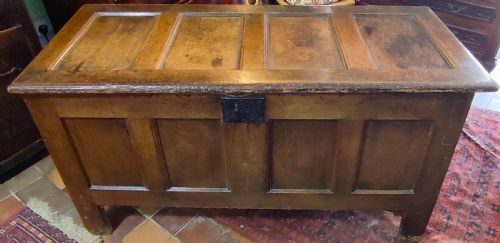


Historic Oak Storage
Historic oak storage encompasses early timber chests and cupboards built to house household goods, prized for their sturdy construction and age.
Historic Oak Storage
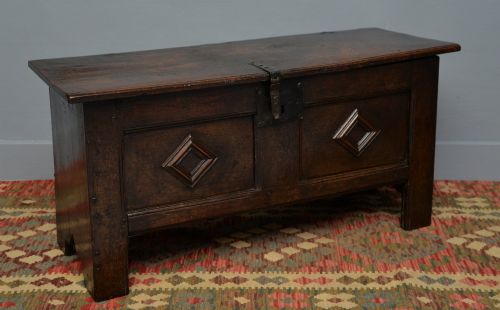
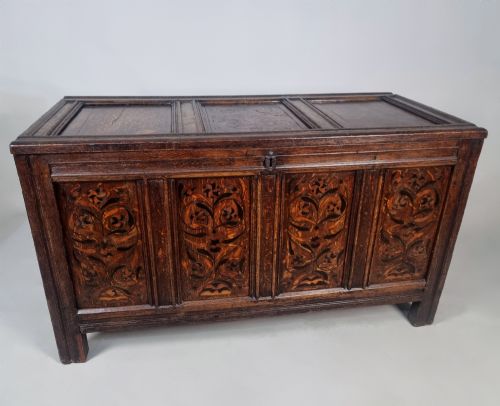
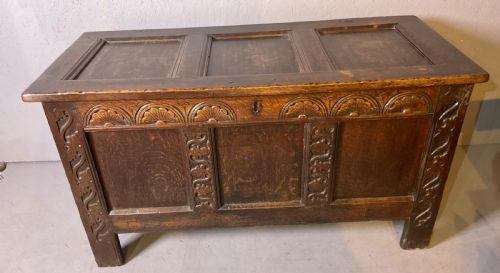
When searching for historic oak storage, buyers encounter robust wooden chests, coffers, cupboards, and mule chests spanning the sixteenth through nineteenth centuries. These pieces originated to secure valuables, textiles, and documents in domestic settings.
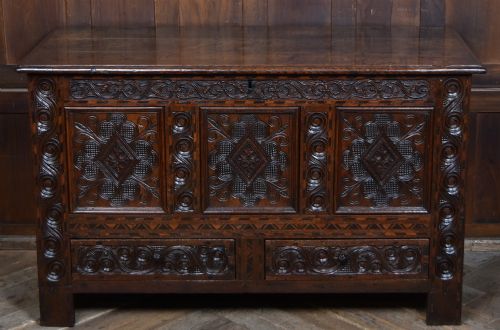
Coffers and chests dominate the forms available, often featuring boarded or joined construction with carved panels. Cupboards and mule chests appear less frequently, offering specialised compartments for storage needs.
The objects stem predominantly from the sixteenth, seventeenth, and eighteenth centuries, with occasional nineteenth-century examples and specific dates such as sixteen seventy-eight.
Materials and construction
Makers utilised solid oak as the primary timber, complemented by iron, brass, wood inlay, and wrought iron for hardware and decorative accents. Joinery techniques included boarded construction and framed panels.
Surface ornamentation involved carving, particularly on friezes and panels, alongside inlaid wood details. Internal fittings such as drawers and compartments were integrated into specific box and chest designs.
Historic Oak Storage Retail Price Guide 2026
Typical asking prices for historic oak storage among the pieces listed under this phrase on Sellingantiques today, from the lower quarter to the upper quarter. They describe what is for sale here now, not the wider market.
Early owners kept their sharpest blades safe inside dedicated sword chests.
Distinctions in quality
Quality differences manifest in the crispness and complexity of carved decoration upon the friezes and panels. Plain boarded surfaces contrast with elaborate joined structures and inlaid details.
The integrity of original timber, metalwork components such as iron and brass hinges, and internal configurations like fitted drawers determine the standing of individual pieces.
The Historic Oak Storage Glossary
- Coffer
- A heavy wooden chest traditionally used for storing valuables and household goods. These pieces often feature hinged lids and carved front panels.
- Mule chest
- A chest of drawers base surmounted by a blanket chest or storage compartment above. This form emerged during the seventeenth and eighteenth centuries.
- Court cupboard
- An antique enclosed piece of furniture used for displaying plate or storing provisions. Surviving examples date from the seventeenth century.
- Boarded construction
- A method of building furniture using wide planks nailed or pegged together at the edges. This technique predates complex frame and panel joinery.
- Frieze
- The horizontal decorative band running along the upper section of a piece of furniture. Carvers frequently embellished this area with geometric or floral patterns.
Historic Oak Storage: Frequently Asked Questions
What is a coffer?
A coffer is a heavy wooden chest constructed primarily for security and domestic storage. They served households for holding linens, valuables, and documents.
Most examples feature a hinged lid giving access to a deep interior well. Older versions rely on simple boards, while later pieces use joined panels.
How do I date an oak chest?
Dating relies on construction methods, hardware types, and stylistic motifs carved into the wood. Boarded boxes generally precede complex framed and joined assemblies.
Specific styles such as Elizabethan, Jacobean, and Georgian provide chronological markers. Carved dates or initials occasionally appear on the woodwork.
Where were these pieces used?
These storage items sat in domestic halls, chambers, and religious institutions for everyday utility. They held bulky textiles, clothing, and church plate securely.
Their robust nature allowed them to function as seating or tables when not accessed for storage. Mobility varied from heavy stationary cupboards to chests with iron carrying handles.
What is a mule chest?
A mule chest combines a traditional storage chest with one or more drawers positioned underneath. This design bridges the evolution between simple blanket chests and full tallboy cabinets.
They appeared in seventeenth and eighteenth-century homes to provide easier access to stored clothing. The internal space often retained a small till for smaller items.