




Historic Oak Chest
A historic oak chest brings raw, utilitarian timber into a room, offering heavy boarded construction or carved panels from the sixteenth to the nineteenth century.
Historic Oak Chest
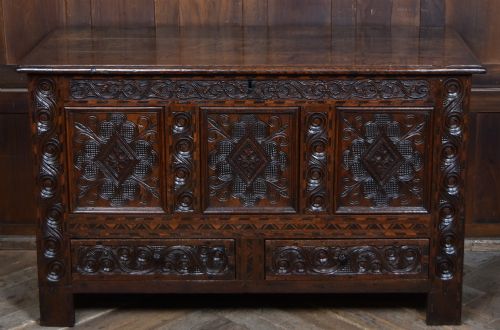
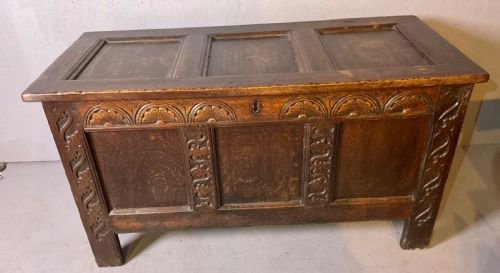
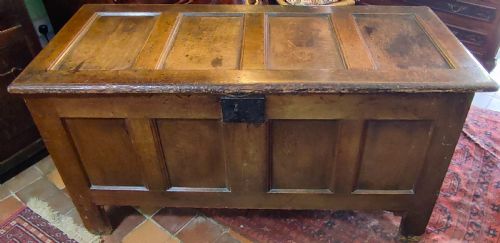
When you search for a historic oak chest, you encounter sturdy storage furniture built to withstand centuries of domestic use. The selection spans robust sixteenth-century boarded coffers alongside seventeenth-century carved examples and later eighteenth-century blanket chests.
Most pieces on this page appear as coffers, blanket chests, or court cupboards constructed from heavy timber. Forms range from simple boarded trunks to joined Lancashire coffers fitted with internal drawers and intricate carved friezes.
How they were made
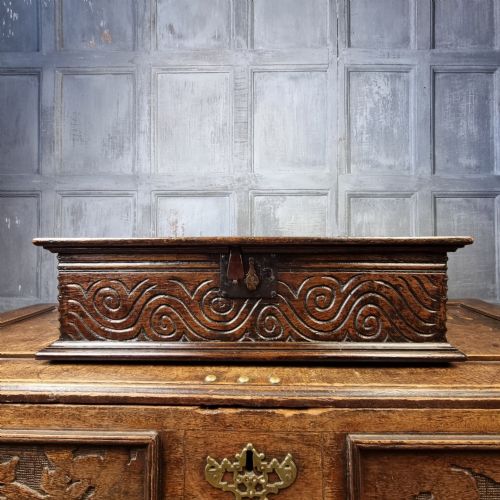
These items rely on solid oak timbers, often shaped using traditional joined or boarded methods. Carpenters reinforced the heavy wood structures with wrought iron and brass hardware to secure lids and hinges.
Surface decoration frequently involves hand carving or wood inlay to articulate panels and friezes. Construction techniques span from early pegged joints in Elizabethan examples to later eighteenth-century cabinet making.
The listings here feature oak items spanning the sixteenth to the nineteenth century, incorporating iron, brass, and wood inlay.
What varies in quality
Quality rests in the integrity of the original timber and the depth of the hand carving across the panels. Early boarded construction with intact boards commands attention, as does crisp detail on seventeenth-century friezes.
Proportion and structural survival differentiate standard utility pieces from finer country furniture. Original ironwork and unaltered internal fittings elevate a piece above later adaptations.
The Historic Oak Chest Glossary
- Coffer
- A heavy wooden chest traditionally used for storing valuables or textiles. These pieces often feature boarded or joined construction from the sixteenth and seventeenth centuries.
- Court Cupboard
- A traditional standing cupboard used for displaying plate or storing provisions. These examples date from the Tudor and Stuart periods.
- Boarded Coffer
- A primitive chest made from thick planks nailed or pegged together at the edges. This construction method represents the earliest form in the evidence.
- Joined Oak
- Furniture constructed using mortise and tenon joints secured with wooden pegs. This technique superseded simpler boarded methods as cabinet making advanced.
- Frieze
- The horizontal decorative band running along the upper section of a chest or cupboard. Carvers frequently decorated these areas with geometric patterns or floral motifs.
Historic Oak Chest: Frequently Asked Questions
What is a historic oak chest?
A historic oak chest is a heavy storage box made from solid timber during the sixteenth, seventeenth, or eighteenth centuries. These items served functional roles in domestic interiors for holding linens, documents, and valuables.
Today, they function as focal points in hallways or living spaces, providing practical storage while displaying centuries of woodworking tradition.
Where were oak chests used?
These chests originated in domestic settings, churches, and civic buildings primarily for secure storage. In homes, families placed them in bedrooms or halls to protect textiles and family documents from moisture and theft.
Their robust construction also allowed them to double as seating benches when space was limited. Over time, their role shifted from utilitarian storage to decorative antique furniture.
How do I care for antique oak?
Caring for antique oak involves maintaining stable humidity levels and avoiding direct heat sources that cause wood to split. Regular dusting with a dry cloth keeps the surface clean without stripping the historic finish.
Applying occasional wax feeds the dry timber and preserves the natural patina built up over centuries. Keeping the environment consistent ensures the wood remains stable.