




Historic Oak Chairs
Historic oak chairs bring solid timber, deep turnings and centuries of domestic use straight into a room.
Historic Oak Chairs
Historic oak chairs cover substantial seating built across several centuries, ranging from early wainscot forms to later country and revival interpretations. When searching for historic oak chairs, buyers encounter heavy timber frames designed for durability and formal presence.
The selection here includes sturdy armchairs and simpler side chairs spanning the seventeenth, eighteenth and nineteenth centuries. Regional variations appear among English, Scottish, French Breton and Austro-Hungarian pieces.
How they were made
Carpenters built these frames primarily using solid oak, occasionally combining it with walnut or elm for specific structural or decorative components. Joinery relied on traditional pegged mortise and tenon construction to secure the heavy wooden members.
Turned elements give many of these frames their distinct silhouette, while some examples incorporate textile, fabric or tapestry upholstery. Iron fittings appear on particular designs, and carved details such as central splats accent the plain timber surfaces.
What varies in quality
Quality rests upon the integrity of the original timber frame and the depth of period character preserved in the grain. Pieces retaining their early construction without excessive replacement timber stand apart from heavily altered examples.
The sophistication of the turning, the presence of carved splats and the historical weight of regional joinery dictate the standing of individual pieces. Coarser country interpretations differ significantly in finish and form from urban workshop commissions.
The Historic Oak Chairs Glossary
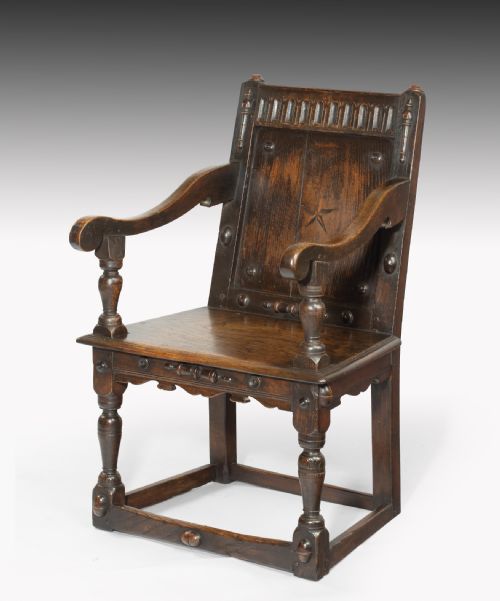
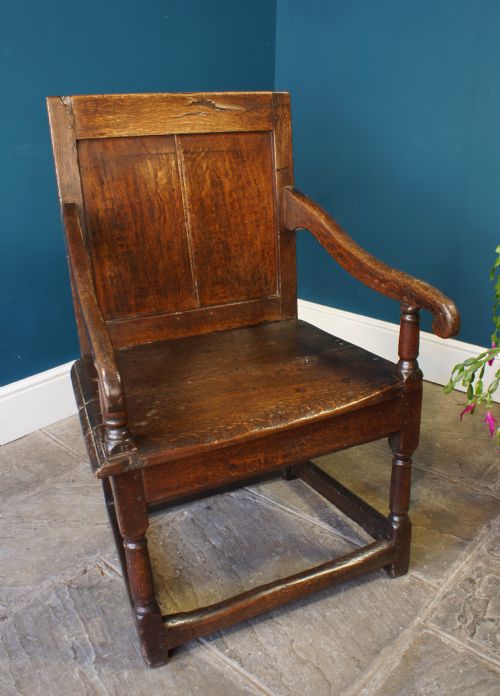
- Wainscot chair
- A heavy wooden armchair featuring a panelled back, solid wooden seat and heavy turned legs, common in the seventeenth century.
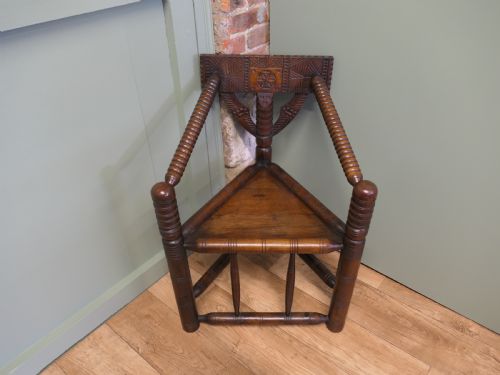
- Turner's chair
- A round or triangular armchair constructed entirely from turned wooden spindles and members, sometimes associated with the sixteenth and seventeenth centuries.
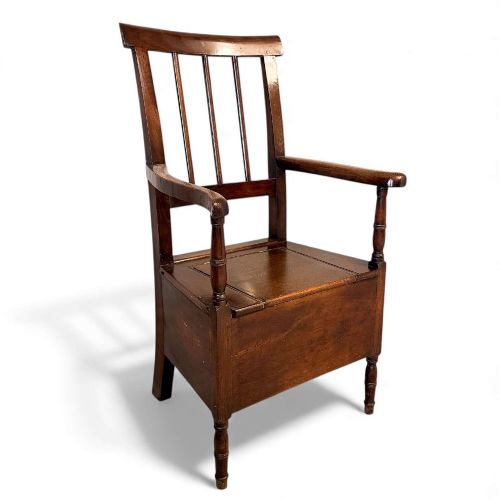
- Commode chair
- An enclosed seat designed with a hidden chamber pot space beneath, bridging utility and cabinet-making.
- Curule chair
- An X-frame seat style drawing on ancient Roman magistrate forms, revived during later nineteenth-century historical revivals.
- Splat
- The vertical central strip of wood set into the back of a chair, supporting the sitter's spine and often shaped or carved.
Historic Oak Chairs: Frequently Asked Questions
How do I identify a seventeenth century oak chair?
Seventeenth century examples typically show heavy pegged joinery, panelled wainscot backs and dense oak timber with deep grain patterns. These pieces lack modern metal fixings and rely on straightforward carpentry.
They also display distinct regional tool marks and simpler turning styles compared to later decorative revivals.
Were these chairs used at dining tables?
Most early oak chairs served as imposing seats of authority or household status rather than matching sets for dining. Single side chairs and heavy wainscot armchairs stood against walls or at the head of a table.
Larger matching dining sets are a much later development in domestic interior history.
Can I use an antique oak armchair daily?
These robust wooden frames handle normal seating well, provided the joints remain stable and the timber is treated with care. Heavy oak construction was built for generations of daily household use.
Adding appropriate cushions helps protect any antique upholstery or exposed wooden seats from unnecessary wear.
What is a turner's chair?
A turner's chair is built entirely from turned wooden spindles assembled in geometric patterns, creating a distinctive cage-like frame. This form relies on the lathe-worker's skill rather than flat board carpentry.
They offer firm seating and a striking architectural silhouette within a room.