


Historic Needlework Art
Historic needlework art comprises framed textile pieces and samplers carrying centuries of threadwork skill.
Historic Needlework Art
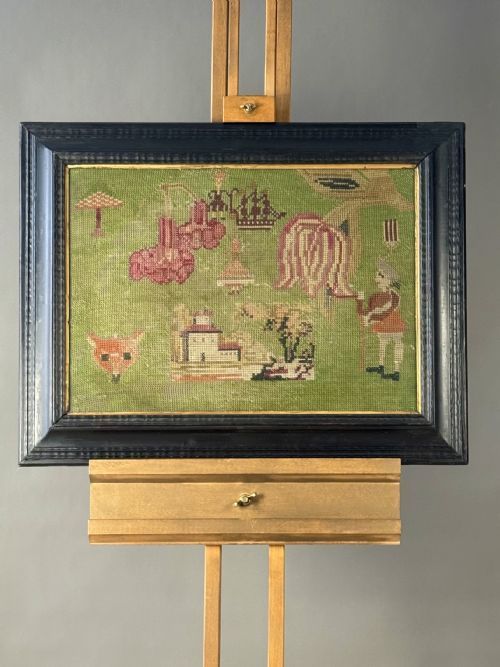
Historic needlework art covers textile pieces ranging from framed panels to detailed samplers worked by hand. Buyers examining this category encounter works originating across the seventeenth, eighteenth, and nineteenth centuries, including Victorian and Georgian examples.
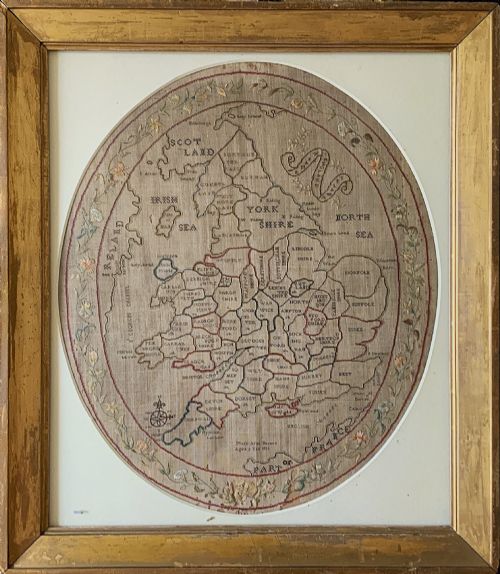
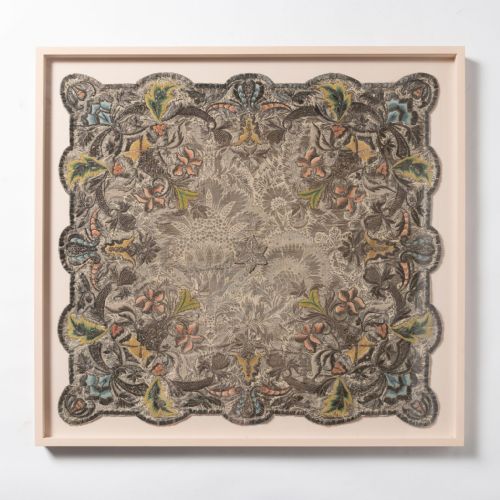
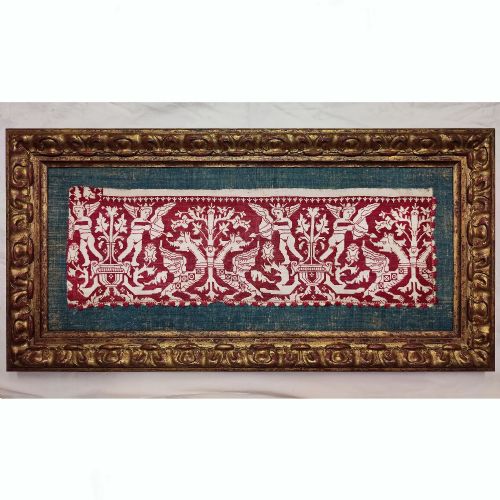
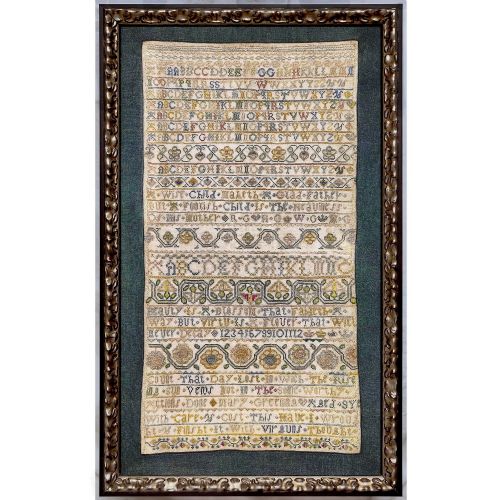
Sampler forms frequently display maps, alphabets, or genealogical records stitched by young makers such as Mary Banion and Ann Hodson. Other surviving formats include embroidered borders, tapestry cushion covers, and framed wall art from English, Italian, French, and German sources.
Distinctions in quality and execution
Quality rests upon the precision of the needlework and the complexity of the design, such as cartographic detail on map samplers. Superior examples maintain clear lettering, balanced composition, and secure mounting within period frames.
Condition varies according to the preservation of the delicate silk and wool threads against the linen ground. Pieces that retain their original scale and legibility command stronger visual presence.
Geographic origins span England, Scotland, France, Italy, and Germany through various framed panels and tapestry formats.
Mary Banion·Mary Greening·Ann Hodson·Margaret Ann Blackow·Maggie Muir·Sarah Baker·Ann B Gilies·Martha Hall·Eleanor Grady·Mary Pinfold
The Historic Needlework Art Glossary
- Sampler
- A piece of needlework produced as a demonstration or test of skill in various stitches. These often incorporate alphabets, numerals, and figures.
- Needlepoint
- Embroidery stitched on a stiff open-weave canvas foundation. The technique covers the entire ground to form a dense pattern.
- Band sampler
- An early form featuring horizontal rows of different pattern bands. These examples frequently date to the seventeenth century.
- Tapestry
- A form of textile art woven on a loom or worked with needle upon canvas. Historic examples often depict figures or botanical motifs.
Historic Needlework Art: Frequently Asked Questions
What is a needlework sampler?
A needlework sampler is a fabric panel stitched by hand to demonstrate proficiency in various embroidery techniques. They frequently display alphabets, numbers, and verses.
Historically, young makers created these pieces under instruction to record domestic skill and literacy. Many surviving examples also include the maker's age and date.
How old are these textile pieces?
The available selection spans from the seventeenth century through the nineteenth century. Georgian and Victorian examples appear frequently.
Earlier works from the sixteen-hundreds typically comprise embroidered borders or tapestry cushion covers. Nineteenth-century items lean toward schoolgirl samplers and framed map panels.
How should framed textiles be hung?
Framed textiles require placement away from direct sunlight to prevent the fading of silk and wool threads. Stable indoor humidity protects the delicate linen grounds.
Most pieces arrive glazed to guard the antique fabric against dust and atmospheric moisture. Professional framing ensures the textile remains properly tensioned.
Can you date a sampler without a date?
Dating relies upon stylistic clues such as the typography of alphabets, border motifs, and costume details depicted in the embroidery. Fabric types and framing styles provide additional chronological context.
Textiles lacking a specific year often point to broad stylistic periods like the Georgian era or the late seventeenth century based on their execution.