



Historic Marine Art
Historic marine art captures the drama of sail and steam through canvas and paper, offering a direct window into naval power and maritime heritage.
Historic Marine Art
When you search for historic marine art, you encounter oil paintings, watercolours, etchings, and fine art prints that document ships, ports, and naval battles across the centuries. The selection spans Georgian maritime works, Victorian maritime pieces, Edwardian maritime art, and mid-century marine realism.
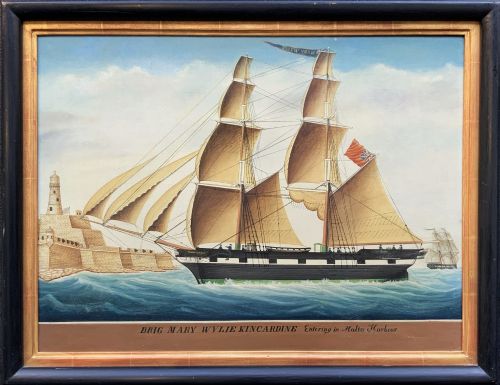
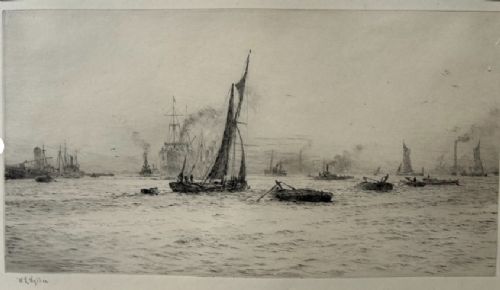
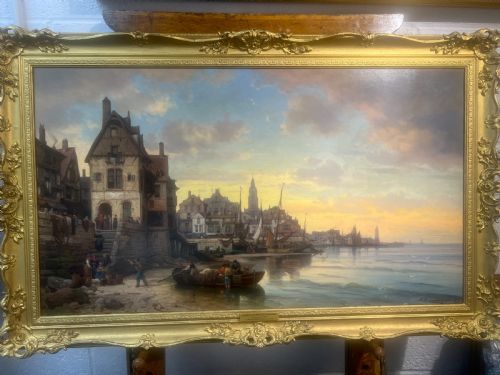
You are most likely to meet 19th-century oil paintings on canvas and panel alongside period watercolours and signed etchings. Subjects range from specific named vessels like the brig Mary Wylie and HMS Swift to bustling scenes on the River Thames and Mediterranean harbours.
The objects frequently capture precise historical moments, from naval engagements to liners such as the RMS Lusitania. Named artists and draughtsmen appear alongside traditional maritime art creators, anchoring each piece in a specific era of nautical history.
Materials and techniques
Artists utilised oil paint on canvas and wood panel to build up rich textures for sea and sky, often framing these works with gold leaf. Watercolours on paper offer a lighter, more translucent medium favoured for coastal views and detailed ship portraits.
Graphic works rely on pencil signatures and etching techniques on paper, preserved under glass to protect delicate lines. These varied methods allowed creators to document rigging, architecture, and water conditions with distinct levels of immediacy.
Historic Marine Art Retail Price Guide 2026
Typical asking prices for historic marine art among the pieces listed under this phrase on Sellingantiques today, from the lower quarter to the upper quarter. They describe what is for sale here now, not the wider market.
The listings span periods from the eighteenth century through the mid-twentieth century, utilising oil, watercolour, and etching on canvas, wood, paper, and glass.
What separates the work
Quality rests in the draughtsmanship of the vessel and the accuracy of maritime architecture, separating competent records from works by accomplished marine painters. The handling of light on water and the convincing depiction of rigging and hull construction reveal the hand of a specialist.
Provenance and attribution elevate certain pieces, particularly those bearing signatures from established marine artists or detailing named vessels and locations. The preservation of the original canvas, panel, or paper surface without heavy restoration maintains the integrity of the piece.
Bernard Gribble·William Lionel Wyllie·Charles Euphraisie Kuasseg·Charles William Wyllie·Dion Pears·Joseph Heard·WF Mitchell·Robert Anderson·Edward Fletcher·John D. Walker
The Historic Marine Art Glossary
- Brig
- A two-masted, square-rigged sailing ship frequently depicted in nineteenth-century maritime art. These vessels formed the backbone of commercial and naval fleets.
- Etching
- A printmaking process where lines are incised into a metal plate with acid before ink is applied and transferred to paper. Signed examples carry particular weight.
- Panel
- A rigid wooden support used by artists in place of canvas, common in earlier marine painting traditions. It provides a smooth surface for minute detail work.
- Watercolour
- A paint consisting of pigment suspended in a water-based solution, typically applied to paper. It allows for rapid sketching of coastal light and atmosphere.
- Ship portrait
- A specialised painting genre focused on rendering a specific vessel with topographical and technical accuracy. These works often include identifying flags and signal pennants.
Historic Marine Art: Frequently Asked Questions
How do I identify a ship portrait?
A ship portrait focuses primarily on a single named vessel, often shown from the side to display its full rigging and hull. These works frequently record specific historical ships like cruisers or merchant vessels.
Background details are usually secondary to the accurate depiction of the ship itself, sometimes including landmarks or lighthouses to indicate location.
What is the difference between oil and watercolour marine art?
Oil paintings use heavy pigments on canvas or panel, allowing for textured sea spray, deep water tones, and layered skies. They are typically framed without glass.
Watercolours use paper supports and translucent washes to capture light and coastal atmosphere, requiring glass protection to prevent environmental damage.
How are dates attributed to unsigned marine artworks?
Dating relies on the style of clothing worn by figures, the architectural details of visible ports, and the specific design of the vessels shown. Naval architecture evolved rapidly during the eighteenth and nineteenth centuries.
Rigging configurations and flags provide crucial chronological markers that help narrow down the decade in which the work was produced.
Where were most historic marine artworks displayed?
Original owners often included shipowners, naval officers, and merchants who commissioned portraits of their own vessels to display in homes and offices. Harbour scenes were also popular among collectors of topographical art.
Today, these pieces transition easily into studies, libraries, and living rooms with traditional or eclectic interiors.