





Historic Country Painting
A historic country painting captures rural life and architecture across centuries of British art.
Historic Country Painting
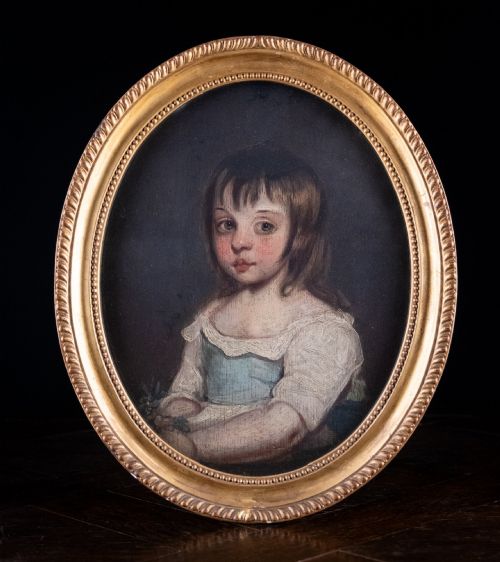
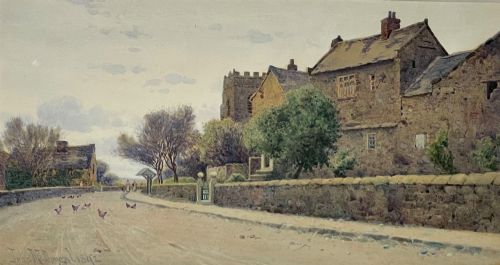
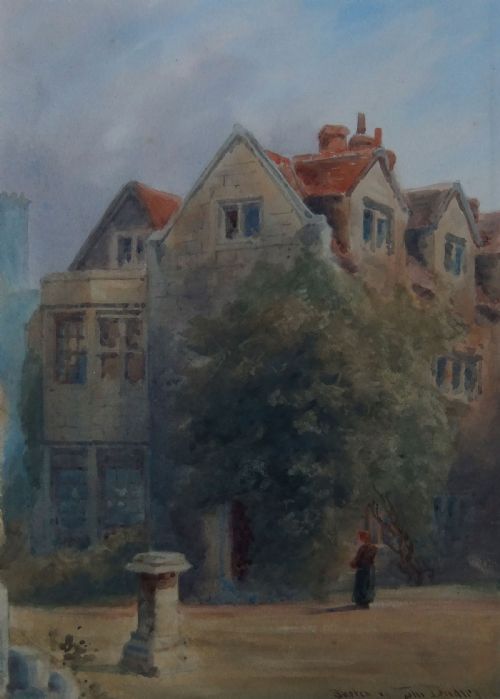
When you search for a historic country painting, you find works spanning the seventeenth century through to nineteen twenty, taking in portraits, village views, and grand estates. These works record rural life, historic buildings, and British landscapes in both oil and watercolour. You are most likely to encounter nineteenth century oils and watercolours depicting specific Yorkshire and Cheshire locations alongside portraits and interiors.
The selection includes specific regional views such as Bidston Village, Richmond, and York, alongside architectural studies of places like Newstead Abbey and Hatfield House. Some pieces record interior spaces such as the Long Gallery at Westwood House or the Summer Drawing Room. Others present genre scenes of gentlemen playing bowls or portraits of country figures.
Materials and methods
Artists painted these subjects using oil paint on canvas and watercolour on paper, capturing the fine details of historic architecture and rural settings. Canvases provide texture and depth for larger landscape and interior compositions, while watercolours allow for crisp delineation of village views and buildings.
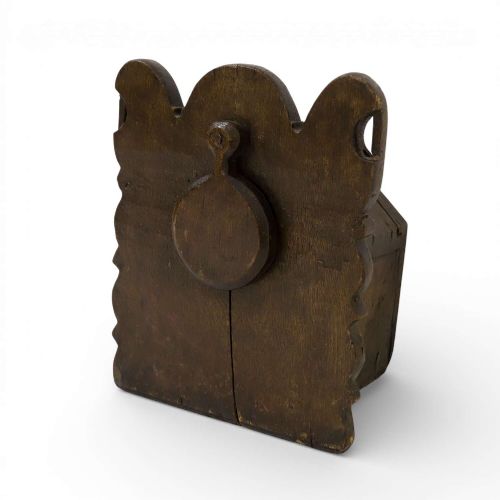
Frames and associated items employ traditional materials including oak and gilt wood, sometimes accompanied by iron hardware such as hinges and fastenings on wooden wall boxes and salt boxes. These materials reflect the domestic and decorative standards of their respective periods.
Historic Country Painting Retail Price Guide 2026
Typical asking prices for historic country painting among the pieces listed under this phrase on Sellingantiques today, from the lower quarter to the upper quarter. They describe what is for sale here now, not the wider market.
Styles span Victorian, Georgian, Edwardian, seventeenth century country, seventeenth century British, English country, and British impressionism.
Judging quality and execution
Quality rests upon the artist's ability to render light, architectural perspective, and atmosphere within the chosen medium of oil or watercolour. Stronger works demonstrate confident brushwork and precise topographical recording, whether depicting a Yorkshire church or a London view.
The handling of the medium determines the distinction between a routine record and a accomplished fine art painting. Works by recorded artists command attention through established provenance and exhibition histories.
John McDougal·Frank Moss Bennett·Fred Stead·William Greaves·Beatrice Parsons·Tom Dudley·J.D. Walker·Robert Thomas Buttery·A Gilbert·Margaret Thompson
The Historic Country Painting Glossary
- Watercolour
- A painting method where fine pigment is suspended in water-based solution on paper. This medium provides translucent washes of colour well suited to topographical views.
- Oil Paint
- A slow-drying paint made with pigments suspended in a drying oil, typically linseed. It allows for rich colour layering and textured application on canvas.
- Canvas
- Heavy woven fabric stretched across a wooden frame to serve as a sturdy surface for oil painting. It remains the standard support for historic fine art.
- Gilt Wood
- Wood carved and coated with a thin layer of gold leaf or metallic gilt powder. Frames utilise this finish to complement the artwork.
Historic Country Painting: Frequently Asked Questions
What subjects do these paintings show?
These works depict British rural life, village scenes, historic country houses, and notable architectural landmarks. Subjects range from Yorkshire churches and Cheshire villages to grand estate interiors and portraiture.
Artists recorded the changing face of the countryside and historic buildings across the seventeenth, eighteenth, nineteenth, and early twentieth centuries.
How do I care for a watercolour?
Watercolour paintings require protection from direct sunlight to prevent fading of pigments on paper. Framing behind conservation glass helps shield the paper from environmental moisture and pollutants.
Display these works in stable indoor conditions away from damp walls and direct heat sources.
Are these works signed by the artists?
Many of the paintings and watercolours feature signatures, initials, or contemporary attributions identifying the creator. Documentation often links specific pieces to known exhibition histories and active dates.
Unsigned works rely on stylistic analysis, subject matter, and period materials for attribution.
What is the difference between oil and watercolour?
Oil paintings use pigment bound in oil on stretched canvas, offering deep tones and textured surfaces. Watercolours apply water-based pigments directly to paper for a luminous, transparent effect.
Both media were employed concurrently by artists documenting British landscapes and interiors across different periods.