

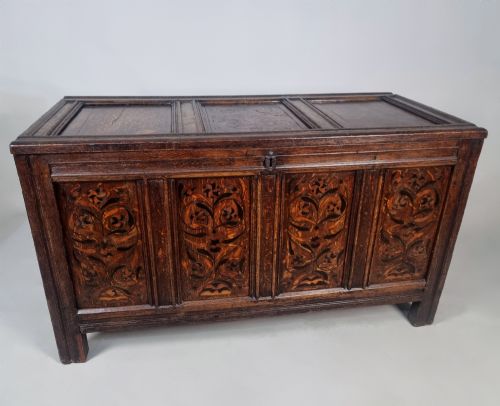
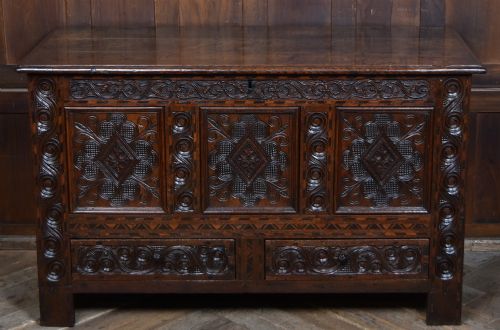
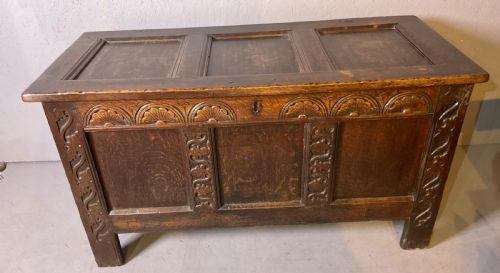
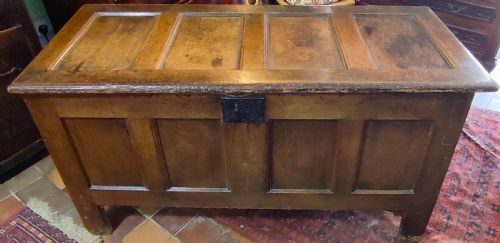


Historic Carved Trunk
These historic carved trunk examples are heavy timber storage pieces built to last centuries, prized for their deep relief carving and honest grain.
Historic Carved Trunk
When you search for a historic carved trunk, you are looking at sturdy wooden receptacles built to hold valuables, linen, and household documents across several centuries. The pieces you are most likely to meet on this page take the form of oak coffers and chests from the sixteenth, seventeenth, and eighteenth centuries. They reflect domestic storage needs from periods spanning Tudor, Jacobean, and Georgian eras.
The majority of these pieces appear in solid oak, occasionally enhanced with wood inlay and secured by wrought iron hardware. Styles range from plain joined panels to elaborate seventeenth-century English carving and Lancashire regional variants. Each surviving trunk carries the marks of early carpentry techniques and centuries of domestic use.
Materials and construction methods
These items are constructed predominantly from solid oak, selected for its strength and durability in domestic furniture. Wood inlay provides decorative contrast on specific seventeenth-century examples.
Joinery methods rely on pegged mortise and tenon frames surrounding heavy panels, allowing the timber to expand and contract with seasonal humidity. Wrought iron strapwork and hinges secure the lids and fronts, forged by hand to withstand heavy daily use.
Historic Carved Trunk Retail Price Guide 2026
Typical asking prices for historic carved trunk among the pieces listed under this phrase on Sellingantiques today, from the lower quarter to the upper quarter. They describe what is for sale here now, not the wider market.
Many sixteenth and seventeenth-century lids still bear the ancient ghost marks of long-lost interior candle boxes.
Judging the quality of a historic carved trunk
Quality rests in the crispness and depth of the carved ornament, alongside the integrity of the original timber frame. Pieces with deeply undercut designs and well-proportioned panels stand above simpler or heavily altered boxes.
The survival of original ironwork, hinges, and board floors heavily influences the standing of a piece. Earlier examples retaining their original surface patination command greater appreciation than those stripped or over-restored by later hands.
The Historic Carved Trunk Glossary
- Coffer
- A heavy wooden chest traditionally used for storing valuables and documents. These pieces often feature hinged lids and sturdy boarded construction.
- Joined oak
- Furniture construction utilising pegged mortise and tenon frames rather than simple nailed boards. This method defines much seventeenth-century English cabinetmaking.
- Wood inlay
- The technique of inserting contrasting pieces of wood into recess depressions to form decorative patterns. This ornament appears on select seventeenth-century items.
- Wrought iron
- Iron heated and hammered into shape by a blacksmith to create functional hardware. This material provides the hinges and straps on early storage chests.
Historic Carved Trunk: Frequently Asked Questions
What were historic carved trunk pieces used for?
These large timber chests served as secure storage for household valuables, silver, important documents, and expensive textiles like woollens and linens.
Because houses lacked built-in wardrobes or cupboards, these portable receptacles held a family's most portable wealth and everyday necessities safely off damp floors.
How do I date a historic carved trunk?
Dating relies on observing construction methods, joinery style, and the motifs used in the surface carving. Sixteenth and seventeenth-century pieces typically display joined frame-and-panel construction with carved strapwork or geometric patterns.
Later eighteenth-century examples often shift towards simpler panel layouts or incorporate wood inlay work reflecting the prevailing tastes of Georgian cabinetmakers.
Are these trunks suitable for modern storage?
These sturdy wooden pieces function exceptionally well as blanket chests, coffee tables, or deep storage solutions in contemporary rooms. Their robust timber construction handles daily interaction easily.
Placing them away from direct heat sources and sudden humidity shifts keeps the dry oak stable and preserves the historical surface patination.
What defines Lancashire coffer styles?
Lancashire coffers are regional seventeenth-century English storage chests distinguished by specific local carving traditions and panel configurations. They frequently exhibit joined oak construction decorated with characteristic regional motifs.
These pieces showcase the stylistic variations found outside London workshops during the seventeenth century.