







Historic British Watercolours
Historic British watercolours capture landscapes and street scenes on paper through decades of changing British style.
Historic British Watercolours
Historic British watercolours encompass original paintings on paper depicting British landscapes, architectural views, and coastal scenes. Buyers seeking these works find original artwork ranging from the Georgian period through the Edwardian era and into the mid-twentieth century.
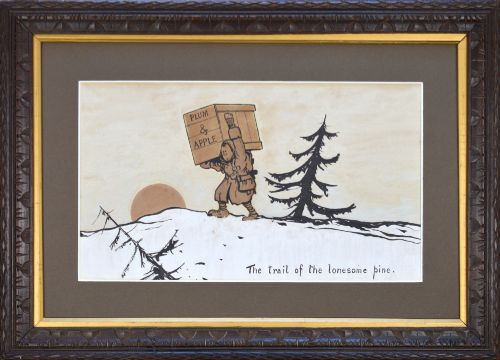
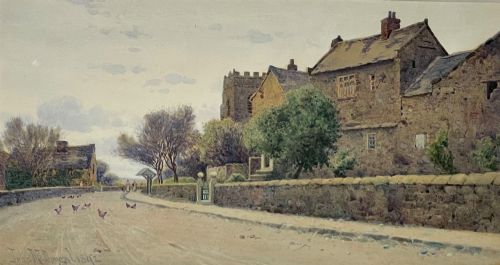
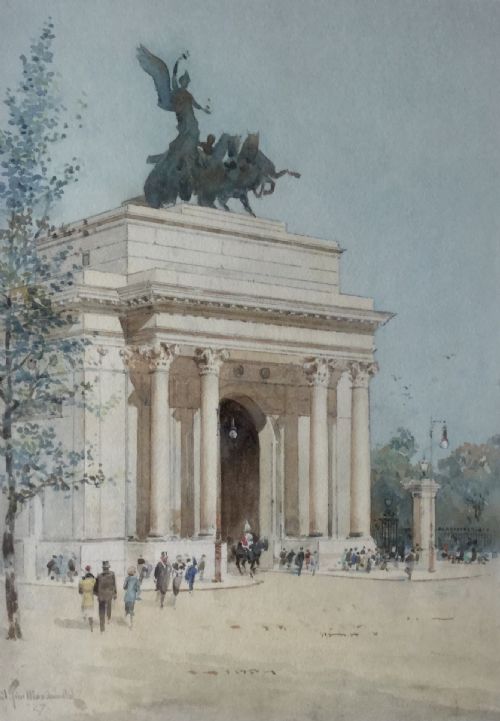
The works on this page appear in various formats including framed paintings and pen and ink sketches. Subjects stretch from rural Yorkshire landscapes and Norfolk churches to London street scenes near Whitehall and the Foreign Office.
Originating across different periods, these paintings reflect distinct regional and stylistic movements. Pieces span from eighteenth-century English school works to First World War illustrations and British Impressionism.
Materials and technique
Artists executed these works primarily using watercolour paint and ink on paper supports. Many pieces incorporate pen work and wash to define architectural details and figures before applying translucent washes of colour.
Framed watercolours typically utilise glass and wood to protect the delicate paper surfaces from light and moisture. The combination of watercolour pigment and ink allows for both fine linear precision and soft atmospheric effects.
Historic British Watercolours Retail Price Guide 2026
Typical asking prices for historic british watercolours among the pieces listed under this phrase on Sellingantiques today, from the lower quarter to the upper quarter. They describe what is for sale here now, not the wider market.
Several watercolours invite viewers to watch everyday scenes, from feeding birds at St Martin-in-the-Fields to cart builders at work.
Assessing quality
Quality rests upon the surety of the draughtsmanship and the handling of pigment across the paper. Works by accomplished artists demonstrate confident pen work and controlled washes that convey light and depth without heavy reworking.
The strength of the composition and the preservation of the original paper surface distinguish finer works. Strong tonal contrast and well-maintained colour integrity elevate an individual painting above standard topographical records.
Bruce Bairnsfather·John McDougal·Percy Robertson·John Augustus Atkinson·Rowland Henry Hill·Henry Barlow Carter·Thomas Rowlandson·David Small·Fred Stead·Noel Harry Leaver·Beatrice Parsons·Tom Dudley·J. Tim Macdonald·Owen Bowen·Henry Edridge·John Thistle
The Historic British Watercolours Glossary
- Watercolour
- A painting method in which the paints are made of pigments suspended in a water-based solution. Artists apply these translucent washes to paper to create luminous effects.
- Wash
- A thin, transparent layer of diluted watercolour paint spread across the paper. This technique establishes uniform areas of tone or colour, often used for skies and water.
- Pen and ink
- A linear drawing technique utilising metal nibs or quills with pigmented ink. Artists frequently combined this method with watercolour washes to outline architectural forms and figures.
- British Impressionism
- A painting style that emerged in the late nineteenth and early twentieth centuries, focusing on light, brushwork, and everyday subjects. Practitioners captured transient atmospheric effects outdoors.
- Topographical
- Artwork depicting specific physical locations, towns, or buildings with realistic detail. These views served as visual records before the widespread use of photography.
Historic British Watercolours: Frequently Asked Questions
What periods do these watercolours cover?
The works span from the eighteenth century through the Victorian and Edwardian eras up to the 1940s. Different decades brought shifts in palette, subject matter, and painterly technique.
Earlier pieces often lean toward topographical record, while later works embrace impressionistic handling of light and atmosphere.
How should I frame and display a watercolour?
Watercolours require careful framing behind glass with acid-free mounts to separate the paper from the glazing. This prevents condensation damage and protects the pigments from fading.
Display these paintings away from direct sunlight and excessive humidity to preserve the integrity of the paper and colours.
What subjects are most common?
Common subjects include British landscapes, coastal towns, rural villages, and prominent London landmarks. Artists recorded architectural landmarks such as churches, castles, and historic streetscapes.
Topographical views of Yorkshire, London, and international cities like Paris and Venice also appear frequently.