






Historic Blanket Box
A historic blanket box is a sturdy timber chest built for domestic storage, offering robust construction and centuries of practical heritage.
Historic Blanket Box
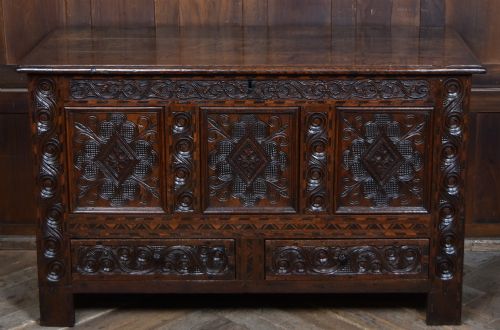
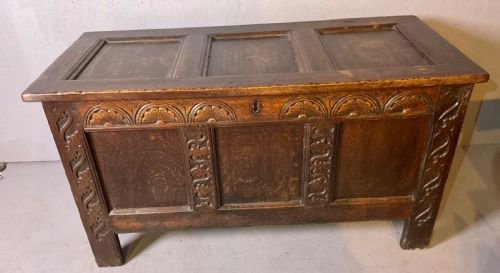
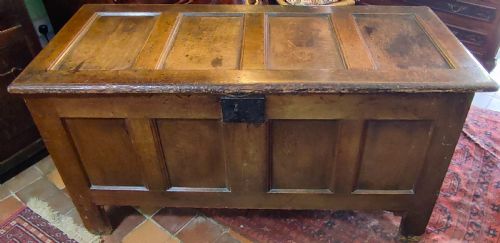
A historic blanket box typically appears as a robust oak coffer or chest designed for holding textiles and household valuables. These pieces originate from periods spanning the sixteenth, seventeenth, eighteenth, and nineteenth centuries, reflecting long traditions of English cabinet making.
The versions most frequently encountered on this page are constructed from solid oak, often featuring carved panels, joined framing, or boarded construction. Regional variations such as Lancashire joinery and specialised forms like sword chests or inlaid examples also emerge within the selection.
Masonic pine chests and simpler nineteenth-century interpretations sit alongside earlier Elizabethan and Jacobean specimens. Each piece demonstrates the heavy timber framing and utilitarian purpose that defined early domestic storage before the widespread adoption of fitted wardrobes.
Construction and materials
Makers relied primarily on native oak, utilising its density and durability for the heavy structural members of a historic blanket box. Secondary timbers such as pine appear in later or more utilitarian examples, while wrought iron and brass provide functional hardware for hinges and locks.
Joinery methods defined early production, employing pegged mortise and tenon frames around fielded or carved panels. Boarded construction appears in earlier Elizabethan examples, where heavy planks were joined directly to form the main body of the chest.
Surface ornamentation involved hand carving, geometric wood inlay, and panel moulding executed with basic chisels and gouges. Metalwork components like wrought iron straps were hand-forged by blacksmiths to secure the lids and corners against heavy use.
Historic Blanket Box Retail Price Guide 2026
Typical asking prices for historic blanket box among the pieces listed under this phrase on Sellingantiques today, from the lower quarter to the upper quarter. They describe what is for sale here now, not the wider market.
Several chests still retain the deep scuffs and iron scars left by centuries of being dragged across uneven flagged floors.
Assessing quality and craftsmanship
The standard of a historic blanket box depends heavily on the integrity of its original timber and the skill of the initial joinery. Pieces retaining their original floorboards, hinges, and structural framing demonstrate higher integrity than those with extensive timber replacement.
Carving depth and precision separate standard utilitarian storage from finer commission work. Crisp execution in geometric patterns or figural panels indicates a maker working at a higher level of competence within Jacobean or Elizabethan traditions.
Proportion and scale influence the desirability of a chest, with well-balanced joined frames commanding greater appreciation. The harmonious integration of wood inlay and the preservation of a stable, honest patina further distinguish superior examples.
The Historic Blanket Box Glossary
- Cofer
- An early term for a large chest used for storing valuables, linens, and garments. These pieces often served multiple domestic purposes including seating.
- Joined oak
- A method of furniture construction utilising interlocking mortise and tenon joints secured with wooden pegs. This technique provided superior strength compared to simple nailed boxes.
- Boarded construction
- A primitive method of building chests using vertical planks nailed or pegged at the edges. This style typifies sixteenth-century examples.
- Wood inlay
- The technique of fitting contrasting pieces of timber into recess depressions on a surface. This created geometric or floral patterns popular in seventeenth-century pieces.
- Sword chest
- A specialised long chest designed to store edged weapons safely. These narrow forms are distinct from standard blanket storage.
Historic Blanket Box: Frequently Asked Questions
What is a historic blanket box used for?
These chests originally served to store heavy woolen blankets, textiles, and family valuables securely in domestic quarters. Their flat lids also allowed them to function as tables or benches when space was limited.
Today, owners utilise them in living areas or bedrooms for blanket storage while displaying their historic timber patination as a focal point.
How do I date a historic blanket box?
Dating relies on observing construction methods, timber species, and stylistic details such as carving or inlay. Sixteenth-century pieces often employ simple boarded construction, while seventeenth-century examples typically feature joined oak frames and geometric panels.
Later eighteenth and nineteenth-century items introduce alternative woods like pine and different hardware styles. Comparing these physical traits against documented period examples establishes the approximate era of manufacture.
Are these chests made of solid oak?
The majority of early examples utilise solid native English oak for both the structural frame and the panels. Oak was chosen for its abundant strength and resistance to warping in domestic environments.
Later pieces from the nineteenth century occasionally incorporate secondary woods like pine, particularly in internal components or regional vernacular items.
How do I care for antique timber?
Maintaining antique wood involves placing the chest away from direct heat sources and dramatic humidity fluctuations. Stable environmental conditions prevent the oak from drying out, shrinking, or splitting.
Applying a traditional beeswax polish occasionally helps nourish the surface and preserve the historic patina built up over centuries of use.