


Historic Armchair
A historic armchair is a seating piece built centuries ago, offering robust timber frames and period textiles that anchor a traditional room.
Historic Armchair
Buyers exploring a historic armchair encounter robust frames built primarily from solid oak and walnut, frequently paired with period textiles such as velvet, leather, and damask.
The selections available range from early seventeenth-century Scottish and English joinery to nineteenth-century revivals drawing on French Baroque, Italian Renaissance, and vernacular British country styles.
How they were made
Carpenters and joiners built these frames from dense native hardwoods like oak, elm, and walnut, employing pegged mortise and tenon joints to secure the heavy timbers without modern adhesives.
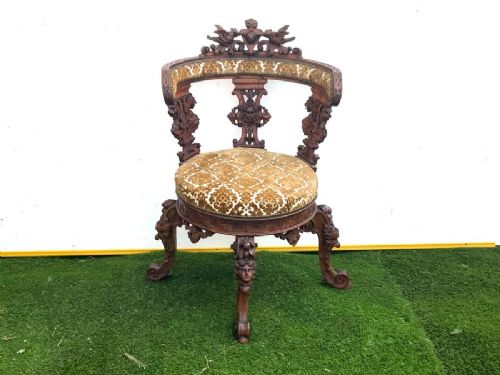
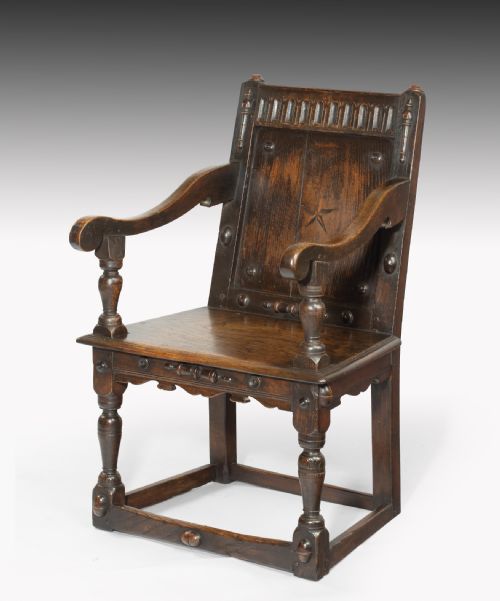
Carvers shaped elaborate details directly into the solid wood surfaces, adding panel work, turned spindles, and scrolling arms that define styles from the Jacobean period to the nineteenth-century revivals.
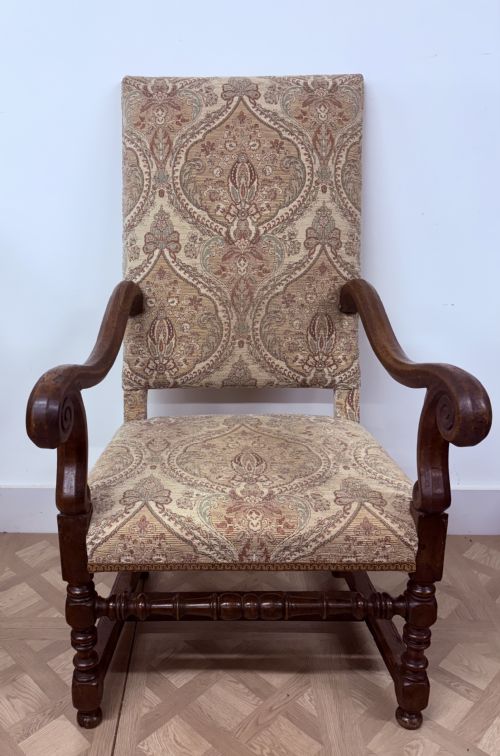
Upholstery layers utilised traditional textile coverings like heavy velvet, woven damask, and stitched leather fixed directly to the wooden frames with iron or brass tacks.
One listed armchair even reclines, proving that seventeenth-century comfort seekers were just as fond of leaning back as we are.
What varies in quality
The integrity of the original timber construction distinguishes finer examples, where structural joints remain tight and the wood retains its natural grain and deep patination.
The finesse of the hand-carved ornamentation alters the character of each piece, ranging from crisp relief work on noble audience chairs to simpler turned spindles on vernacular country seats.
White, Allom & Co.
The Historic Armchair Glossary
- Wainscot armchair
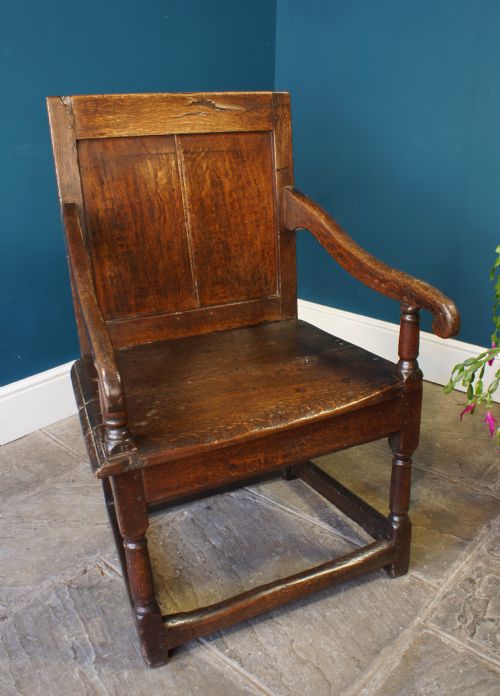
- A heavy wooden chair constructed with solid panelled backs and substantial armrests, typical of seventeenth-century joinery. These pieces rely on rigid wooden panels rather than upholstered padding.
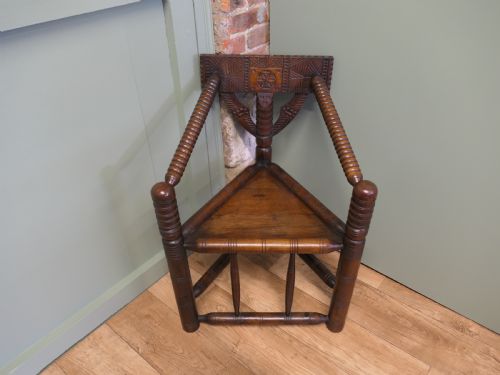
- Turner's chair
- A form constructed entirely from turned wooden spindles and members fitting together in geometric patterns. This style is also known as a roundabout or sausage-turned seat.
- Curule chair
- An X-framed folding seat design derived from ancient Roman forms, seen here in Renaissance revival interpretations. The intersecting frame supports a sling seat or upholstered pad.
- Damask
- A reversible figured fabric traditionally woven with patterns of flowers or foliage. This material frequently appears as the primary covering on formal revival seating.
Historic Armchair: Frequently Asked Questions
What is a wainscot armchair?
A wainscot armchair is a heavy wooden seat featuring a solid panelled back and sturdy armrests. These pieces were constructed by joiners using thick timbers.
They represent early domestic seating where wood carving and pegged joinery took the place of upholstered comfort.
How do I identify a seventeenth century chair?
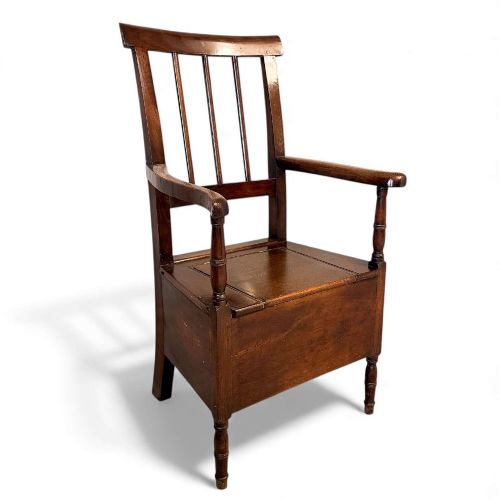
Seventeenth century chairs are identified by heavy oak or walnut construction, visible pegged joints, and panelled backs. The proportions are typically upright and rectilinear.
Decoration on these pieces relies on carved strapwork, turned wooden spindles, and solid joinery rather than padded upholstery.
What materials were used for upholstery?
Period upholstery materials included heavy woven damask, plush velvet, and stitched leather. These textiles were fastened directly to the wooden frames using metal tacks.
Selection depended on the formality of the piece, with grander audience chairs receiving richer fabrics than vernacular country seats.
Where were nineteenth century revival chairs made?
Nineteenth century revival chairs were produced across Britain, France, Austro-Hungary, and Italy. Makers drew inspiration from earlier Renaissance, Baroque, and Jacobean designs.
These workshop pieces adapted historical forms such as the X-framed Dante chair for Victorian interiors.