



Historic Alphabet Sampler
A historic alphabet sampler is a textile record of needlework skill, prized for its stitched letters, names and dates.
Historic Alphabet Sampler
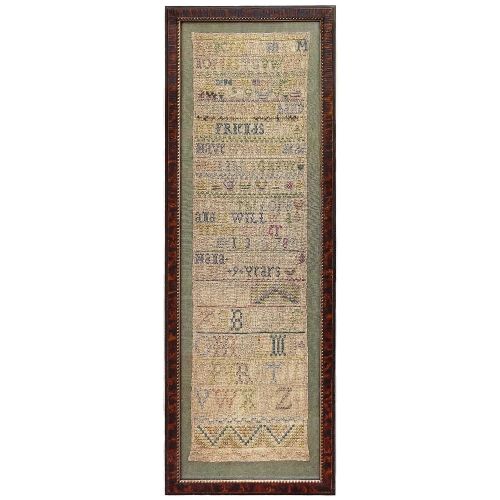
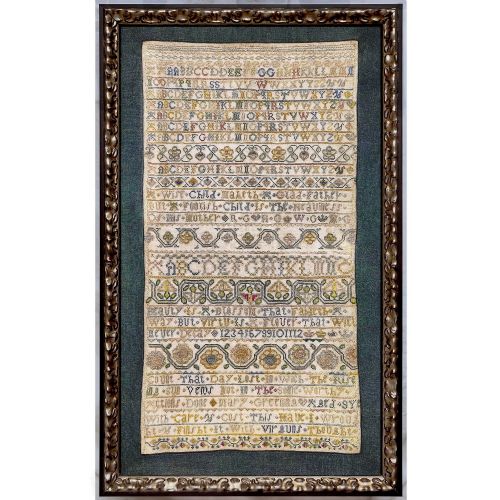
A historic alphabet sampler is a piece of needlework art created by hand to practise and display stitch mastery. These works range from the late seventeenth century through the Georgian and Victorian eras, recording names, ages and dates alongside rows of letters.
The versions most commonly met on this page include nineteenth century and Georgian examples worked on linen. Many feature the maker's name and age, such as young stitchers like Ann Hodson, Margaret Ann Blackow or Maggie Muir, providing a direct connection to the past.
Makers often included moral verses, biblical texts like the commandments, or educational themes alongside the alphabet. Formats include framed wall art and textile art, preserving delicate threads of silk and wool behind glass within wooden frames.
Materials and construction
These samplers were produced using linen grounds as a foundation for intricate needlework. Makers stitched letters and pictorial motifs using silk thread, wool and standard thread.
Completed textile pieces were mounted into wooden frames, often protected behind glass to preserve the delicate fibres. Materials vary across periods, moving from early band sampler formats on fine linen to robust Victorian wool and silk compositions.
Historic Alphabet Sampler Retail Price Guide 2026
Typical asking prices for historic alphabet sampler among the pieces listed under this phrase on Sellingantiques today, from the lower quarter to the upper quarter. They describe what is for sale here now, not the wider market.
One Victorian Scottish sampler preserves an authentic stitch error made by eleven-year-old Maggie Muir in eighteen eighty.
Distinctions in quality
Quality rests in the precision and consistency of the stitches across the linen ground. Early band samplers from the seventeenth or eighteenth centuries demonstrate high complexity in their layout and threadwork.
The inclusion of detailed naming, precise dating and educational verses elevates a piece beyond a simple exercise. Original framing and the careful preservation of silk and wool threads further separate finer examples from standard schoolroom practice.
The Historic Alphabet Sampler Glossary
- Band sampler
- An early format of needlework featuring horizontal bands of different stitches and alphabets arranged in rows. These pieces showcase a wide variety of patterns rather than a single pictorial scene.
- Linen
- A natural textile woven from flax fibres, used as the primary foundation ground for the vast majority of antique needlework samplers. Its even weave allowed stitchers to count threads accurately.
- Stitch error
- An intentional or accidental deviation in the repeating pattern or alphabet sequence created by the maker. Such details provide authentic evidence of human handwork during the learning process.
- Needlework sampler
- A textile artwork created by stitching alphabets, numbers, names and motifs onto a fabric backing. They served as both practice pieces and decorative records of accomplishment.
Historic Alphabet Sampler: Frequently Asked Questions
What is a historic alphabet sampler?
A historic alphabet sampler is a textile work created by hand to practise lettering and decorative stitches. They frequently record the maker's name, age and date of completion.
These pieces range from late seventeenth-century band samplers to nineteenth-century schoolroom works framed for display.
How were these samplers used?
Young makers used them to learn and demonstrate proficiency in needlework, lettering and numbers. They served as reference pieces for stitches and patterns.
Over time, completed works were framed and hung in homes as decorative wall art and family records.
How do I live with a sampler?
Antique samplers require protection from direct sunlight to prevent the fading of silk and wool threads. Keeping them behind glass in stable indoor environments helps preserve the delicate textile fibres.
Position them on interior walls away from moisture and heat sources to ensure long-term preservation.
How can I tell periods apart?
Early examples often take the form of long band samplers with complex seventeenth-century or early eighteenth-century stitching styles. Nineteenth-century pieces frequently include specific dates, ages and formal borders.
Materials and framing styles also shift from early linen foundations to later Victorian wool and silk compositions.