



Hinged Serving Tray
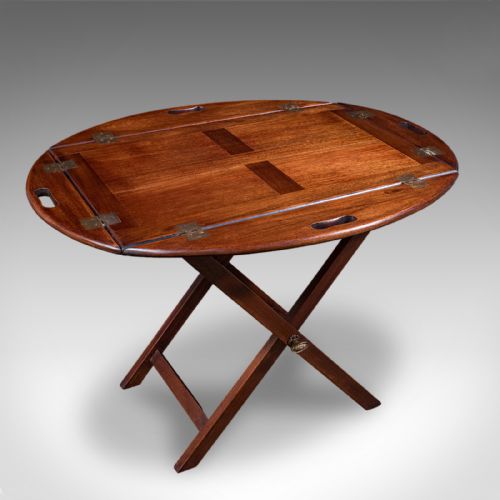
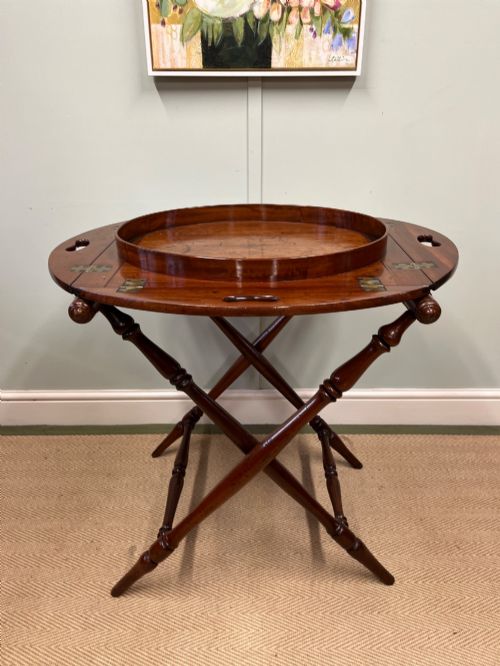
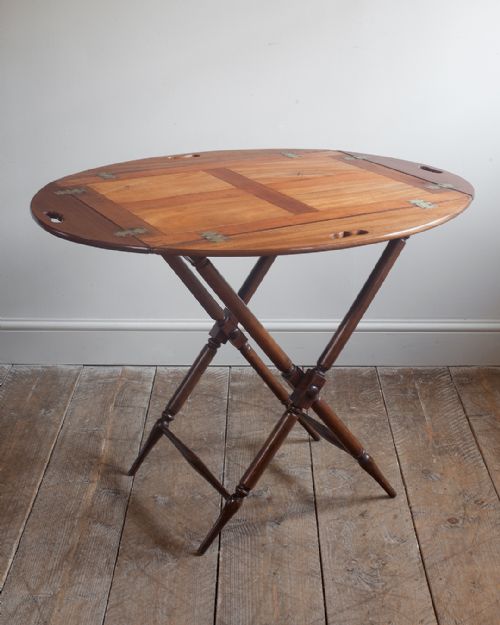
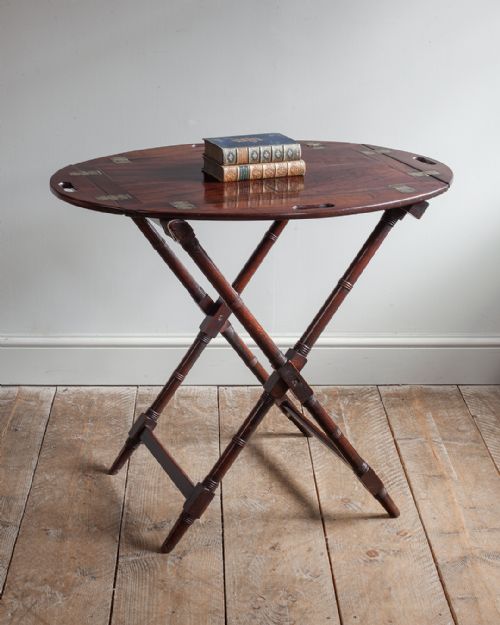
A hinged serving tray brings practical utility and period character to a room, offering a removable top that sits easily upon its folding stand.
Hinged Serving Tray
When you search for a hinged serving tray, you encounter pieces primarily designed for carrying and serving, often paired with folding or fixed stands to function as occasional tables, coffee tables, and side tables. These furnishings emerge from periods spanning the Georgian, Regency, and Victorian eras through to the Edwardian period and nineteen thirty.
The most common versions met on this page are mahogany butlers trays, including Cuban mahogany variants and oval George III examples, alongside drop-flap serving stands and tray tables. They combine a portable tray top with a supporting stand, creating versatile furniture that transitions effortlessly between serving function and display use.
How they were made
The construction relies heavily on timber selection, with mahogany and Cuban mahogany dominating the pieces alongside oak and brass fittings. Craftsmen utilised dense hardwoods to ensure the tray bases and folding stands could bear weight safely during service.
Joinery techniques focus on stability and portability, incorporating folding stands and canvas webbing to support the tray structures. Hinges and drop-flaps allow the sides of the tray to lift or lower, requiring precise metalwork that integrates smoothly with the wooden framework.
Hinged Serving Tray Retail Price Guide 2026
Typical asking prices for hinged serving tray among the pieces listed under this phrase on Sellingantiques today, from the lower quarter to the upper quarter. They describe what is for sale here now, not the wider market.
A butler tray easily transforms from a tea server into an impromptu cocktail station when guests arrive unexpectedly.
What varies in quality
The distinction between the top of the range and simpler examples lies in the timber figure and the subtlety of the cabinetwork. Pieces fashioned from Cuban mahogany display deeper grain patterns and richer colour than later or more utilitarian iterations.
Refinement in the hardware and the execution of the folding stand also signal superior craftsmanship. Better examples show careful attention to the fit of the hinges and the integrity of the structural joints rather than purely mass-produced assembly.
The Hinged Serving Tray Glossary
- Drop-flap
- A hinged section of a tray rim that can be lowered for serving or raised to contain items. This design allowed servants to carry the tray flat against the body.
- Cuban mahogany
- A dense, highly prized hardwood sourced from the Caribbean, known for its deep colour and rich grain. It appears frequently on pieces from the Georgian and Regency periods.
- Tray table
- A piece of furniture consisting of a removable tray resting upon a separate folding or rigid stand. It serves multiple domestic functions as an occasional table or coffee table.
- Canvas webbing
- Strong woven bands utilised within folding stands to support the weight of the tray top. This traditional method provides both flexibility and robust strength.
Hinged Serving Tray: Frequently Asked Questions
What is a hinged serving tray used for?
Originally utilised by household staff to transport food and beverages from kitchens to reception rooms, these pieces functioned as portable serving implements before resting on stands to become temporary tables.
In modern interiors, they serve equally well as cocktail tables, coffee tables, or occasional surfaces that can be easily repositioned or folded away when floor space is required.
How do I care for a mahogany tray?
Maintenance requires gentle cleaning with a soft, dry cloth to remove dust without harming the polished wooden surface. Avoid placing hot or wet items directly onto the antique timber to prevent rings and staining.
Applying a traditional beeswax polish periodically helps nourish the mahogany and preserves the depth of the grain over time.
Can the tray be separated from the stand?
Most traditional examples feature a tray top that lifts entirely free from its folding or rigid base. This removable design reflects the original purpose of carrying the tray independently from its support.
When placed back onto the stand, the tray usually rests securely within rails or upon webbing without requiring permanent fixings.
How do I date a butler tray?
Dating relies upon observing the timber species, such as Cuban mahogany on early nineteenth-century pieces, alongside the construction style of the handles and hinges. Georgian and Regency examples often display hand-cut dovetails and subtle carving, whereas Edwardian and later pieces show machine assistance.
Examining the wear patterns on the underside and the joinery details helps confirm whether a piece belongs to the Victorian era or later revivals.