


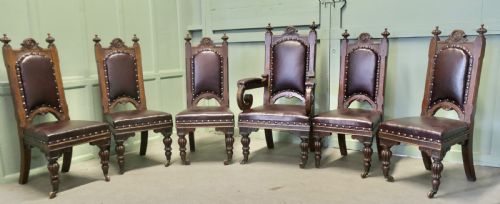
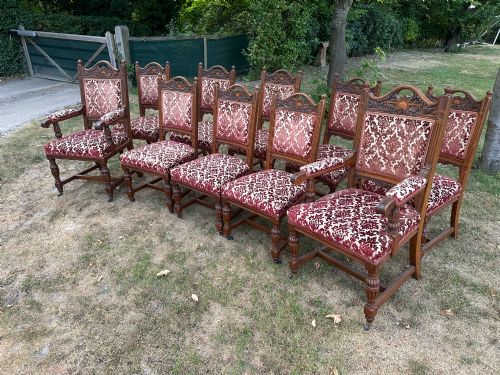
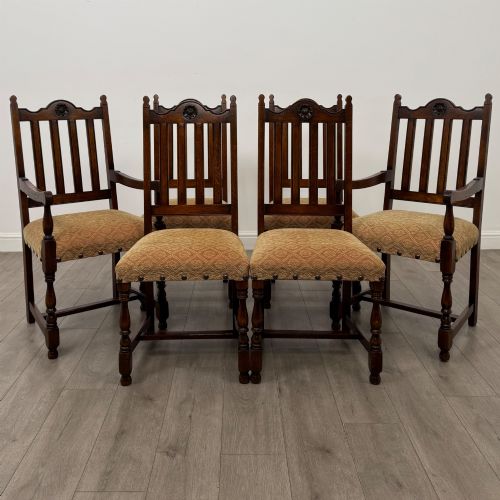
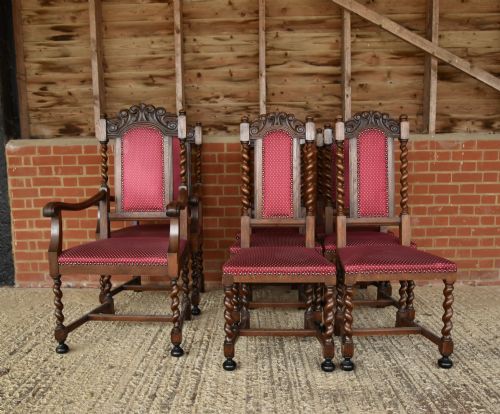
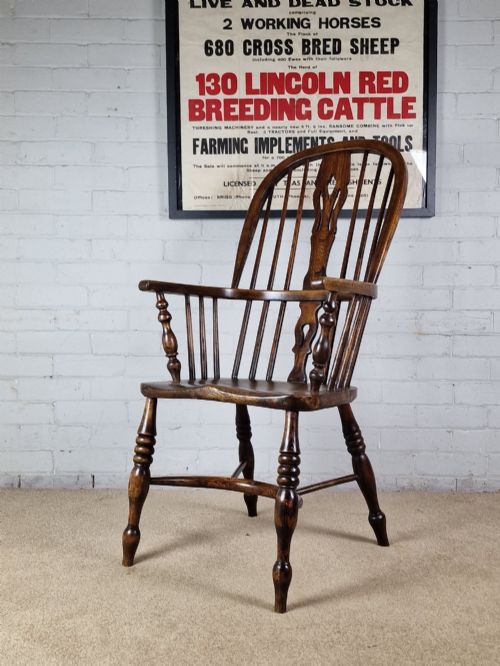
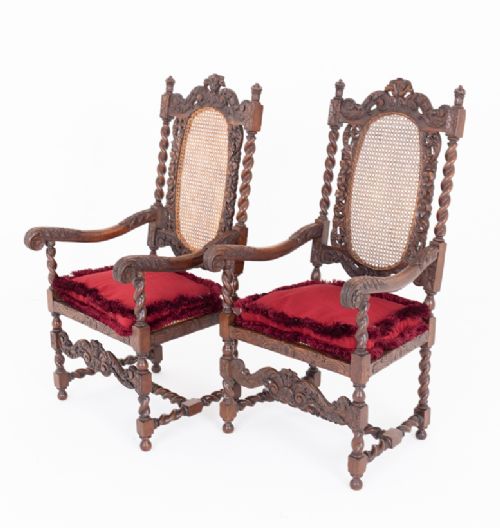

High Back Oak Carvers
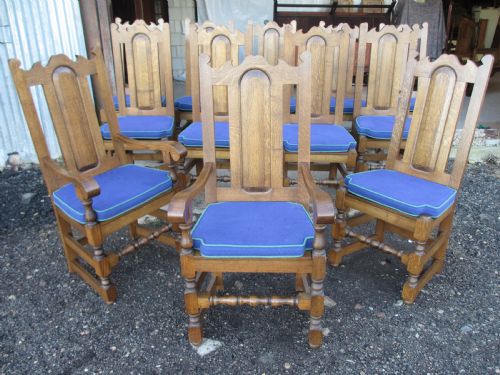
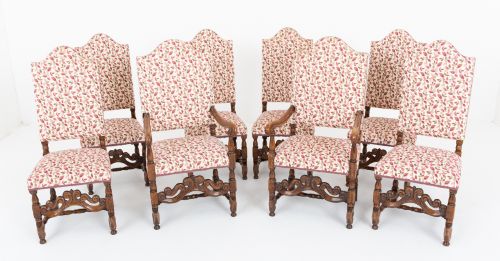
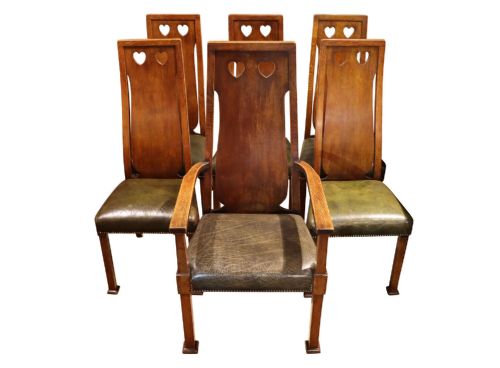
High back oak carvers are commanding seating pieces defined by elevated proportions and sturdy frames, offering both architectural presence and historical character.
High Back Oak Carvers
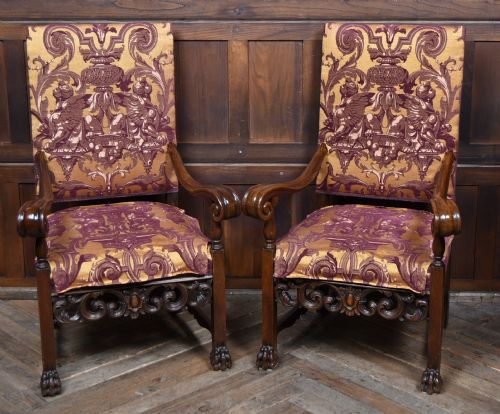
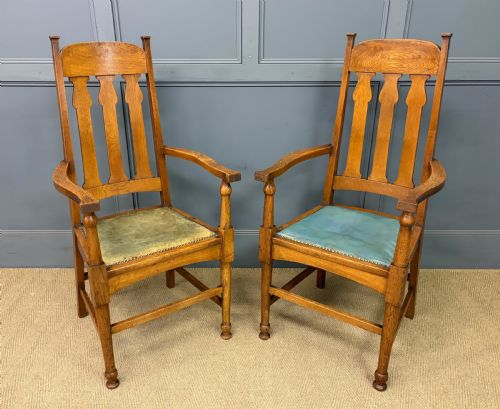
High back oak carvers appear primarily across nineteenth century, Edwardian, and early twentieth century production, spanning various revivalist aesthetics. These substantial armchairs function as principal seating at a table end or standalone interior statements.
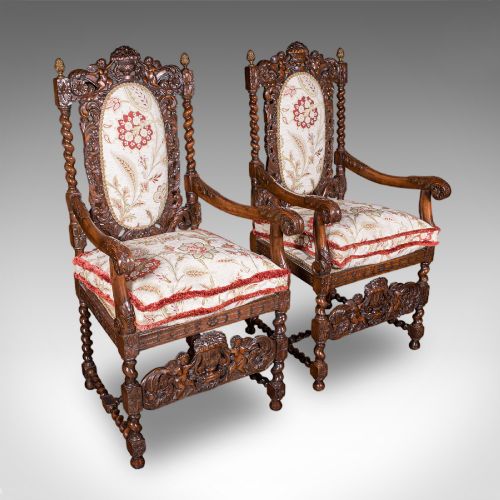
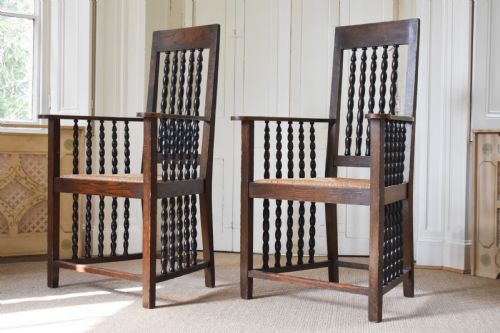
Jacobean revival and Arts and Crafts interpretations dominate the selection, combining traditional joinery with period specific ornamentation. Buyers most frequently encounter single armchairs or matched pairs emerging from these distinct stylistic movements.
Materials and Construction
Timber selection centres primarily on solid oak, frequently supplemented by secondary woods like elm and ash in regional country seating. Frames rely on traditional mortise and tenon joinery to support the substantial vertical loads of an elevated backrest.
Upholstery and detailing incorporate leather, cane, fabric, velvet, and brass tacks, reflecting the specific decorative grammar of each respective decade. Natural rush and woven cane provide tactile contrast against dense timber structures.
High Back Oak Carvers Retail Price Guide 2026
Typical asking prices for high back oak carvers among the pieces listed under this phrase on Sellingantiques today, from the lower quarter to the upper quarter. They describe what is for sale here now, not the wider market.
Early twentieth century craftsmen occasionally snuck secret initials into hidden stretcher joints just to confuse future historians.
Distinctions in Execution
Quality rests in the crispness of carved ornamentation and the structural integrity of the timber frame over centuries of use. Finer examples display deliberate proportioning and integrated arm supports that balance decorative ambition with ergonomic reality.
The integrity of original surface finishes and secondary materials, such as undamaged cane work or period leather, separates standard production from superior craftsmanship. Coarser iterations rely on repetitive machine turning, whereas better pieces retain hand-finished detail.
Heinrich Vogeler·Goodyers London·Liberty Morris And Co·Shapland And Petter·William Morris
The High Back Oak Carvers Glossary
- Carver
- An armchair designed with elbow rests, traditionally placed at the heads of a dining table. These pieces match or complement the smaller side chairs in a larger set.
- Jacobean Revival
- A nineteenth and early twentieth century design movement that reinterprets seventeenth century motifs. It utilises heavy turnings, geometric panel carving, and dark timber finishes.
- Arts and Crafts
- A design philosophy prioritising honest construction, visible joinery, and materials rooted in local traditions. Pieces from this movement often feature subtle organic curves and functional restraint.
- Bergere
- An enclosed upholstered armchair featuring cane work on the back and sides. This technique lightens the visual weight of heavy timber frameworks.
- Windsor
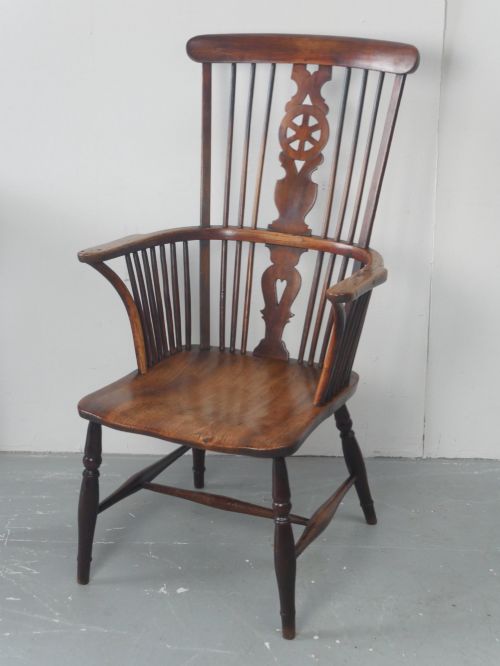
- A traditional wooden chair constructed with a solid shaped seat into which the legs and back spindles are wedged directly. Regional variations often combine ash, elm, and oak.
High Back Oak Carvers: Frequently Asked Questions
What distinguishes high back oak carvers from standard dining chairs?
High back oak carvers feature integrated armrests and taller vertical backrests designed to provide a commanding presence at a table end.
They offer distinct architectural height and structural support compared to standard low profile side chairs.
How do I identify Jacobean Revival pieces?
Jacobean Revival items typically display geometric panel carving, barley twist turnings, and dark patinated oak surfaces.
These design elements consciously echo seventeenth century aesthetics while utilising nineteenth or twentieth century construction methods.
Where should I place a carver in a modern room?
Carvers function effectively as desk chairs, standalone reading seats in corners, or paired at opposite ends of a dining table.
Their substantial vertical proportions allow them to anchor open spaces or balance heavier living room furniture.
Are cane and rush seats durable for daily use?
Woven cane and rush provide flexible support that withstands regular seating when maintained in dry indoor environments.
Care should be taken to avoid excessive point pressure or moisture to preserve the integrity of the natural fibres.