

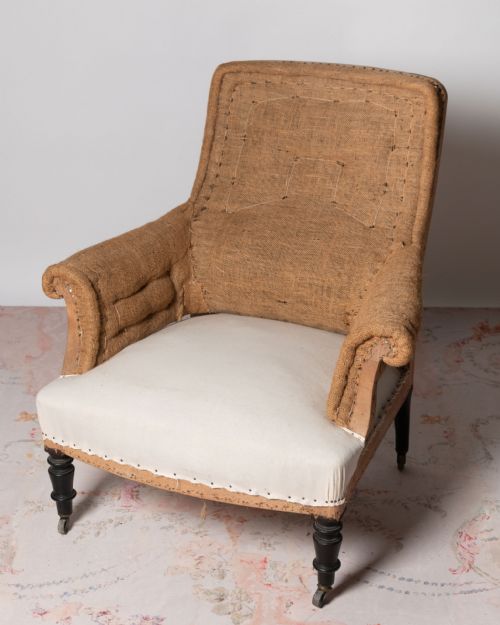
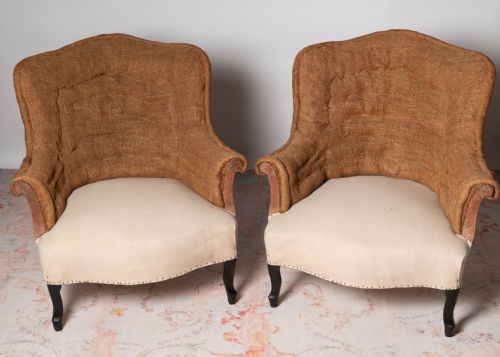
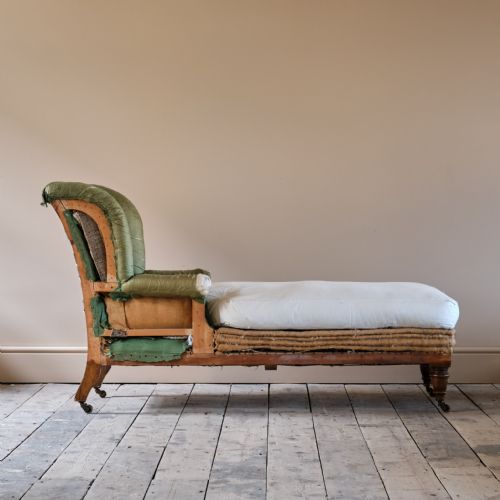

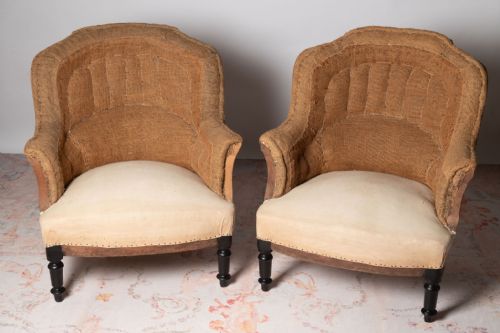


Hessian Upholstery
Hessian upholstery forms the durable foundation beneath fine textiles on period seating, offering enduring structure and support for traditional armchairs and sofas.
Hessian Upholstery
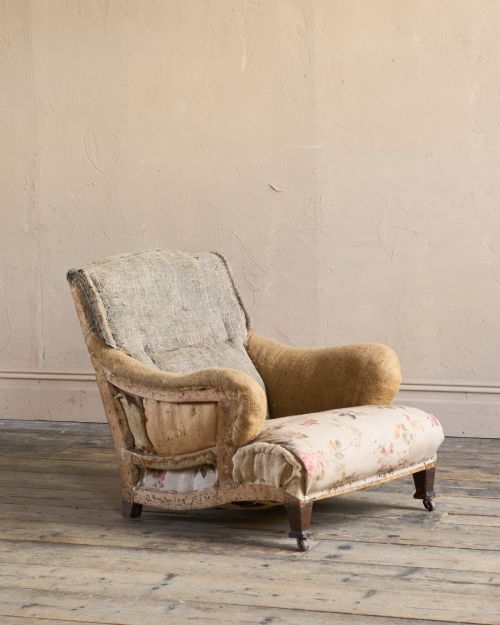
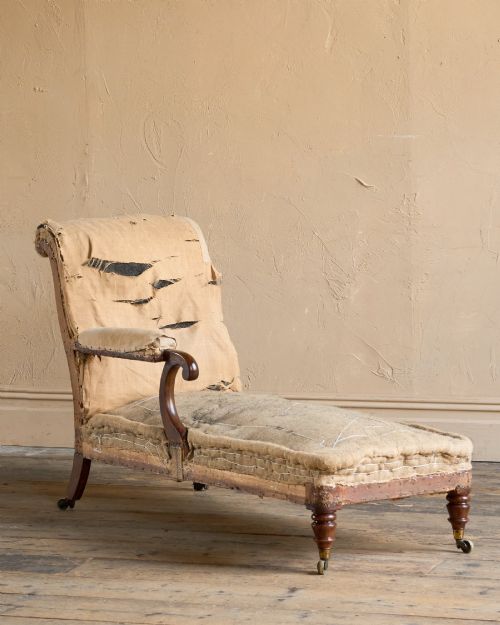
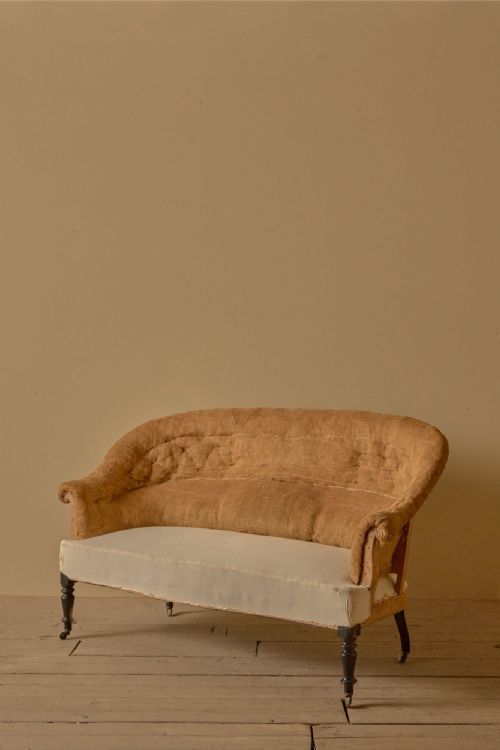
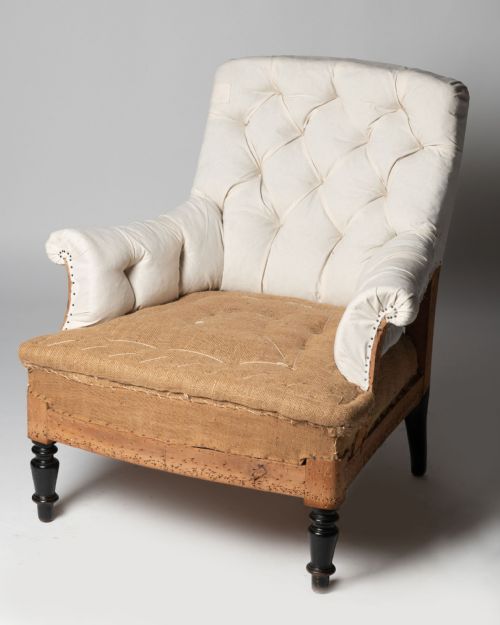
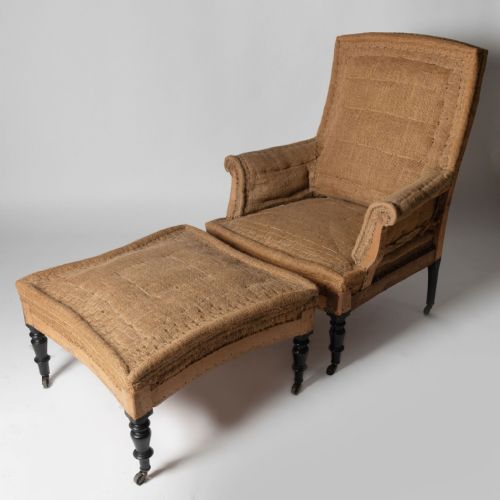
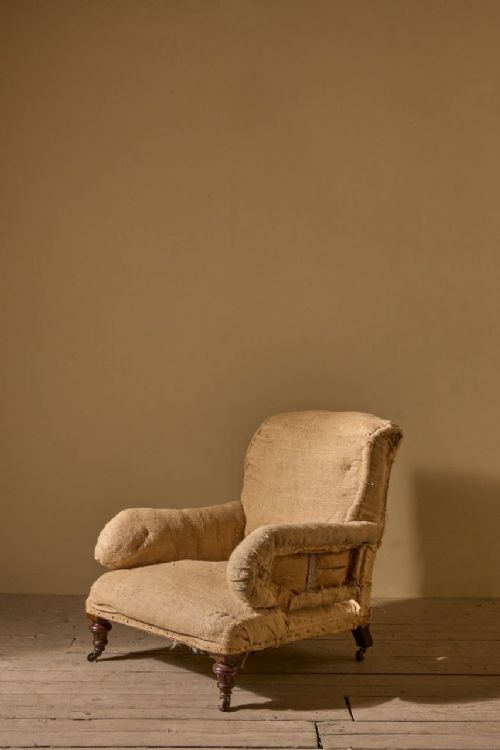
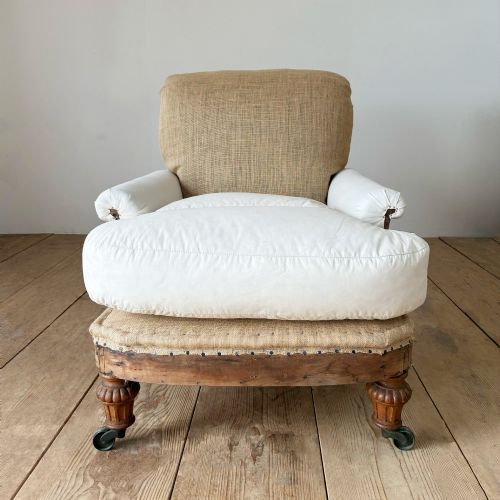
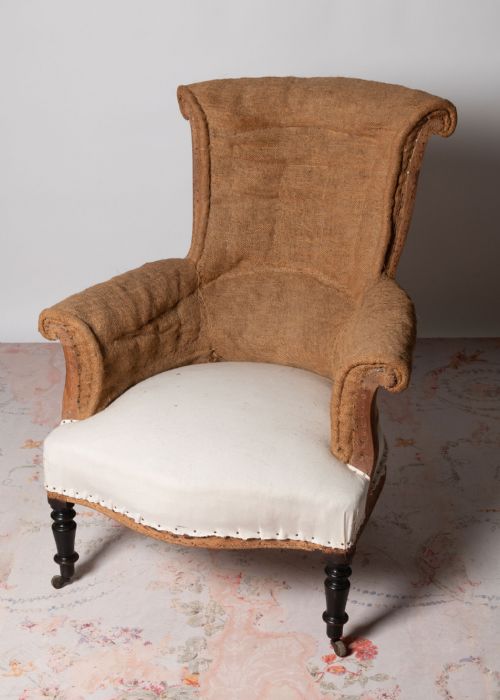
Hessian upholstery underpins traditional seating forms such as armchairs, sofas, daybeds, and footstools across various historical periods. When searching for hessian upholstery, collectors encounter foundational fabric layers concealed beneath outer coverings like cotton, calico, linen, and velvet.
The pieces utilising this technique span the 18th century, Victorian era, Edwardian period, and 1930s. French styles, including Napoleon III and French provincial designs, sit alongside English Queen Anne, Grafton style, and Howard style creations.
Standard seating types found with this construction method include bedroom chairs, slipper chairs, wingback armchairs, and three-seater sofas. The material serves as the essential internal webbing and stuffing retainer across diverse wooden frames.
How they were made
Traditional frames constructed from mahogany, walnut, and other timbers provide the structural skeleton for these chairs and sofas. Craftsmen stretch coarse hessian tightly across the wooden rails to form a robust base for stuffing materials.
Interior padding incorporates natural fibres held firmly in place by the stout woven hessian. Outer layers of calico, cotton, and linen then cover the foundation before decorative textiles are applied.
Hessian Upholstery Retail Price Guide 2026
Typical asking prices for hessian upholstery among the pieces listed under this phrase on Sellingantiques today, from the lower quarter to the upper quarter. They describe what is for sale here now, not the wider market.
Underneath layers of fine Victorian velvet and calico lies stout hessian, quietly holding centuries of comfort together.
What varies in quality
The tightness of the weave and the weight of the hessian fabric foundation determine the structural longevity of the upholstered piece. Dense, heavy-grade material provides superior support for the internal stuffing compared to looser weaves.
Frame construction quality, visible in the selection of mahogany or walnut timbers and the precision of joinery, elevates certain pieces above standard production. Maker attribution, such as work associated with Howard & Sons, Gillows, or Robert Strahan, distinguishes notable examples.
Howard & Sons·Gillows·Robert Strahan
The Hessian Upholstery Glossary
- Hessian
- A dense, coarse woven fabric typically made from jute fibres, utilised as the foundational webbing and stuffing cover in traditional upholstery. It provides the necessary tension to hold internal padding securely within the wooden frame.
- Calico
- A plain-woven cotton fabric placed over the internal hessian and stuffing layers as an intermediate lining before the final outer upholstery is applied. It creates a smooth surface for decorative textiles.
- Webbing
- Woven strips of strong material stretched tightly across the seat frame to support the springs and padding. In traditional work, it works in tandem with the hessian foundation.
- Wingback
- An armchair featuring protective side panels attached to the arms and back to deflect drafts. These forms frequently employ traditional internal stuffing and hessian foundations.
- Napoleon III
- A 19th-century French design style characterised by eclectic revivals and elaborate upholstery techniques. Pieces from this era often utilise concealed foundational layers of stout fabric.
Hessian Upholstery: Frequently Asked Questions
What is hessian upholstery?
Hessian upholstery refers to the sturdy, coarse jute fabric used inside traditional chairs and sofas to support internal stuffing and springs. It acts as the hidden structural foundation beneath outer decorative textiles.
This material allows traditional frames to maintain their shape and firmness over decades of use. It forms a core component of period seating construction.
Where were these chairs made?
The pieces originate from various workshops and cabinet makers in England, Ireland, and France. English makers like Gillows and Howard & Sons produced notable examples alongside Dublin workshops.
French provincial and Napoleon III pieces reflect continental design traditions of the nineteenth century. Each region contributed distinct stylistic traits to the framework and upholstery.
How do I care for upholstered furniture?
Preserving upholstered furniture involves regular gentle vacuuming to remove dust from the fabric surfaces. Keeping pieces away from direct sunlight prevents the outer textiles from fading.
Maintaining stable indoor humidity protects both the internal hessian and the timber frame from deterioration. Professional conservation cleaning safeguards fragile historic fabrics.