



Hessian Couch
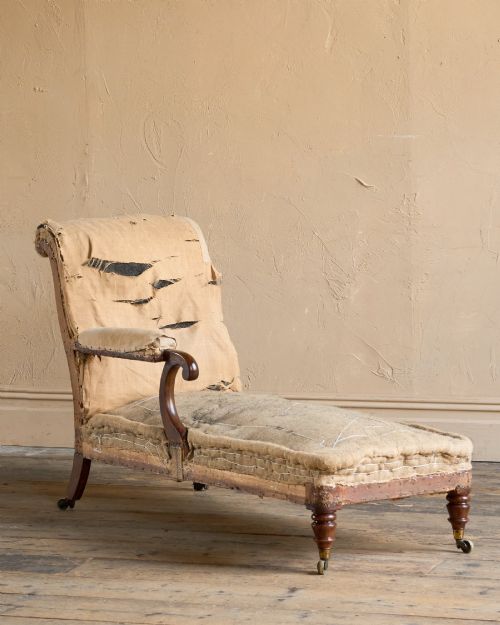
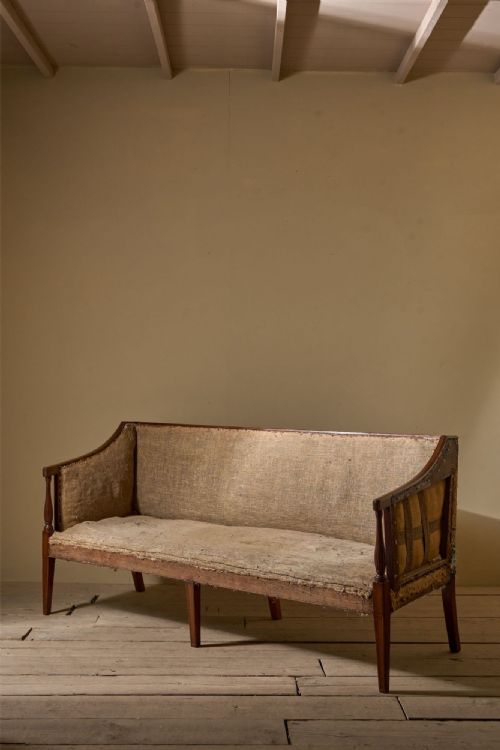
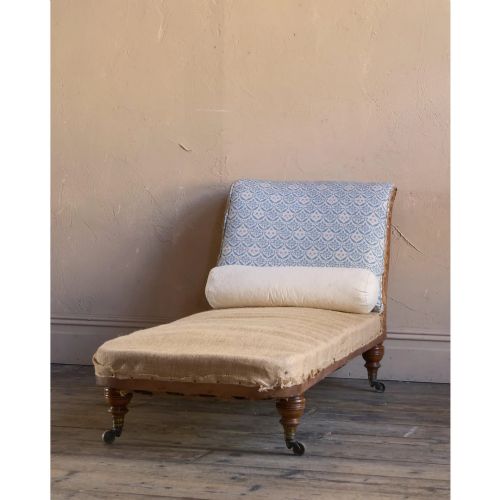
A hessian couch brings tactile texture and sturdy country house character into a sitting room.
Hessian Couch
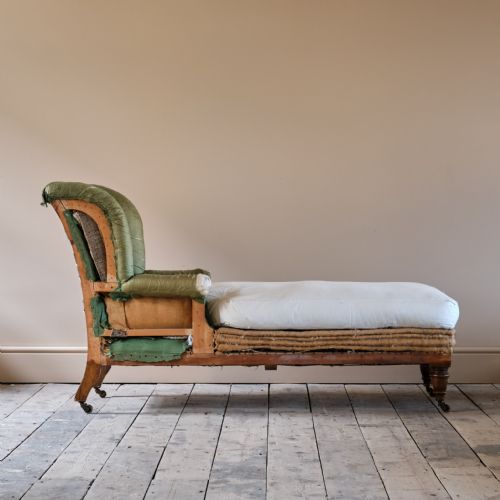
A hessian couch brings substantial seating into a room, taking the form of sofas, daybeds, and chaise longues. These pieces emerge from the nineteenth and twentieth centuries, spanning periods from the Georgian era through Victorian times, Regency designs, and into the 1930s.
The versions most commonly met on this page are country house sofas and daybeds built during the nineteenth century. These seating options often display heavy timber framing beneath their durable upholstery, balancing utility with traditional form.
Makers such as Howard & Sons and Miles & Edwards appear among these furnishings, alongside French provincial and English country house styles. Buyers seek these items for their historical presence and deep-seated comfort.
How they were made
Makers constructed these frames from hardwoods such as mahogany and beech, ensuring a robust structural foundation for daily use. Carpenters shaped these timbers into supportive skeletons for sofas and daybeds before applying padding and textile covers.
Upholsterers utilised hessian fabric as a primary foundation material, layering it with calico and supplementary fabric to create supportive seating. Brass detailing sometimes accented the woodwork, while giltwood appeared on more elaborate nineteenth-century English pieces.
Hessian Couch Retail Price Guide 2026
Typical asking prices for hessian couch among the pieces listed under this phrase on Sellingantiques today, from the lower quarter to the upper quarter. They describe what is for sale here now, not the wider market.
Listings span the nineteenth and twentieth centuries, featuring materials such as hessian, mahogany, beech, and brass across Victorian and 1930s styles.
What varies in quality
Quality separates pieces through the precision of the timber framing and the integrity of the underlying construction. A substantial mahogany or beech frame indicates superior craftsmanship compared to simpler secondary woods.
The execution of upholstery work, from the choice of hessian and calico to the handling of fabric and brass elements, dictates the distinction between standard utilitarian seating and high-end country house commissions.
Howard & Sons·Miles & Edwards
The Hessian Couch Glossary
- Hessian
- A coarse woven fabric typically made from jute fibres, utilised as a sturdy foundation or inner upholstery layer in traditional seating. It provides structural support beneath softer top covers.
- Giltwood
- Wood that has been coated with gold leaf or a gold-coloured metallic finish for decorative effect. This treatment appears on formal nineteenth-century English frames.
- Calico
- A plain-woven textile often used as an interim lining beneath outer fabrics in traditional upholstery. It creates a smooth barrier over the inner hessian and stuffing.
Hessian Couch: Frequently Asked Questions
What is a hessian couch?
A hessian couch is a traditional seating piece utilising coarse jute fabric within its construction, often appearing in nineteenth-century country house styles.
These items range from large sofas to daybeds and chaise longues built by makers like Howard & Sons.
How do I date a nineteenth-century sofa?
Dating involves examining the timber framework, such as mahogany or beech, alongside the stylistic markers of periods like the Georgian era or Regency.
Construction techniques and the presence of original hessian and calico linings also help establish the age of the piece.
Are these sofas comfortable for daily use?
Many nineteenth and twentieth-century designs, particularly country house and deep-seated models, were built with generous proportions for relaxation.
Their robust hardwood frames and traditional sprung or stuffed upholstery provide durable support for everyday sitting.
What woods were used for these frames?
Cabinet makers and carpenters relied on hardwoods, specifically mahogany and beech, to build the structural skeletons of these couches and daybeds.
These dense timbers ensured the furniture could withstand heavy domestic use over generations.