


Herb Cabinet Drawers
Herb cabinet drawers bring compact storage and distinct period character to any room, offering multiple small compartments designed for traditional remedies and spices.
Herb Cabinet Drawers
When you search for herb cabinet drawers, you are looking at small-scale storage units with numerous compartments, which include apothecary chests, spice cabinets, and banks of drawers. These pieces range from wall-hanging spice boxes to large floor-standing apothecary cabinets featuring scores of small individual drawers.
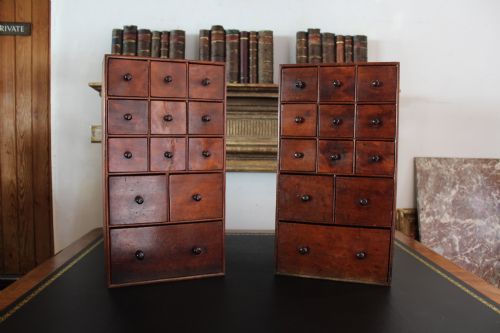
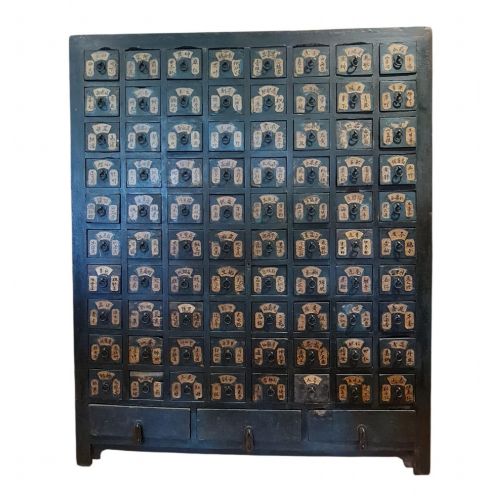
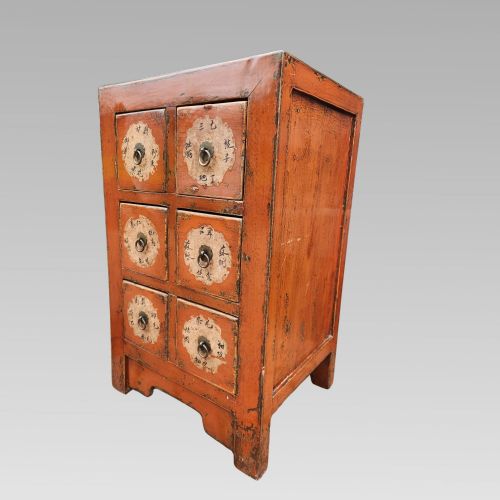
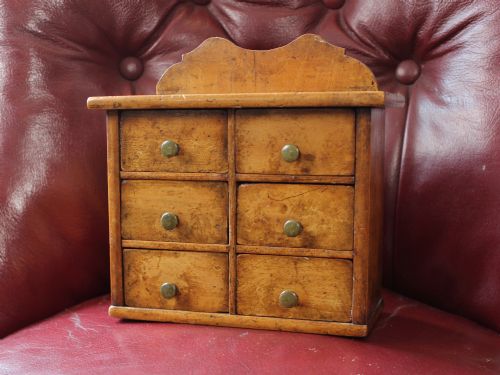
You are most likely to meet 19th-century examples on this page, alongside pieces from the early decades of the 20th century. Forms vary from English fruitwood spice drawers and oak wall-hanging boxes to substantial Chinese elm medicine cabinets originating from Shanxi Province.
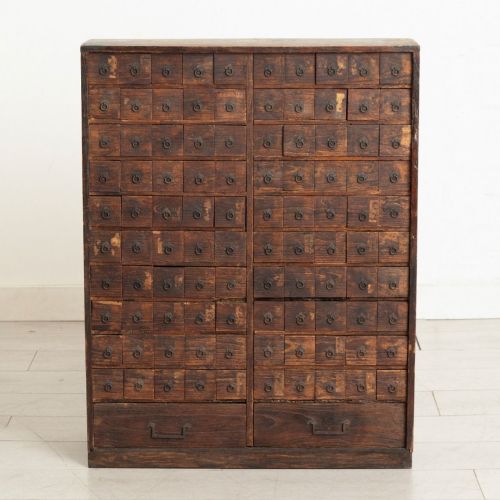
The styles span traditional English country workshops to Chinese Qing Dynasty and Japanese Meiji Period designs. Buyers seek them for their dense configuration of small drawers and the practical, utilitarian history they embody.
Materials and construction methods
Cabinet makers built these pieces using durable timbers such as mahogany, oak, pine, elm, and fruitwood. Solid wood construction ensured stability across the frame while allowing for the precise joinery required to house dozens of small drawer compartments.
Hardware played a functional role, utilising brass handles, iron fittings, and occasionally lacquer finishes to protect the wood. Wall-hanging spice boxes and larger chemist banks alike relied on traditional dovetail or mortise and tenon joints to withstand frequent opening and closing.
Geographic origins span English country workshops, Shanxi Province in China, and Meiji Period Japan.
Quality and craftsmanship variations
Quality in these pieces rests upon the integrity of the timber selection and the precision of the drawer construction. Finer examples display tight joinery across banks containing dozens of small compartments, whereas simpler pieces use straightforward pine or mixed woods with basic hardware.
The distinction also lies in the surface finish and regional detailing, such as decorated surfaces on 18th-century English cupboards or the substantial carved elm frames of Chinese medicine cabinets. Original brass or iron furniture adds distinct value compared to later replacements.
The Herb Cabinet Drawers Glossary
- Apothecary cabinet
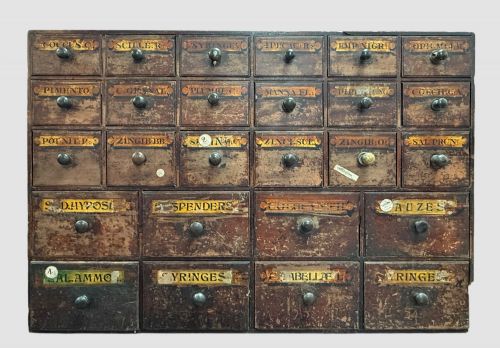
- A multi-drawer storage unit historically used by practitioners to store medicinal herbs, dried roots, and remedies. These pieces typically feature numerous small drawers, sometimes labelled to identify the contents.
- Spice cabinet
- A small storage form designed for domestic kitchens to hold culinary herbs and spices. They appear as tabletop boxes, wall-hanging units, or small sets of drawers.
- Bank of drawers
- A configuration featuring a large assembly of small drawers arranged in rows and columns. This dense arrangement maximises storage capacity for small items.
- Elm
- A tough, durable hardwood often utilised in Asian cabinet making. It provides strong structural integrity and a pronounced grain pattern.
- Fruitwood
- A dense timber gathered from fruit-bearing trees such as pear or apple. Makers favoured it for small domestic storage and fine decorative items due to its smooth texture.
Herb Cabinet Drawers: Frequently Asked Questions
What were herb cabinet drawers used for?
These cabinets stored dried herbs, medicinal roots, chemical powders, and kitchen spices in distinct small compartments. The multiple drawers kept individual ingredients organised and protected from moisture and light.
Over time, domestic kitchens and apothecary shops relied on these banks of drawers for daily preparation. Today, buyers utilise them for similarly small household items and collection displays.
How do I date an apothecary chest?
Dating relies on examining the timber species, construction joints, and overall style of the piece. 18th-century examples often display hand-carved decorative elements and traditional English joinery, while 19th-century pieces frequently utilise mahogany, fruitwood, or pine.
Asian medicine cabinets from the Qing Dynasty or Meiji Period exhibit distinct regional framing methods and native hardwoods like elm. Hardware styles also help establish the correct period.
Are spice boxes wall hanging?
Many traditional spice boxes feature construction suited for wall mounting to save valuable workspace in historical kitchens. These units typically combine oak and pine materials with a flat back and hanging points.
Other variations sit directly on countertops or tables as portable boxes. Checking the reverse of the cabinet reveals whether it was designed to be hung.
What is the difference between an apothecary chest and a spice cabinet?
Apothecary chests generally refer to larger professional storage units containing numerous small drawers, sometimes numbering up to eighty or more. They served medical practitioners and chemists in commercial or clinical settings.
Spice cabinets are typically smaller domestic pieces built for home kitchens. They offer fewer compartments and simpler decorative details suited for household use.