
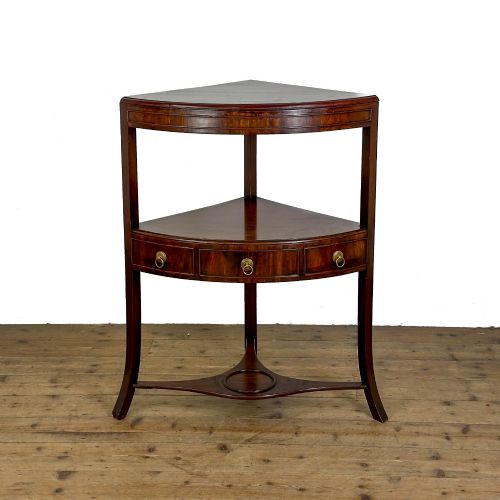
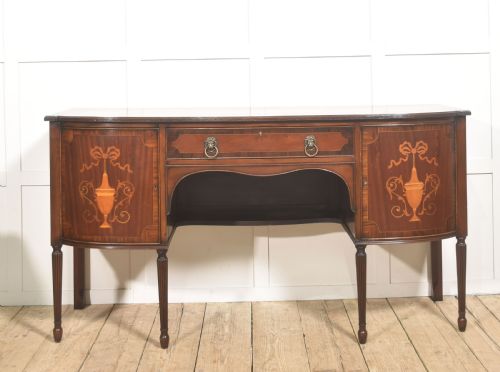


Hepplewhite Style Cabinet
These pieces sold as a hepplewhite style cabinet unite neoclassical grace with the rich warmth of figured mahogany.
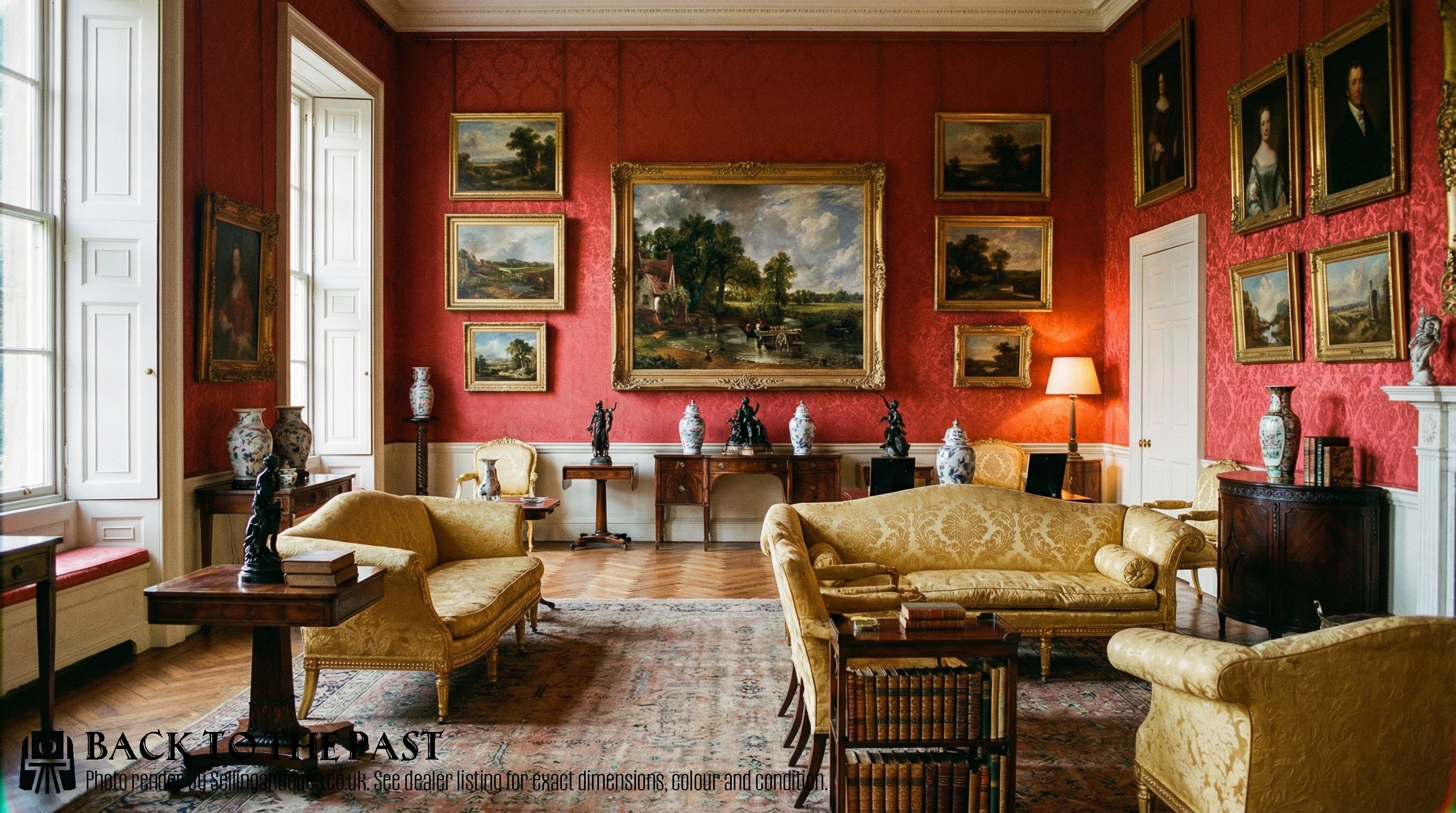
Hepplewhite Style Cabinet
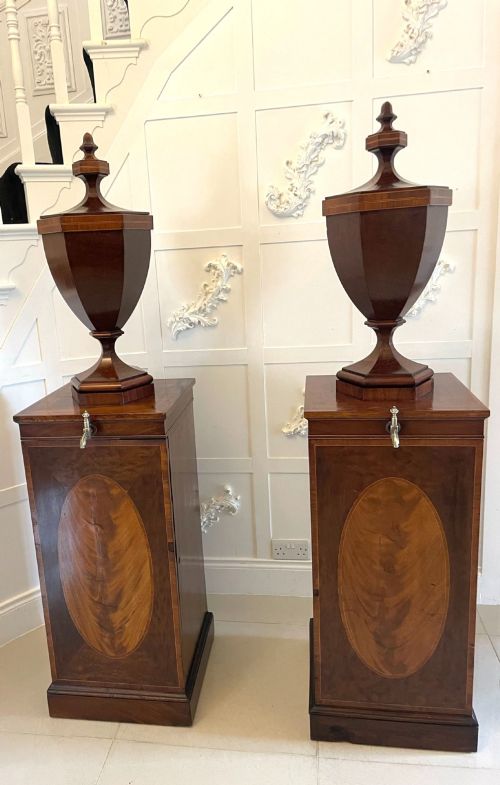
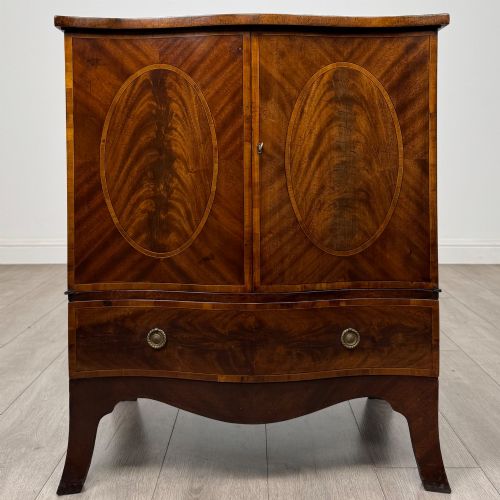
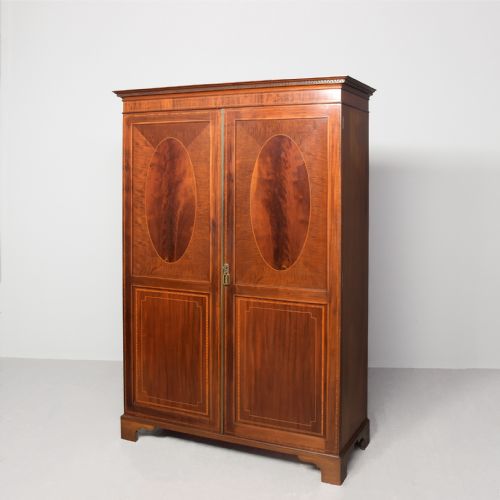
A hepplewhite style cabinet encompasses a variety of storage forms, from sideboards and side cabinets to bookcases and pedestals, linked by the slender elegance associated with eighteenth-century design. When you search for a hepplewhite style cabinet, you meet pieces built across several distinct eras, spanning the Georgian period, the nineteenth century, and revival phases such as the Edwardian period.
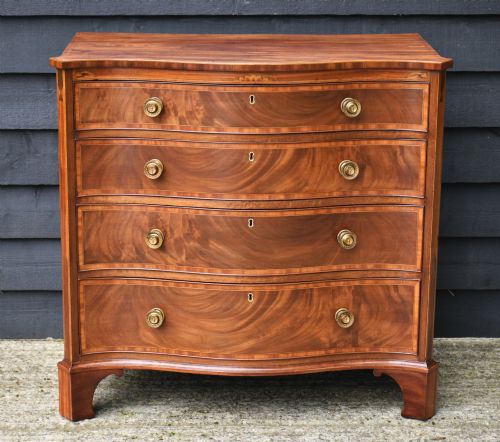
The selections on this page demonstrate the enduring appeal of these forms, particularly mahogany sideboards, bowfront chests, and glazed display cabinets. Pieces range from genuine late eighteenth-century examples to later revivals from nineteen hundred and nineteen ten that faithfully copy the earlier aesthetic.
Makers and cabinetmakers drew heavily on classical motifs, shaping fronts into gentle serpentine or bowfront curves. The forms serve both practical storage needs and decorative display within a room, maintaining slim proportions despite their utility.
Materials and construction methods
Construction relies fundamentally upon solid mahogany and carefully selected mahogany veneers, often enhanced by contrasting timbers. Cabinetmakers utilised satinwood, boxwood, and delicate wood inlay to create geometric lines, bellflower husks, and classical swags across drawer fronts and cupboard doors.
Hardware played a functional and decorative role, with original brass fittings providing contrast to the dark polished wood. Joinery techniques such as dovetailed drawer construction ensured longevity, while skilled turners shaped tapering legs typical of the style.
Materials recorded across the inventory include mahogany, satinwood, boxwood inlay, glass, and brass hardware.
Distinctions in craftsmanship and survival
Quality rests in the precision of the timber selection and the crispness of the inlay work. Finer examples display highly figured flame mahogany veneers matched symmetrically across doors and drawers, whereas simpler items utilise plain stock timber.
The survival of original surfaces and hardware dictates much of the standing of an individual piece. Subtle details, such as hand-cut dovetails and tight joints without modern structural intervention, separate standard production from superior cabinet work.
The Hepplewhite Style Cabinet Glossary
- Serpentine front
- A furniture front curving outward at the ends and inward at the centre. This shape requires advanced woodworking skill to construct cleanly.
- Bowfront
- A convex, outward-curving front profile common on sideboards and chests of drawers. It softens the rectangular appearance of case furniture.
- Satinwood
- A pale, lustrous exotic timber native to Ceylon and India. Cabinetmakers used it for contrasting inlay and banding against dark mahogany.
- Boxwood inlay
- Narrow strips or shaped pieces of pale boxwood set flush into the surface of dark woods. It created sharp, linear borders on panels and drawers.
- Neoclassical
- A style drawing inspiration from classical antiquity, dominant during the late eighteenth century. It introduced symmetry, urn motifs, and restrained ornamentation.
Hepplewhite Style Cabinet: Frequently Asked Questions
What defines a hepplewhite style cabinet?
These pieces are characterised by slender proportions, tapering legs, and delicate neoclassical inlays. They draw upon the design vocabulary popularised in the late eighteenth century.
They serve primarily as refined storage furniture, incorporating cupboards, drawers, and display shelves while maintaining an elegant visual presence.
How do I spot a revival piece?
Revival pieces, often dating from the Edwardian era or around nineteen hundred, employ similar mahogany timbers and inlay techniques. They reflect the historicist tastes of later makers looking back at Georgian forms.
Closer inspection of timber seasoning, backboards, and interior secondary woods usually reveals whether a piece originates from the eighteenth century or a later workshop.
Where were these cabinets used?
Historically, sideboards, pedestals, and side cabinets stood in dining rooms and parlours to store tableware, linens, and serving items. Bookcases and display cabinets found places in libraries and drawing rooms.
Today, they adapt readily to modern interiors, providing functional surface space and storage in living rooms, hallways, and dining spaces.
Are these pieces made of solid wood?
Most examples utilise a combination of solid timber for frames and legs, paired with mahogany veneers applied to secondary woods for wide surfaces like table tops and door panels. Veneering allowed cabinetmakers to display striking grain patterns without risking the warping inherent in large solid boards.
Secondary woods such as oak or pine frequently appear on drawer linings and interior framing, depending on the period of manufacture.