



Height Adjustable Seat
When you search for a height adjustable seat, you are looking for mechanical ingenuity designed to suit different players and desks.
Height Adjustable Seat
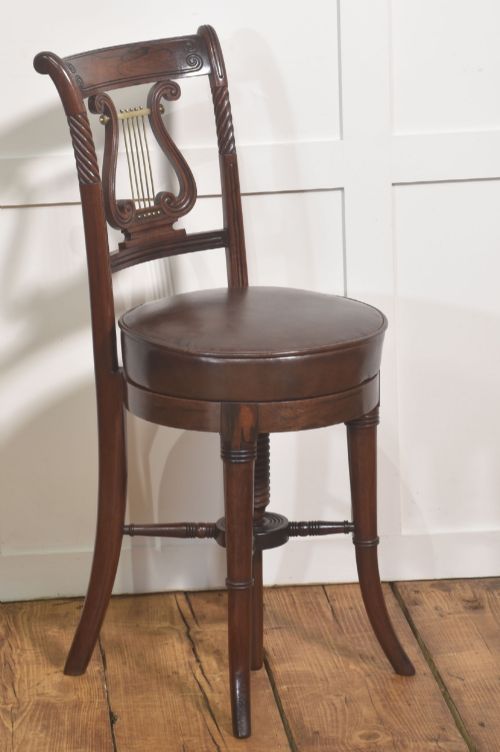
A height adjustable seat brings together domestic comfort and mechanical movement across the nineteenth and early twentieth centuries. Piano stools, music chairs and dressing table chairs form the majority of the pieces you will meet on this page, alongside industrial workshop stools and desk chairs.
Victorian and Edwardian examples dominate the selection, often taking the form of revolving piano stools or rise and fall music chairs. Earlier Regency, Georgian and William IV pieces appear frequently, alongside later industrial workshop pieces from the nineteen-thirties.
The primary purpose of these seats was practical adjustment for musicians and workers who needed specific heights for their tasks. Mahogany and walnut appear regularly as the main timbers, joined by oak, rosewood and cast iron in the industrial workshop variants.
How they were made
Cabinet makers utilised dense hardwoods such as mahogany, walnut and rosewood to construct the frames, turning and carving the legs and central columns. Brass fittings frequently appeared in the mechanisms and decorative inlay of Regency and Victorian examples.
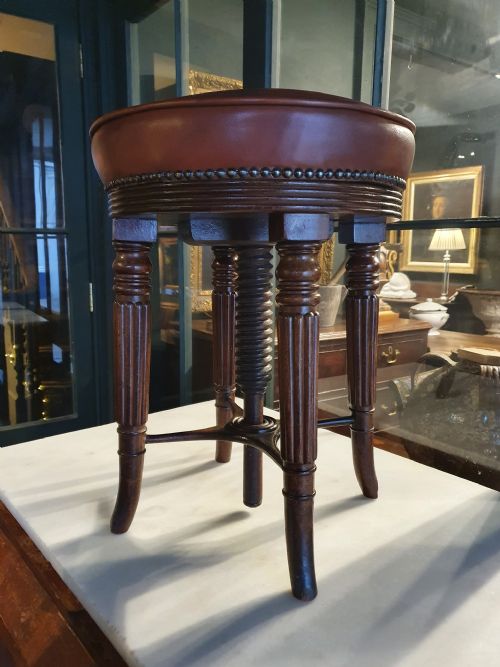
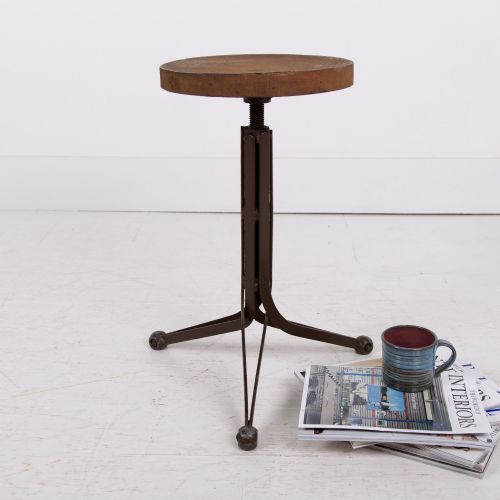
The mechanical adjustment relied on threaded wooden screws or metal screw columns that allowed the seat top to rotate and rise or fall. Industrial and workshop pieces incorporated heavy cast iron bases paired with solid wood or metal seats to withstand daily use.
A nineteenth-century pianist could practice for hours while quietly unscrewing themselves into the ceiling.
What varies in quality
The sophistication of the revolving or screw mechanism dictates much of the quality, with smooth and reliable movement separating fine workshop production from standard utility items. Maker attribution, such as pieces bearing the mark of Gillows or James Shoolbred, elevates the standing of certain examples.
Timber selection and secondary carving detail reveal the ambition of the original maker, particularly in the figured mahogany, rosewood and satinwood chosen for grander piano stools. Upholstery finish and the retention of original leather or fabric surfaces also influence the integrity of the piece.
Gillows·James Shoolbred
The Height Adjustable Seat Glossary
- Rise and fall
- A mechanism that allows the seat height to be adjusted by turning the top or using a lever. This system was essential for piano players and musicians.
- Revolving piano stool
- A seat with a rotating top that screws up or down on a central threaded spindle. These formed the standard seating for nineteenth-century keyboards.
- Patent music chair
- A specialised seat featuring adjustable components designed specifically for musicians. They often incorporate supportive backs and swivelling seats.
- Ebonised
- Wood finished with a dark stain or paint to imitate ebony. This treatment was popular during the Victorian period for fashionable furniture.
- Industrial workshop stool
- A robust seat constructed from iron and wood for factory or studio use. These pieces prioritise utilitarian strength over domestic polish.
Height Adjustable Seat: Frequently Asked Questions
How do I adjust the height on these seats?
Most of these pieces utilise a central screw mechanism operated by rotating the wooden seat top clockwise or anticlockwise. Some later examples employ metal levers or rise and fall ratchets to alter the position.
Ensure the mechanism is clean and free from obstruction before attempting adjustment to protect the threaded column from unnecessary wear.
Were all these seats made for pianos?
While piano stools and music chairs make up a large portion of the selection, the category also includes dressing table chairs, office desk chairs and industrial workshop stools. Each form was engineered for a specific professional or domestic task.
The presence of a swivelling top or a screw adjustment suited various settings where variable seating heights proved useful.
How do I date an adjustable seat?
Dating relies on timber choice, turning styles, upholstery materials and the sophistication of the internal mechanism. Regency and William IV pieces display distinct classical carving, whereas Victorian and Edwardian examples show greater variety in wood finishes and industrial iron components.
Examining the construction methods beneath the seat often reveals the manufacturing period more clearly than the surface appearance alone.
Can I use a piano stool at a modern desk?
Many antique piano stools and revolving chairs offer suitable proportions for use as compact desk or dressing table seats. Their adjustable height feature makes them practical for matching with modern table clearances.
Consider the weight capacity and the stability of the swivelling mechanism if you intend to use the seat for extended daily work.