

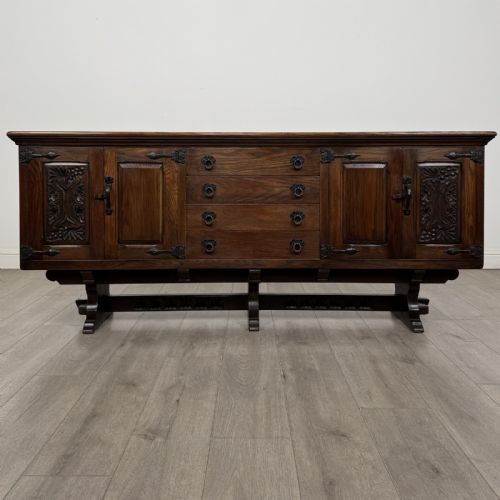
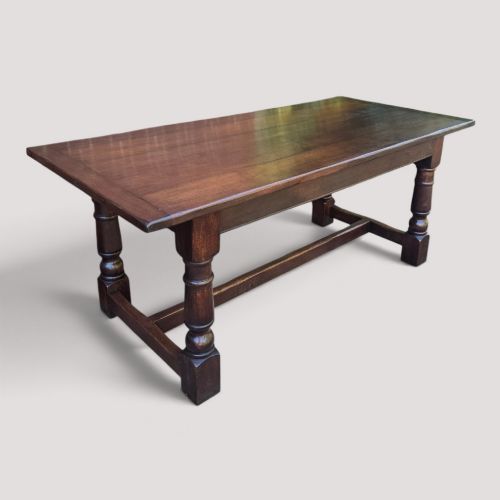
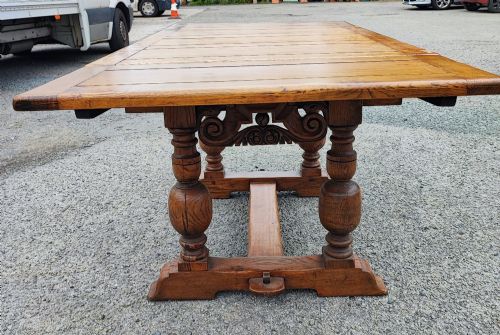
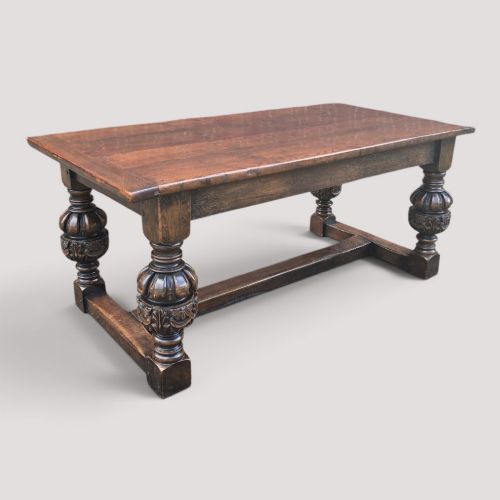

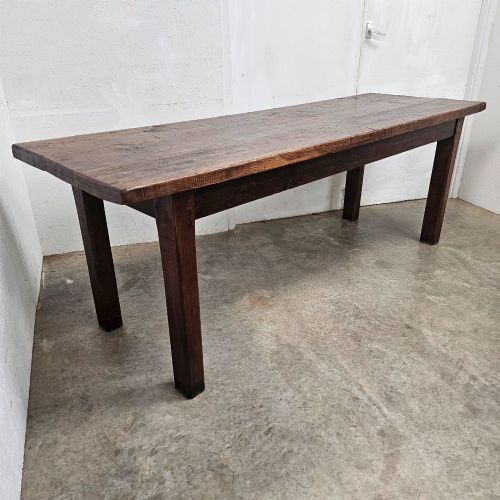
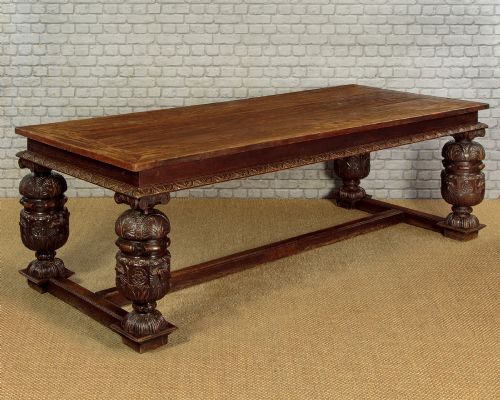
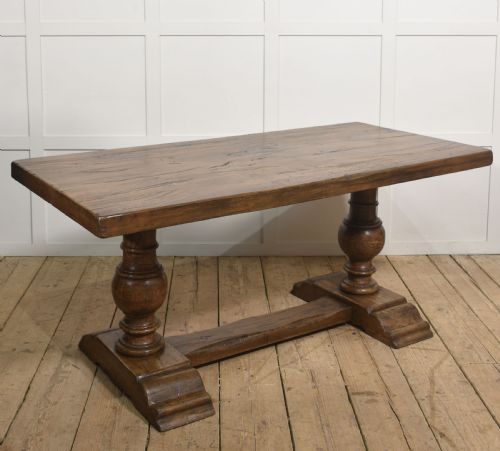
Heavy Wooden Table
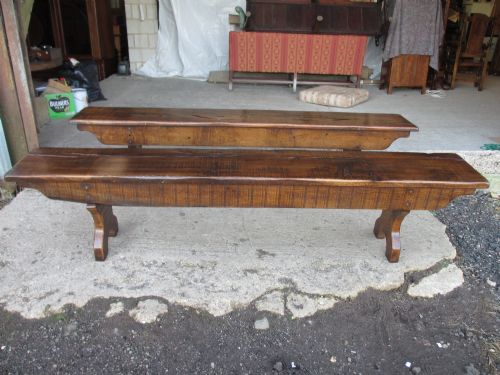
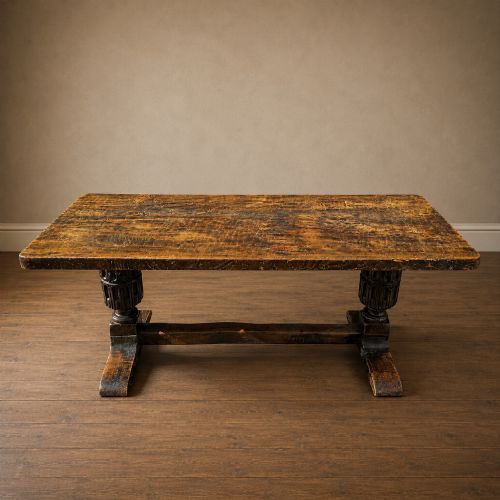
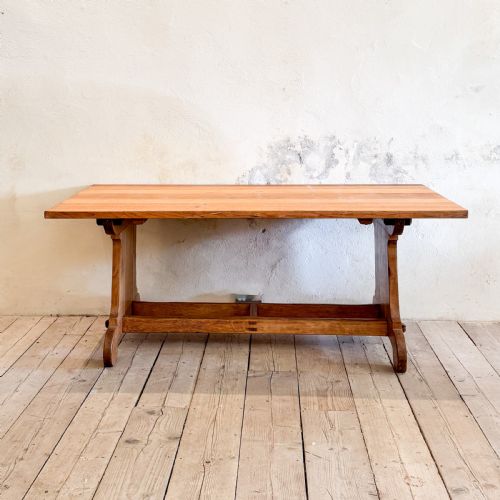
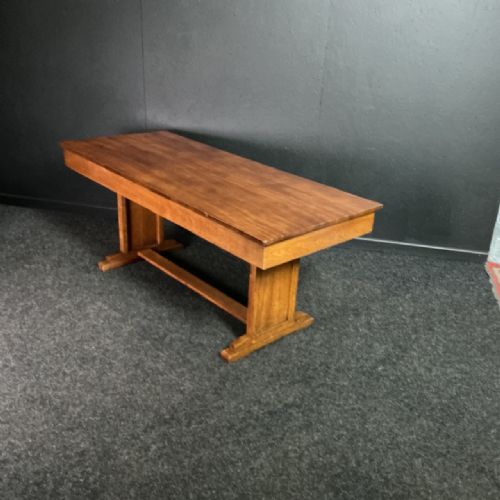
These heavy wooden table pieces offer robust utility and solid construction, uniting centuries of craftsmanship from various British and continental workshops.
Heavy Wooden Table
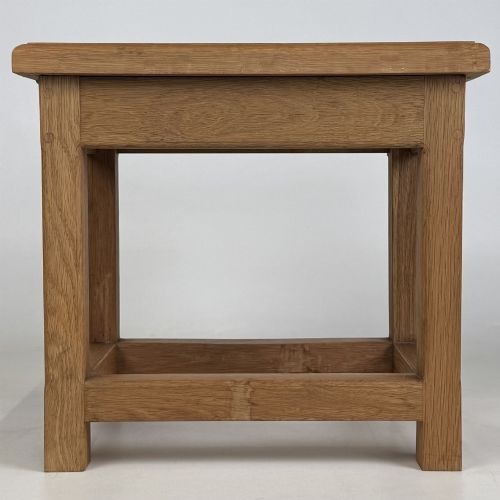
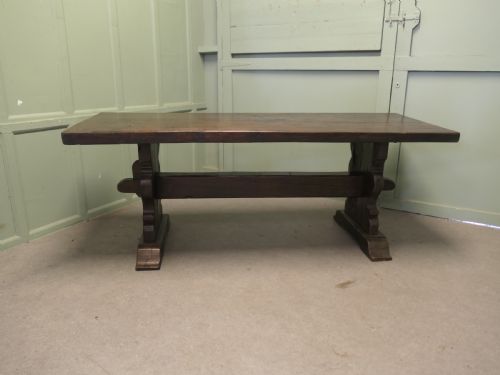
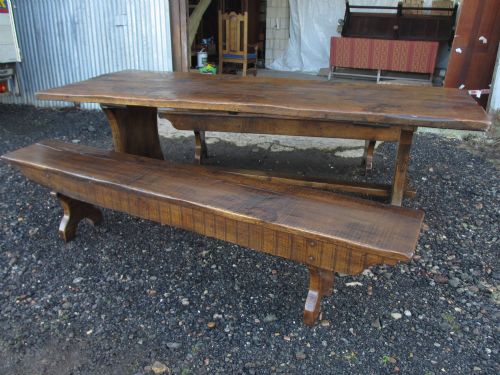
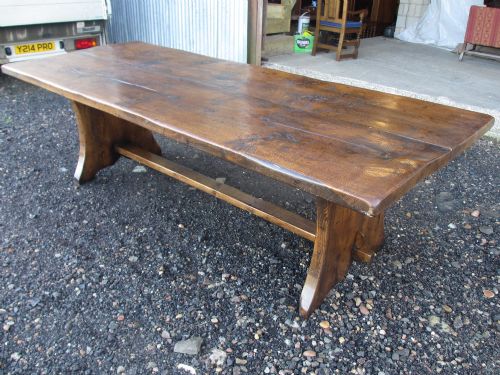
A heavy wooden table brings substantial form and enduring utility into domestic spaces, drawing from traditions of communal dining and rigorous manual work. When exploring heavy wooden table selections, buyers frequently encounter substantial refectory forms, sturdy workbenches, and broad farmhouse surfaces designed for heavy daily use.
The material lineage spans centuries, incorporating pieces from the seventeenth, eighteenth, and nineteenth centuries alongside Edwardian and later twentieth-century iterations. Origins stretch from English oak and elm refectories to French country work tables and substantial Indian trunks adapted for domestic roles.
Forms vary from trestle-based dining tables to industrial butchers blocks and public school library surfaces. These objects serve modern interiors by providing anchor points for kitchens, dining rooms, and studies where durability and presence matter most.
Materials and construction methods
Construction relies primarily on dense hardwoods such as oak, elm, walnut, and teak, selected for their structural integrity and weight. Planks are frequently joined with traditional pegged joints or held by iron and brass hardware.
Working methods encompass hand-planed single or multi-plank tops resting on trestle bases, turned legs, or heavy pedestal supports. Hardware such as iron hasps and vices appear on utilitarian forms like French workbenches and butchers blocks.
Some French elm boxes arrive equipped with iron carrying hoops, ready for a journey that ended centuries ago.
Evaluating construction and proportion
Quality rests upon the integrity of the primary timber, where thick single-plank tops or dense quarter-sawn oak distinguish superior examples from lighter builds. The relationship between the top and its support structure dictates overall stability and visual balance.
Finishes and surface patination tell the history of use, distinguishing pieces retaining original hardware and uncompromised structural frames from those altered over time. The precision of joinery, from pegged mortise and tenon joints to fitted drawers, marks the distinction between vernacular utility and refined workshop production.
The Heavy Wooden Table Glossary
- Refectory table
- A long, narrow dining table traditionally used in monasteries and large halls. These pieces feature long timber tops supported by trestles or sturdy legs.
- Draw leaf table
- A table equipped with sliding leaves beneath the main top that pull out to extend the surface area. This mechanism allows the table to accommodate larger gatherings without requiring permanent space.
- Joint stool
- A low wooden stool constructed with pegged joinery rather than turned legs alone. They often accompanied early dining arrangements before chairs became common.
- Trestle base
- A support structure consisting of horizontal beams connected to vertical feet or uprights. This design maximises legroom along the length of the table.
- Butchers block
- A thick, solid block of wood used as a heavy-duty cutting surface in food preparation. They often retain deep surface markings from years of utilitarian service.
- Hasps
- Fastening plates slotted over staples and secured with pins or padlocks. These metal fittings appear on trunks and storage boxes for security.
Heavy Wooden Table: Frequently Asked Questions
How do I maintain a heavy wooden table?
Keep the timber conditioned with natural waxes and oils to prevent drying and splitting over time. Avoid placing wooden surfaces near direct heat sources or in fluctuating humidity.
Clean spills promptly with a damp cloth rather than harsh chemical detergents. Regular gentle buffing preserves the accumulated patination of the wood.
Can I use an antique workbench as a dining table?
Many workbenches and industrial tables fit modern dining spaces due to their generous proportions and sturdy construction. Their built-in vices and tool wells offer distinctive character for contemporary interiors.
Ensure the height and leg clearance match standard seating arrangements before pairing them with chairs. Protective glass or custom runners can safeguard uneven wooden surfaces during meals.
How do I distinguish 17th century oak from later revivals?
Seventeenth-century timber exhibits distinct hand- pit-sawn marks, irregular grain patterns, and pegged joinery executed entirely by hand. Surface wear reflects centuries of continuous use rather than simulated ageing.
Revival pieces from later periods often display machine-cut precision, standardised fixings, and cleaner internal construction. Comparing the density of the wood and the construction methods clarifies the true age.