

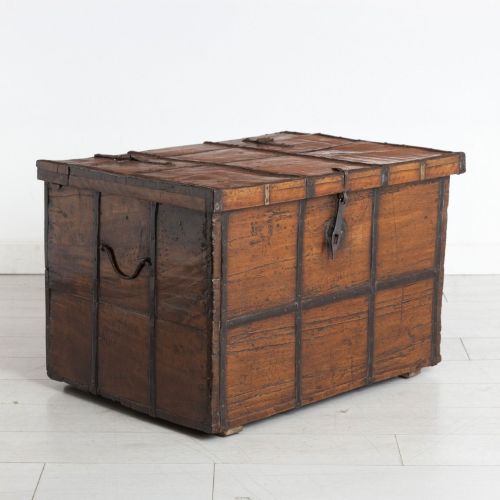
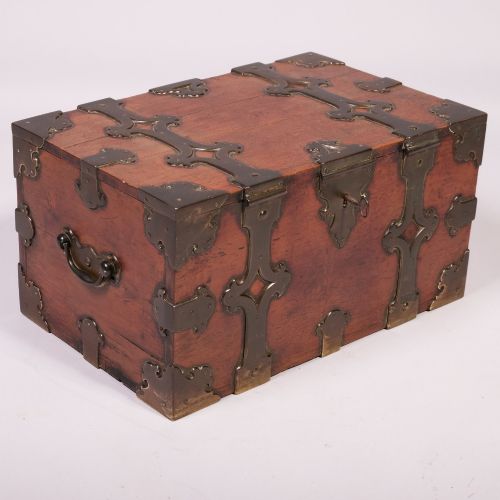
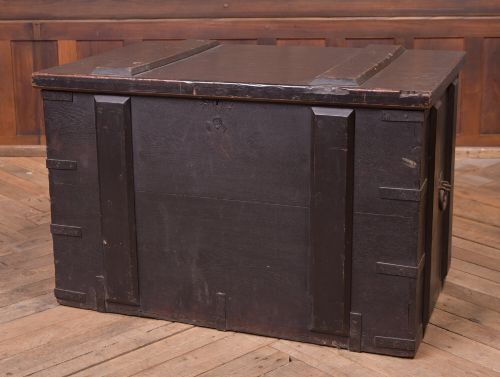
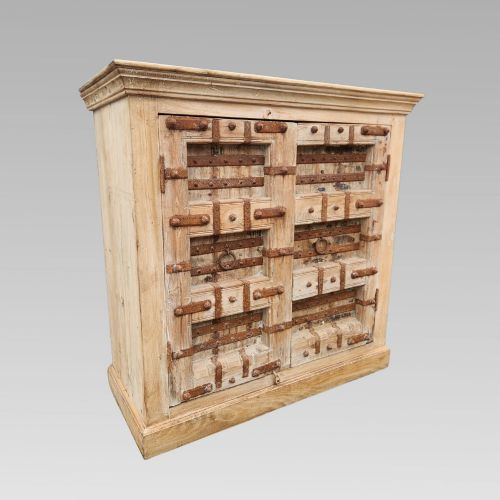


Heavy Wood Storage Chest
A heavy wood storage chest brings enduring utility and robust character to a room, offering substantial storage built to withstand the rigours of travel and time.
Heavy Wood Storage Chest
When you search for a heavy wood storage chest, you are looking at utilitarian boxes and trunks designed for secure transport and storage. These pieces combine substantial timber construction with metal reinforcement, serving practical domestic and travel needs across generations.
Forms range from military campaign chests and Zanzibar trunks to country house log bins and panelled coffers. Each object reflects the functional demands of its era, utilising dense timbers and robust hardware to protect contents during transit or daily use.
How they were made
Construction relies on dense, durable timbers such as teak, camphor wood, oak, mahogany, and pine, selected for their strength and resistance to environmental conditions. These woods form thick panels joined to withstand heavy loads and constant movement.
Metal reinforcement is integral to the manufacture of these pieces, employing iron bands, brass mounts, and studs to secure corners and edges. Blacksmiths and cabinetmakers fitted these fixtures with heavy-duty hinges, straps, and carrying handles.
Surfaces often display plain timber finishes or simple polishing that highlights the natural grain of the wood. The integration of metalwork with solid joinery ensures structural integrity across the lifespan of each trunk or coffer.
Heavy Wood Storage Chest Retail Price Guide 2026
Typical asking prices for heavy wood storage chest among the pieces listed under this phrase on Sellingantiques today, from the lower quarter to the upper quarter. They describe what is for sale here now, not the wider market.
Camphor wood chests retain their distinct aroma after centuries, serving as natural mothballs for your woollens.
What varies in quality
Quality in these pieces rests upon the integrity of the timber and the robustness of the metal hardware. Denser woods like teak and camphor command attention for their durability, while well-fitted brass or iron mounts indicate careful original manufacture.
The sophistication of the joinery and the retention of original fixings distinguish finer examples from simpler utilitarian boxes. Pieces retaining their original hinges, straps, and locks demonstrate a higher standard of craftsmanship and historical preservation.
The Heavy Wood Storage Chest Glossary
- Campaign chest
- A portable chest made in sections with recessed brass handles, designed for military officers on the move during the nineteenth century.
- Cofer
- A large solid chest, often panelled, used historically for storing valuables, linens, or documents before the widespread use of wardrobes.
- Zanzibar chest
- A heavily ornamented chest featuring brass studding, strapwork, and specialised hardware, often associated with trade routes in the Indian Ocean.
- Log bin
- A sturdy container, frequently banded in iron, constructed to hold firewood near a domestic fireplace in country houses.
- Camphor wood
- An aromatic timber prized for its insect-repellent properties, commonly used for nineteenth-century storage trunks and caskets.
Heavy Wood Storage Chest: Frequently Asked Questions
What is a heavy wood storage chest?
A heavy wood storage chest is a robust box or trunk constructed from dense timber and reinforced with metal, designed for secure storage and transport.
These pieces range from military campaign trunks to domestic coffers and log bins, built to endure demanding environments.
How were these chests used originally?
Originally, these chests served to transport personal belongings, military equipment, and valuable goods across land and sea. Their sturdy construction protected contents from moisture, pests, and rough handling during travel.
In domestic settings, they functioned as blanket boxes, strong boxes, or secure repositories for household linens and documents.
Where do colonial chests come from?
Colonial chests originate from regions influenced by European trade and occupation, particularly India and other overseas territories during the eighteenth and nineteenth centuries.
Local workshops utilised native timbers like teak and camphor wood, combining traditional joinery with British military or domestic design requirements.
How do I care for antique wood chests?
Caring for an antique wood chest involves maintaining stable humidity levels to prevent the timber from splitting or warping over time. Periodic light cleaning with appropriate wax helps preserve the finish of the wood and the lustre of the metal mounts.
Avoid placing these pieces in direct sunlight or near heat sources to protect the structural integrity of the timber and hardware.