



Heavy Wood Buffet
These heavy wood buffet pieces bring substantial presence and enduring storage to a room through solid timber construction.
Heavy Wood Buffet
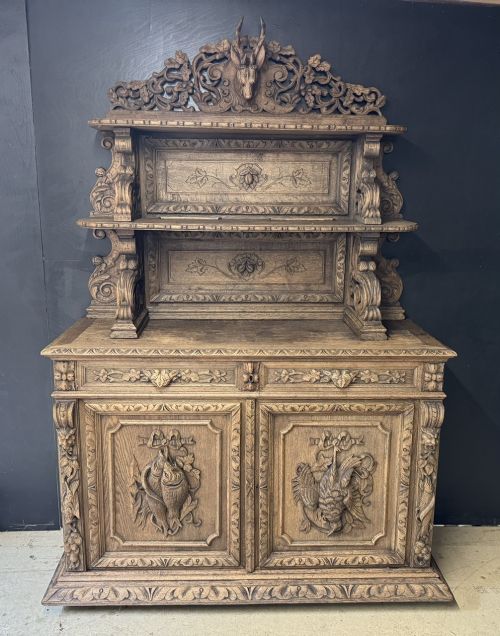
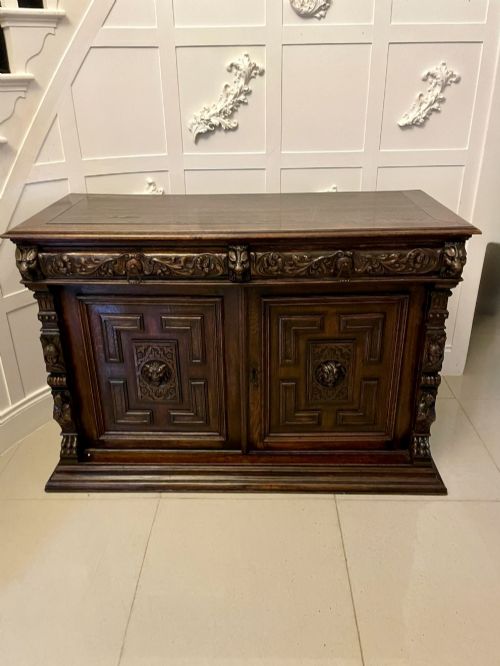
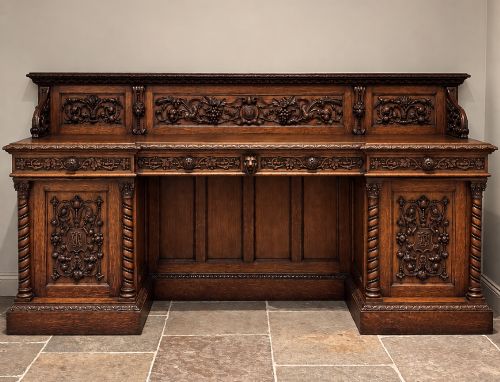
When you search for heavy wood buffet, you are looking at substantial storage furniture built primarily from oak during the nineteenth century and the early twentieth century. These pieces encompass sideboards, large cabinets, and Welsh dressers designed for domestic utility and display.
The versions you are most likely to meet on this page hail from the Victorian era and the broader nineteenth century, often reflecting revivalist movements such as Jacobean, French Renaissance, and Gothic styles. They frequently feature grand proportions, carved details, and stretcher bases.
Makers of these items utilised robust forms to anchor dining rooms and halls, combining large surfaces with cupboards and drawers. The resulting furniture offers a tangible connection to nineteenth-century craftsmanship and period interior design.
How they were made
Construction relies heavily on solid oak, shaped through traditional joinery and detailed carving to create robust sideboards and cabinets. Artisans incorporated functional elements such as stretcher bases to support the considerable weight of the timber.
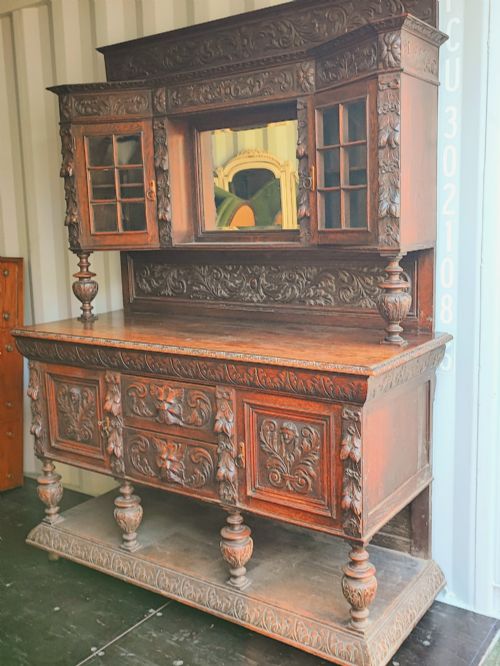
Designers added textural contrast and utility by integrating brass hardware, glass panels, and mirror glass into the carved wooden frames. Bevelled glass and mirrored surfaces reflect light, balancing the dense and imposing nature of the heavy wood structures.
Heavy Wood Buffet Retail Price Guide 2026
Typical asking prices for heavy wood buffet among the pieces listed under this phrase on Sellingantiques today, from the lower quarter to the upper quarter. They describe what is for sale here now, not the wider market.
Keep an eye out for hidden wooden faces peering from the foliage on Green Man sideboards.
What varies in quality
The distinction between standard examples and the finest pieces rests upon the depth, crispness, and ambition of the carved ornament. Elaborate motifs such as Green Man carvings or French Renaissance revival details demand a higher level of sculptural skill than simpler linear mouldings.
Proportion and scale also dictate the standing of a piece, with grander dimensions and integrated architectural elements commanding greater visual authority. The selection of timber grain and the integration of functional additions like bevelled mirror glass further separate ordinary furniture from exceptional work.
The Heavy Wood Buffet Glossary
- Stretcher base
- A system of horizontal wooden bars connecting the lower legs of a sideboard for added structural stability. This framework prevents the heavy legs from bowing under weight.
- Green Man
- A sculptural motif depicting a human face surrounded by or entwined with foliage and vines. It appears frequently in nineteenth-century revivalist wood carving.
- Bevelled glass
- Glass panes with edges cut and polished at an angle to catch the light. This technique adds a decorative border to mirrors and cabinet doors.
- Revival
- An artistic movement that adopts the architectural and decorative styles of earlier historical eras. Examples include Jacobean, Gothic, and Renaissance revivals.
Heavy Wood Buffet: Frequently Asked Questions
What rooms suit a heavy wood buffet?
These large storage pieces traditionally anchor dining rooms or spacious hallways where their substantial proportions provide both utility and a strong visual anchor.
Their robust timber construction and generous surface areas also allow them to function effectively as serving stations or display cabinets in period interiors.
How do I identify a Victorian sideboard?
Victorian sideboards typically display dense oak construction combined with revivalist decorative motifs such as Jacobean or Renaissance carving. They often feature grand proportions and substantial storage compartments.
Dates and stylistic markers within this era frequently include stretcher bases, mirrored backs, and elaborate carved details reflecting nineteenth-century tastes.
What is a French hunting sideboard?
A French hunting sideboard is a nineteenth-century storage piece distinguished by elaborate carved motifs traditionally associated with rural sports and harvests. These designs often incorporate fruit, game, and foliage into the woodwork.
Such cabinets combine deep storage capacity with highly decorative panel work typical of continental revival styles.
How should I care for antique oak?
Antique oak benefits from consistent indoor humidity levels and protection from direct sunlight to prevent the timber from drying out or splitting. Regular dusting with a soft, dry cloth preserves the finish.
Avoid silicone-based polishes, opting instead for traditional wax applications when the wood appears dry to maintain its natural lustre.