



Heavy Iron Grate
These heavy iron grate pieces bring robust hearth utility and period character to a room, offering sturdy hearth structures built to handle frequent fires.
Heavy Iron Grate
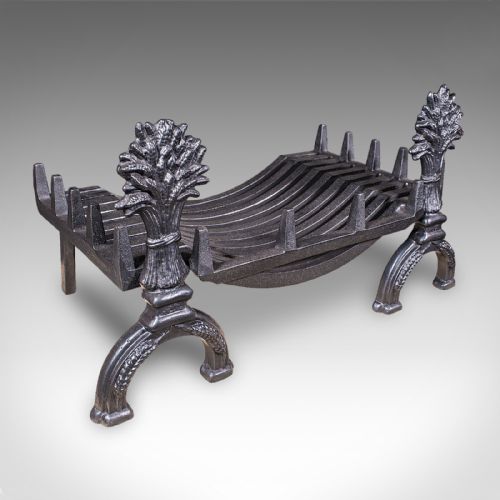
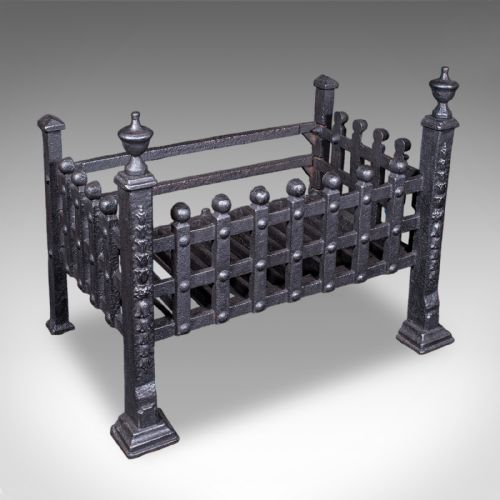
When you search for a heavy iron grate, you are looking at utilitarian hearth furniture designed to hold burning fuel safely above the hearth floor. The pieces gathered here include fire baskets, log baskets, and complete inglenook fireplace sets paired with andirons and firebacks.
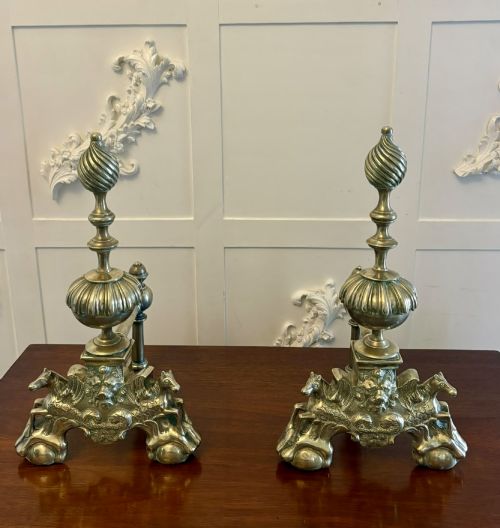
Most examples originate from the Victorian period or the nineteenth century, utilising styles ranging from Gothic Revival and Tudor Revival to Arts and Crafts. These robust assemblies often sit on heavy iron andirons, designed to support wood or coal fires within substantial domestic hearths.
Materials and construction
The primary materials recorded in these pieces are cast iron and wrought iron, frequently combined with brass accents and firebrick linings to withstand intense heat. Cast iron forms the solid backs and basket structures, providing heavy thermal mass, while wrought iron supplies strong structural support for baskets and associated andirons.
Manufacturing methods rely on traditional foundry casting and smithing techniques, resulting in thick sections of iron built for longevity. Individual elements like fire backs and grates are joined or paired with heavy metal dogs to create stable hearth assemblies.
Heavy Iron Grate Retail Price Guide 2026
Typical asking prices for heavy iron grate among the pieces listed under this phrase on Sellingantiques today, from the lower quarter to the upper quarter. They describe what is for sale here now, not the wider market.
Listings span periods from 1800 to 1920, predominantly featuring cast iron, wrought iron, and brass.
Judging quality in hearth ironwork
Quality in these pieces depends on the thickness and weight of the metal casting, alongside the complexity of decorative detailing such as Gothic or Arts and Crafts motifs. Superior examples display clean casting lines, substantial iron heft, and well-matched sets that include complementary andirons or fire backs.
Lighter or simpler items may lack the sculptural presence of large inglenook sets, while finer specimens show careful hand-finishing on wrought iron components and robust construction designed to endure heavy use.
The Heavy Iron Grate Glossary
- Fire grate
- A metal basket or frame designed to hold fuel in an open fireplace. It allows air to circulate beneath the fire for efficient burning.
- Andirons
- Horizontal metal bars supported on legs, used to raise logs off the hearth floor. They often accompany fire baskets to complete the hearth set.
- Fire back
- A heavy iron plate placed at the back of a fireplace opening. It protects the masonry wall and reflects heat back into the room.
- Inglenook
- A large recessed corner space around a fireplace, typical of traditional country houses. Fire grates built for these spaces are usually exceptionally large and heavy.
- Gothic Revival
- An architectural and decorative style drawing inspiration from medieval design. Pieces in this style often feature pointed arches and ecclesiastical motifs.
Heavy Iron Grate: Frequently Asked Questions
How do I choose the right size grate?
Measure the width and depth of your fireplace opening carefully before selecting a basket. Ensure there is adequate clearance around the iron frame for safe operation.
Consider the scale of your hearth, as larger inglenook grates require substantial room proportions compared to smaller nineteenth-century variants.
Can these grates burn real wood?
Many of these pieces are constructed from heavy cast and wrought iron intended for solid fuel fires. Check whether the individual basket includes a firebrick lining or solid iron base suited to your fuel type.
Traditional country house baskets and log baskets accommodate standard logs, while smaller variants suit compact hearth settings.
How do I clean heavy iron?
Remove ash and debris regularly using a soft brush to prevent moisture retention against the metal. Avoid harsh chemical cleaners that can strip the historic surface.
Apply a light coat of grate polish or specialised stove blacking periodically to maintain the dark finish and protect against rust.
What period do most pieces date from?
The majority of these hearth pieces date from the Victorian era and the nineteenth century. Common stylistic indicators include Gothic Revival, Tudor Revival, and Arts and Crafts details.
Construction dates span from around eighteen hundred through to nineteen hundred and twenty, reflecting industrial foundry methods of those decades.