


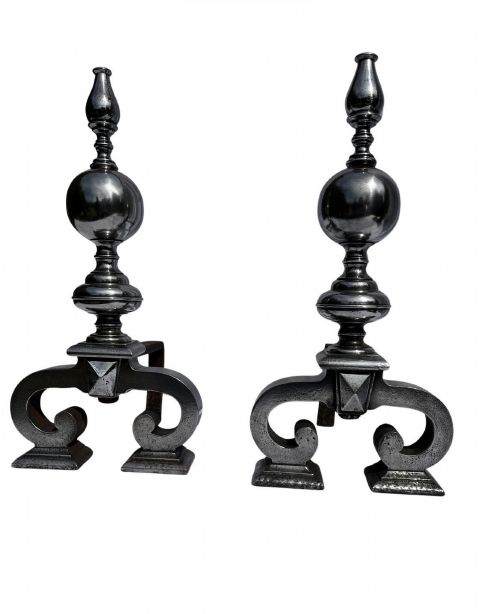


Heavy Cast Andirons
Heavy cast andirons anchor an open hearth with substantial metalwork, offering both structural support for burning logs and ornamental presence in a period fireplace.
Heavy Cast Andirons
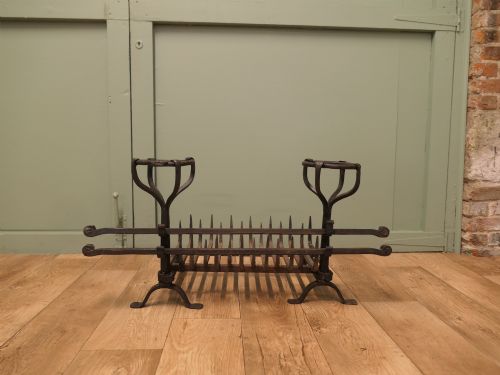
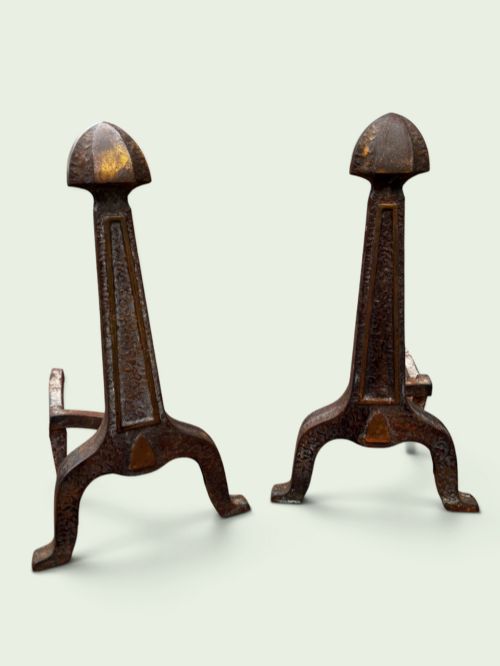
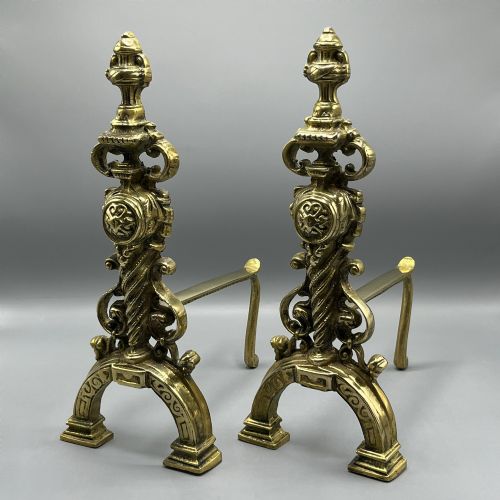
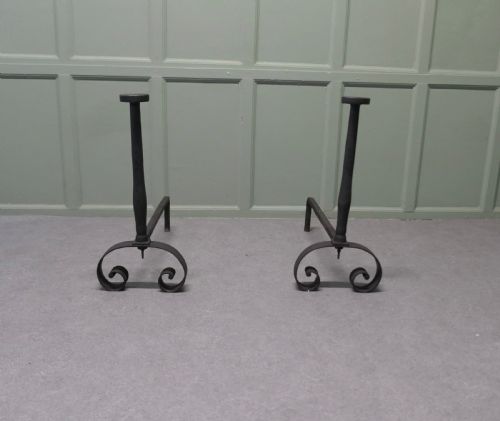
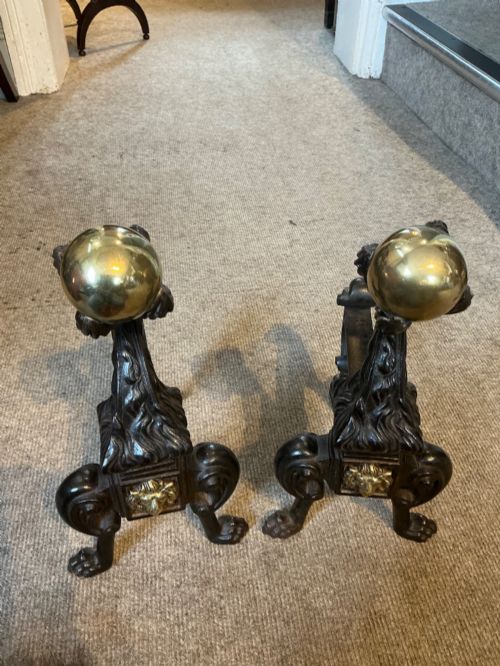
Heavy cast andirons serve as essential hearth supports, holding logs above the hearth floor to ensure proper airflow beneath a fire. When exploring heavy cast andirons on this page, buyers encounter robust examples primarily originating from the nineteenth century alongside Victorian interpretations.
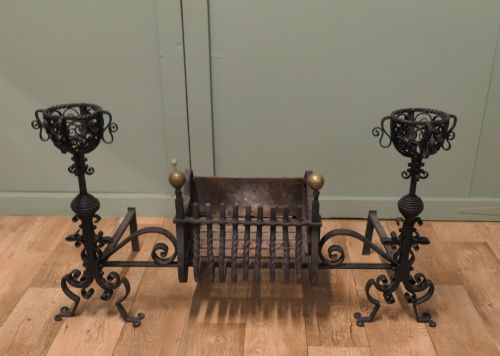
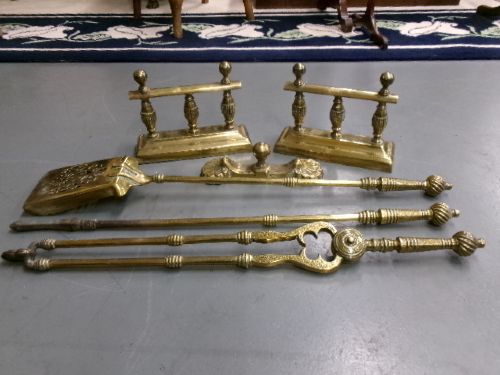
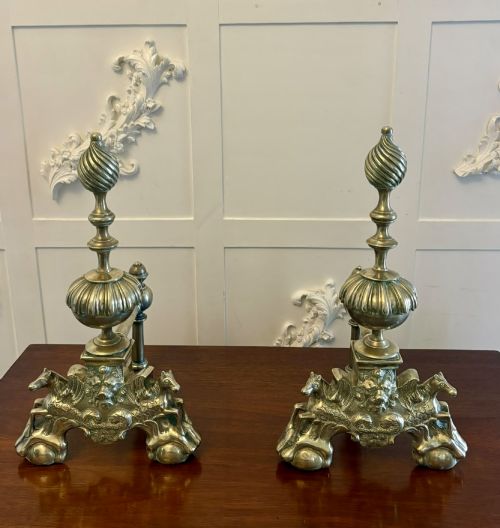
The selections span various regional designs, including French country models, Dutch Baroque style pieces, and English Victorian fireplace sets complete with fire baskets. These objects frequently appear alongside grates, fire backs, and companion tools designed for nineteenth-century hearths.
Most entries reflect Victorian tastes, incorporating Gothic Revival or neo-classical motifs that elevate utilitarian fireplace accessories into decorative centrepieces. The inventory demonstrates how these heavy supports integrated into grand inglenook settings and domestic hearths alike.
Materials and construction methods
Foundries utilised cast iron, wrought iron, and solid brass to build these durable hearth accessories, often combining steel and bronze for specific decorative elements. Iron provided the necessary heft and thermal resilience required for supporting heavy timber within an active fireplace.
Brass and bronze components were frequently cast separately and then mounted to the primary iron shafts, allowing for ornate detailing such as cast finials and scrolling legs. Polished finishes on iron and brass surfaces highlighted the precision of the nineteenth-century foundry work.
Heavy Cast Andirons Retail Price Guide 2026
Typical asking prices for heavy cast andirons among the pieces listed under this phrase on Sellingantiques today, from the lower quarter to the upper quarter. They describe what is for sale here now, not the wider market.
The listings feature heavy cast andirons spanning the nineteenth century, utilising cast iron, wrought iron, solid brass, bronze, and steel.
Assessing quality in hearth metalwork
Quality rests upon the crispness of the casting and the thickness of the metal used in the primary shaft and decorative terminal. Superior examples display sharply defined ornamentation without the surface pitting or distortion common in lesser foundry output.
The integrity of the assembly also determines worth, as premier pieces rely on secure heavy fastenings rather than superficial joins to withstand intense hearth temperatures. Heavier gauge metals and balanced proportions indicate a higher standard of period craftsmanship.
The Heavy Cast Andirons Glossary
- Andiron
- A metal support placed in a hearth to hold burning logs aloft. These objects are also known as fire dogs.
- Fire Basket
- A metal grate designed to hold coal or wood within a fireplace opening. They often sit directly between a pair of andirons.
- Fire Back
- A heavy iron plate placed at the back of a fireplace to protect the masonry and reflect heat into the room.
- Inglenook
- A recessed corner by a large fireplace designed to provide warmth in traditional domestic interiors.
Heavy Cast Andirons: Frequently Asked Questions
How do andirons work?
Andirons hold logs above the base of the fireplace. This elevation allows air to circulate underneath the wood for a cleaner burn.
The vertical front standards also prevent rolling logs from spilling out onto the hearth floor during use.
Can I use these with modern fires?
These robust metal supports were built for traditional wood or coal burning. Many examples remain entirely functional for open hearths today.
Buyers should ensure the dimensions and weight match their specific fireplace opening before installation.
What is a fire dog?
A fire dog is simply another term for an andiron. The name historically derives from the animal shapes often carved into the front terminals.
Both terms describe the same heavy metal supports found on this page.
How do I date a pair?
Dating relies on stylistic clues such as Victorian Gothic revival motifs, material choices like solid brass or cast iron, and manufacturing textures.
Nineteenth-century pieces often display distinct foundry marks and heavier metal gauges than later reproductions.