




Heavy Carved Wood Cabinet
A heavy carved wood cabinet brings immense architectural weight and tactile depth to a room through dense, sculptural ornamentation.
Heavy Carved Wood Cabinet
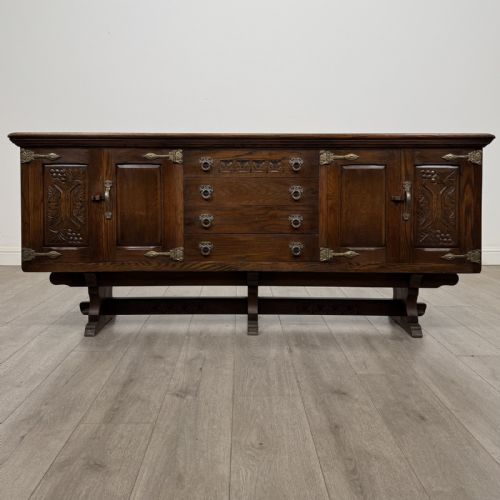
A heavy carved wood cabinet embodies substantial utility combined with dense, three-dimensional surface ornamentation across several historic forms. When searching for a heavy carved wood cabinet, a buyer encounters large functional furniture designed for prominent display and storage in formal reception rooms or libraries.
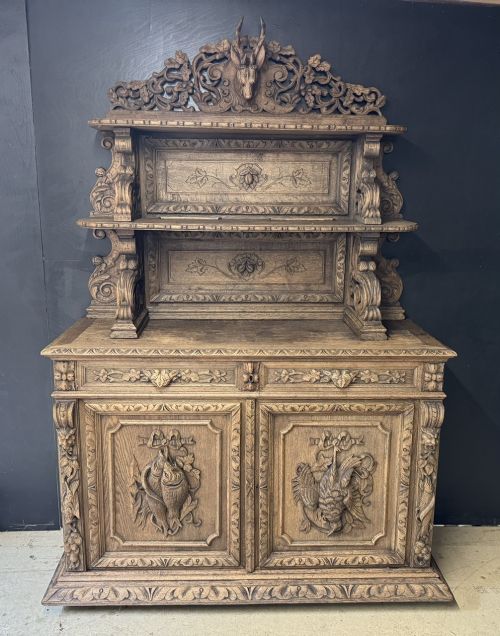
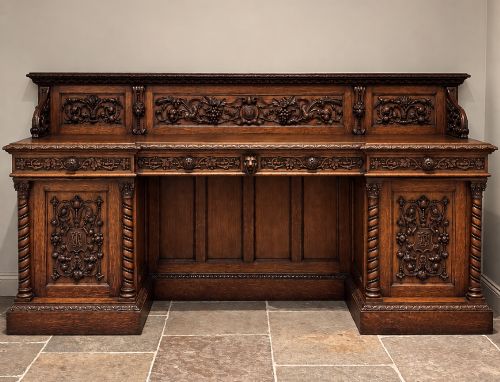
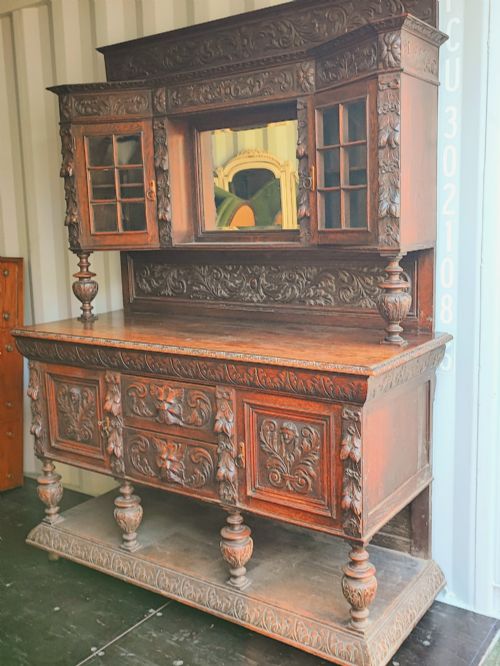
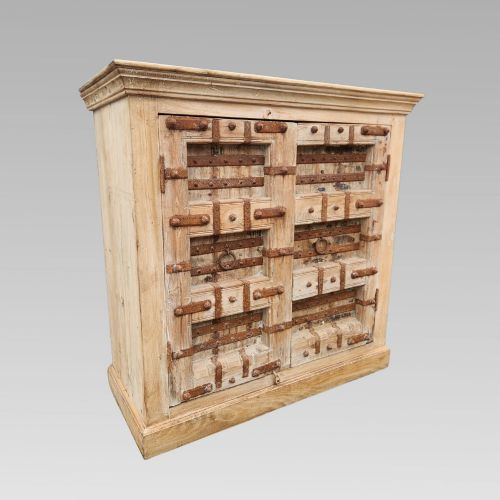
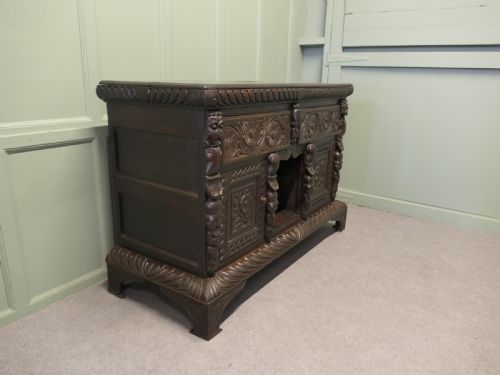
The selection on this page consists predominantly of nineteenth-century oak sideboards, bookcases, and buffet bases created during the Victorian era and associated revival movements. These pieces range from grand breakfront bookcases bearing specific provenance to French hunting sideboards and Indian reclaimed teak storage cupboards.
Makers drew on a rich vocabulary of historicist revivals, incorporating Jacobean, Renaissance, and Gothic details into domestic storage. Surviving examples demonstrate how robust timber construction met the nineteenth-century taste for elaborate, figurative, and architectural joinery.
How they were made
Construction relies heavily on sturdy oak and reclaimed teak, providing the necessary structural integrity to support deep, high-relief carving and large proportions. Workshops joined massive timbers using traditional framing techniques, ensuring the casework could bear the weight of heavy cornices, breakfront shelves, and projecting stretcher bases.
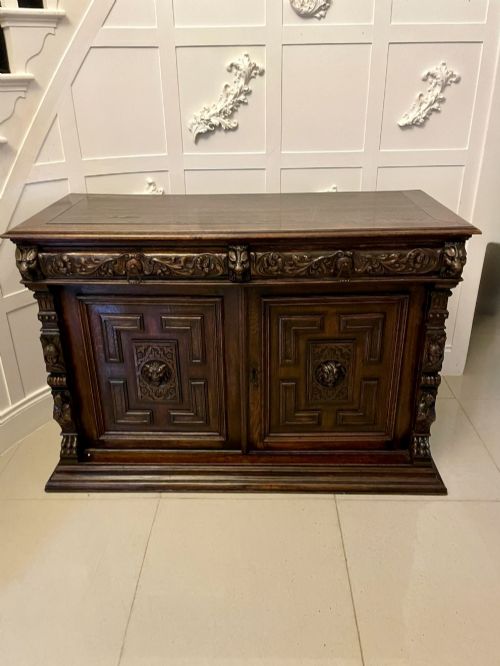
Surface decoration was executed by hand, utilising chisels and gouges to create intricate foliage, strapwork, and figurative motifs such as Green Man masks. Glazing incorporated bevelled glass within sturdy wooden frames, while iron, brass, and mirror elements added functional contrast to the dark timber surfaces.
Heavy Carved Wood Cabinet Retail Price Guide 2026
Typical asking prices for heavy carved wood cabinet among the pieces listed under this phrase on Sellingantiques today, from the lower quarter to the upper quarter. They describe what is for sale here now, not the wider market.
Hidden amongst the foliage, watchful Green Man masks peer out from nineteenth-century oak panels to guard your collection.
What varies in quality
Quality in these pieces is dictated by the depth, sharpness, and anatomical accuracy of the hand carving across panels, friezes, and supports. Superior examples exhibit crisply undercut foliage and expressive figures rather than shallow, mechanically assisted stamping.
Proportion and architectural coherence also separate standard production from exceptional works, seen in balanced breakfront designs and well-integrated stretcher bases. The choice and figure of the primary timber, particularly mature oak with pronounced medullary rays, further elevates the stature of a piece.
The Heavy Carved Wood Cabinet Glossary
- Breakfront
- A piece of furniture with a central section that projects forward from the flanking sections. This configuration adds architectural depth and visual variety to large bookcases and sideboards.
- Stretcher base
- A system of horizontal wooden bars connecting the lower legs of a cabinet or table for added stability. These supports often feature decorative turnings or central mouldings.
- Green Man
- A sculptural architectural ornament depicting a human face surrounded by or sprouting from foliage. It appears frequently in medieval and revivalist wood carving to symbolise rebirth.
- Buffet
- A low side table or cabinet used for serving food and displaying plate. In nineteenth-century contexts, it often incorporates substantial drawers and cupboards beneath a flat top.
Heavy Carved Wood Cabinet: Frequently Asked Questions
Where should I place a heavy carved wood cabinet?
These substantial pieces demand a room with adequate proportions and strong load-bearing floors to support their considerable weight and visual mass. They function effectively as focal points in large dining rooms, libraries, or wide hallways.
Ensure there is sufficient clearance for doors and drawers to open fully, as elaborate projecting carvings can extend past the main carcass dimensions.
How do I care for carved oak furniture?
Maintain the timber by dusting regularly with a soft, dry brush to prevent dirt from settling within the deep recesses of the carving. Avoid placing the cabinet near direct heat sources or strong sunlight, which can dry out the historic wood.
Apply a microcrystalline wax sparingly once or twice a year to nourish the surface and protect the finish without building up a sticky residue.
How can I identify a Renaissance revival cabinet?
Renaissance revival pieces borrow heavily from sixteenth-century architectural motifs, displaying symmetry, robust columns, and strapwork panels. Look for figural carvings, mythological references, and heavy pediments that emulate classical stone buildings translated into wood.
These cabinets often date from the middle to late nineteenth century, when European workshops heavily reinterpreted earlier historic styles.