





Heavy Book Supports
Heavy book supports are sturdy functional objects designed to anchor volumes upright on shelves, offering both stability and decorative presence.
Heavy Book Supports
Heavy book supports appear across several periods including the Victorian and Edwardian eras, alongside pieces from the 1900s, 1910s, 1920s, and 1930s. The selection spans styles such as Art Deco, Georgian, and Georgian Revival.
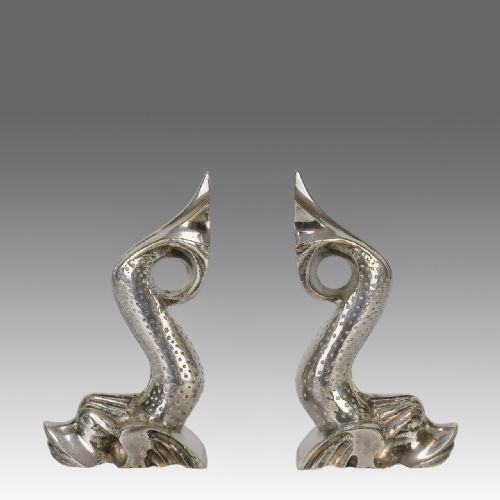
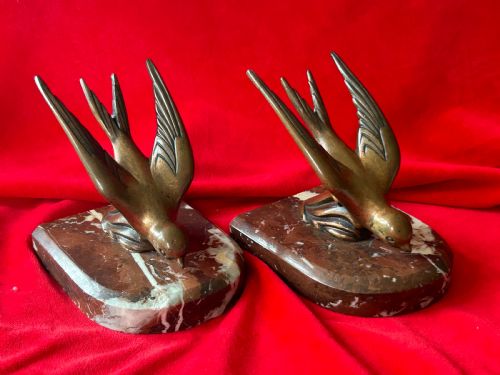
Forms include sculptural figures of animals, birds, and cherubs, alongside simpler geometric blocks. Common subjects on this page include owls, sea lions, lions, dogs, elephants, and fish.
Origins represented in the inventory include English and French examples, utilising both timber and heavy metals. Buyers most frequently encounter pairs cast in metal or carved from stone and wood.
How they were made
Makers utilised heavy materials such as marble, alabaster, bronze, spelter, brass, silvered metal, and patinated metal to provide the necessary weight for holding volumes in place. Metals were often cast and subsequently patinated or silvered.
Wood examples involve carved pine, ebony, and solid yew wood, sometimes executed in Georgian Revival or Anglo-Indian styles. Terracotta also appears as a moulded medium for sculptural figures.
Heavy Book Supports Retail Price Guide 2026
Typical asking prices for heavy book supports among the pieces listed under this phrase on Sellingantiques today, from the lower quarter to the upper quarter. They describe what is for sale here now, not the wider market.
Solid yew wood sits alongside bronze sea lions and spaniel dogs on the shelf.
What varies in quality
The choice and combination of materials affect the overall character and mass of a piece. Bases formed of solid marble or dense hardwoods combined with patinated bronze display a more substantial construction.
F Abella & Sons·C Omin
The Heavy Book Supports Glossary
- Spelter
- A zinc alloy commonly utilised as a less costly alternative to bronze for sculptural castings. It takes patination well to simulate heavier metals.
- Patinated metal
- Metal treated with chemicals or heat to produce a coloured surface finish or aged appearance. This technique enhances the depth of sculptural details.
- Cold painted bronze
- Bronze figures decorated with paint applied without heat after casting. The method allows for realistic coloration on animal and bird subjects.
- Alabaster
- A fine-grained translucent stone used for carving decorative objects. Its natural veining gives each piece a distinct appearance.
Heavy Book Supports: Frequently Asked Questions
What are heavy book supports?
Heavy book supports are solid objects designed to keep rows of books upright on shelves and desks.
They combine utilitarian weight with decorative sculptural forms, often depicting animals or figures.
How were they used?
They were placed at the ends of unsecured rows of books to prevent them from falling over.
Their substantial mass provided the necessary counter-pressure for large volumes in libraries and studies.
How do I live with them?
These pieces function practically on open shelving, mantelpieces, or side tables to organise reading material.
Their materials require simple dusting and placement on stable surfaces capable of supporting their weight.
How do I tell periods apart?
Periods are identified through stylistic traits such as the clean geometric lines of Art Deco or the ornate carvings of Victorian and Edwardian work.
Materials and manufacturing techniques also indicate the era of production, from early carved timber to later cast metals.