



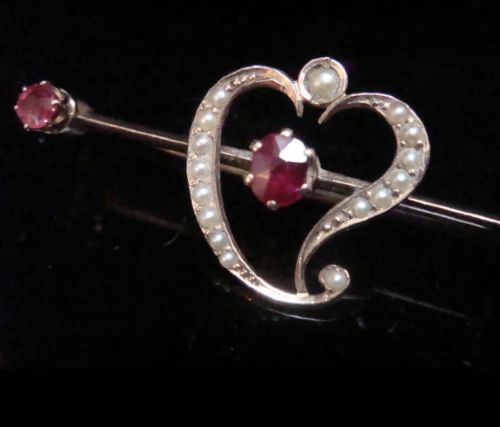


Heart Brooch Pin
A heart brooch pin is a sentimental fastening set in gold or silver, designed to be worn on a lapel or bodice.
Heart Brooch Pin
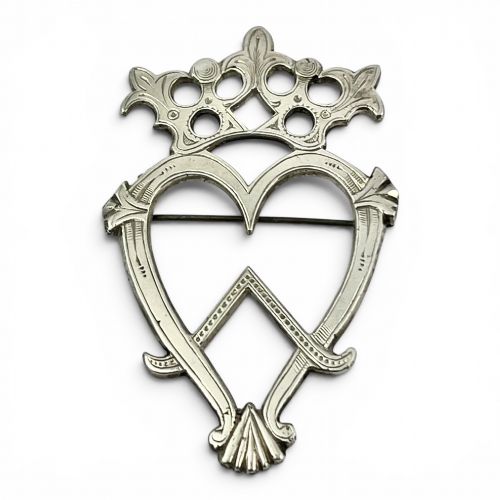
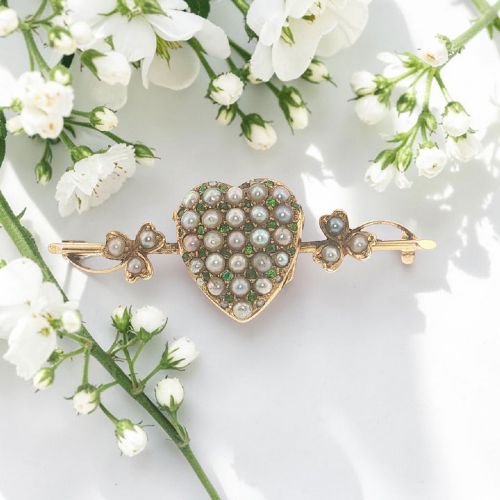
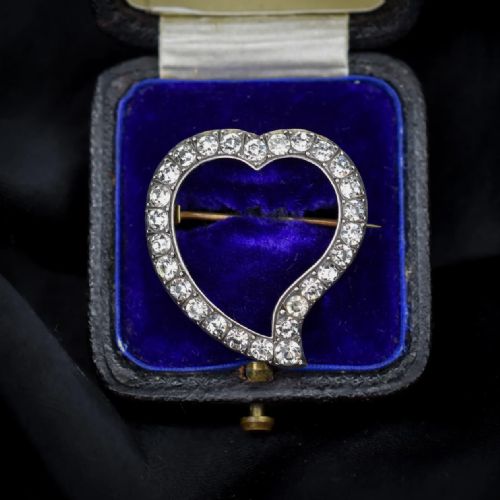
A heart brooch pin spans several distinct decorative eras, appearing most frequently in Victorian and Edwardian examples. These pieces range from simple silver and paste designs to elaborate gold mountings set with pearls, turquoise, and diamonds.
The selections here showcase various regional and stylistic interpretations of the heart motif. Pieces vary from classic Victorian gold lockets and multi-stone double heart configurations to Edwardian winged variations and silver marcasite work.
Materials and construction
Metals such as 15ct gold, 18ct yellow gold, sterling silver, and white gold form the foundational structures for these pins. Goldsmiths and silversmiths shaped these metals through casting, piercing, and wirework to create secure settings.
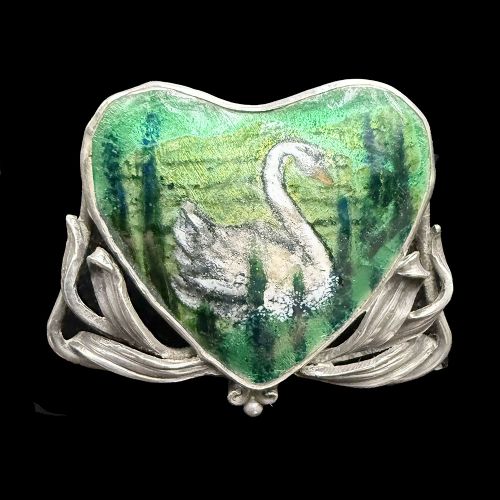
Gemstones including diamonds, rubies, garnets, tourmalines, and amethysts are paired with pearls, seed pearls, and turquoise. Enamel work, notably plique-à-jour, adds vibrant colour panels to silver and gold frameworks.
Heart Brooch Pin Retail Price Guide 2026
Typical asking prices for heart brooch pin among the pieces listed under this phrase on Sellingantiques today, from the lower quarter to the upper quarter. They describe what is for sale here now, not the wider market.
Swan motifs and delicate bows occasionally share the stage with these hearts, proving that even a brooch needs good company.
Quality factors in construction and stones
The calibre of a heart brooch pin depends heavily on the precision of the metalwork and the selection of materials. Fine examples display intricate pierced gold frames, well-matched seed pearls, and securely bezel-set or claw-set gemstones.
Design complexity further separates standard items from finer work, such as pieces incorporating intricate enamel details, multi-gem clusters, or integrated locket compartments. The inclusion of original fitted boxes and intact pin mechanisms also influences the overall standard.
The Heart Brooch Pin Glossary
- Paste
- Hand-cut glass or lead crystal used to imitate gemstones in antique jewellery. It is typically foil-backed to enhance brilliance.
- Seed pearl
- A very small, naturally occurring pearl, often half-drilled and glued or pegged onto jewellery settings. These tiny pearls frequently line the borders of Victorian heart motifs.
- Plique-à-jour
- An enamelling technique where the enamel is applied within a cellular framework without a backing, resembling miniature stained glass. This method allows light to shine through the transparent or translucent enamel.
- Cabochon
- A gemstone polished to a smooth, convex dome rather than faceted. This cut is commonly used for opaque stones like turquoise, agate, and chalcedony.
- Witches heart
- An asymmetric heart motif with a twisted tail, historically associated with romantic devotion and witchcraft amulets in Scottish and European jewellery.
Heart Brooch Pin: Frequently Asked Questions
How do I wear a heart brooch pin?
A heart brooch pin fastens securely onto the fabric of jackets, coats, scarves, or heavy knitwear using a traditional pin stem and catch. They are traditionally pinned to the left lapel or chest.
Ensure the fabric is sturdy enough to support the weight of gold and gemstone settings, particularly for larger pieces containing diamonds or multiple stones.
Are these brooches made of solid gold?
Many of the gold pieces utilise specific historic alloys such as 15ct gold alongside 18ct yellow gold and 9ct variations. These higher karat measures reflect British standard gold purity used during the Victorian and Edwardian eras.
Silver and white gold alternatives are also common, frequently paired with marcasite, paste, or enamel detailing.
How do I care for antique gemstone brooches?
Clean these pieces gently with a soft, dry cloth to remove surface dust, avoiding harsh chemical dips or ultrasonic cleaners that can dislodge seed pearls or damage soft stones like turquoise. Store them separately in lined boxes to prevent scratching between harder diamonds and softer gems.