

Hat and Coat Rack
A hat and coat rack keeps the hallway tidy while bringing period character to the entrance.
Hat and Coat Rack
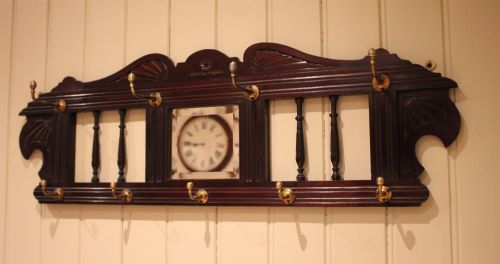
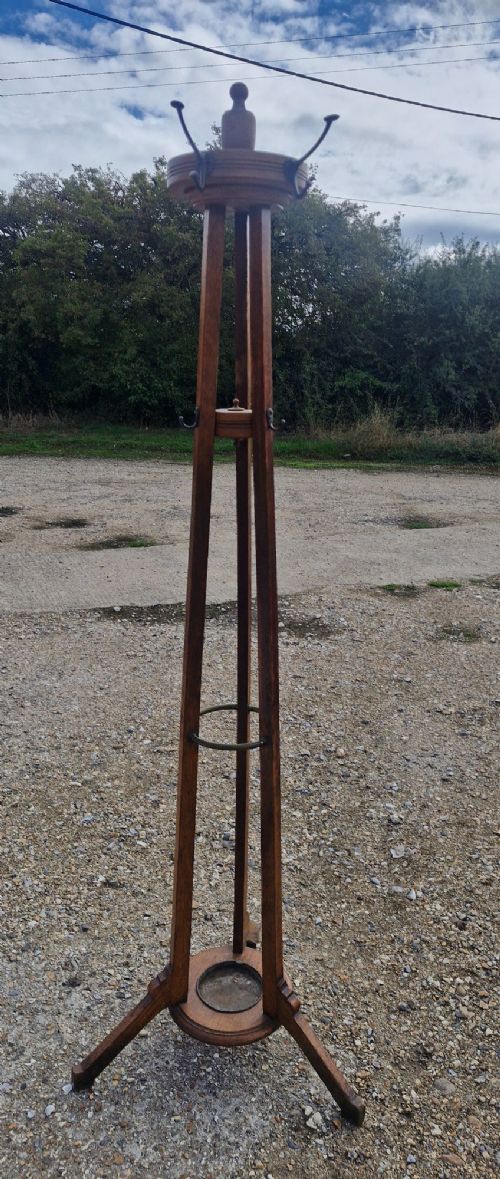
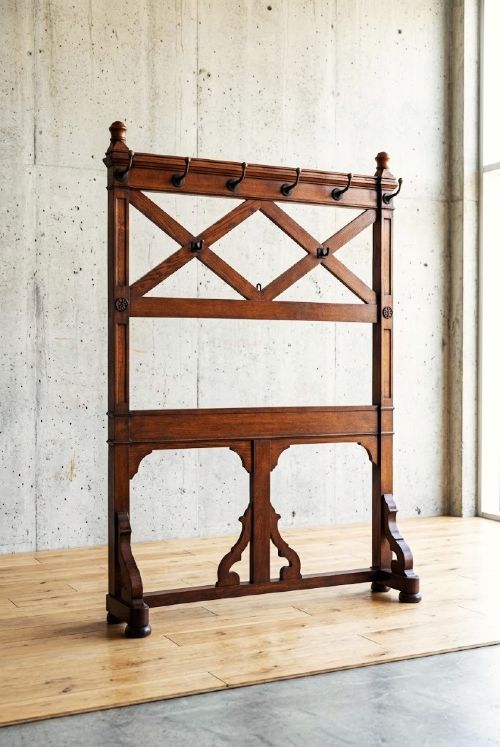
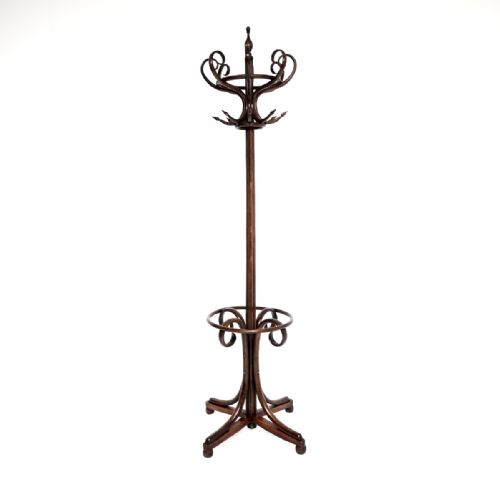
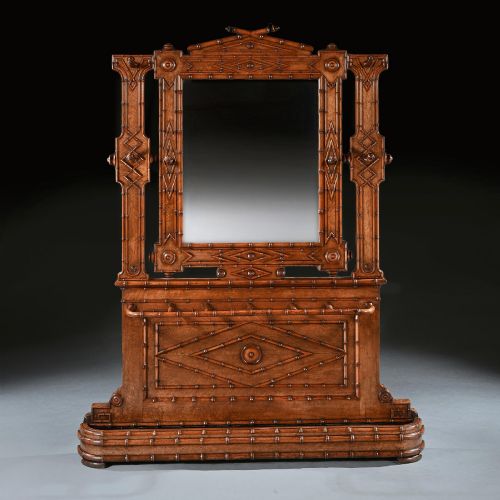
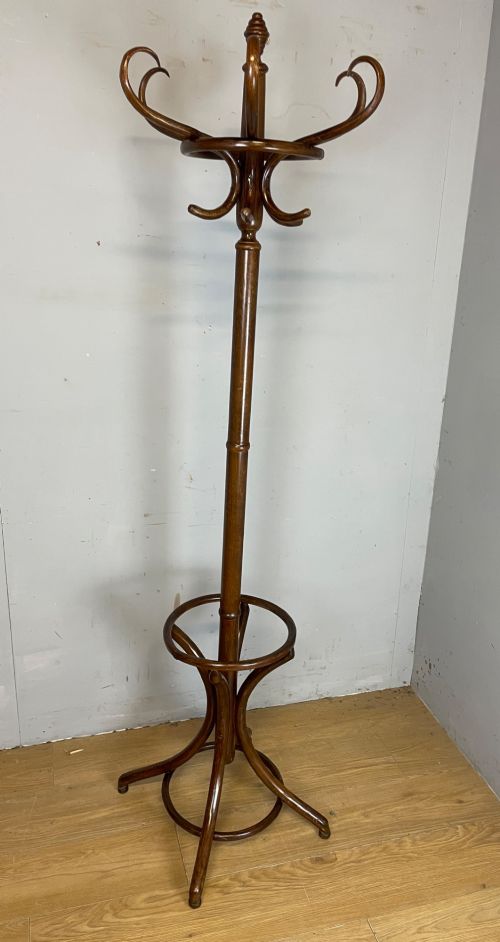
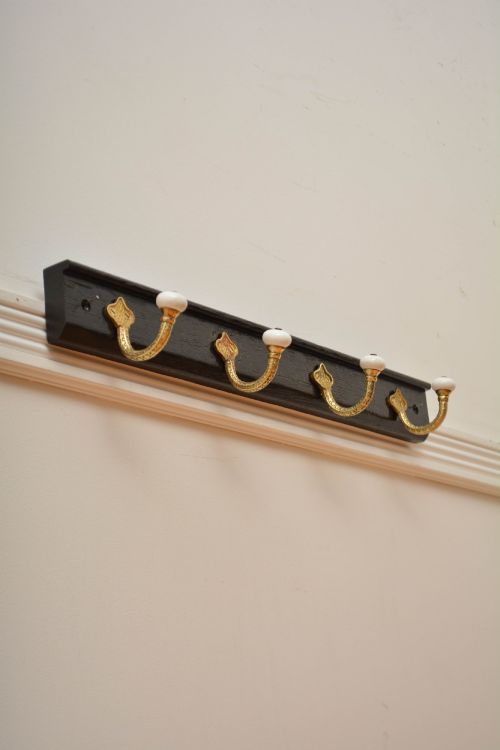
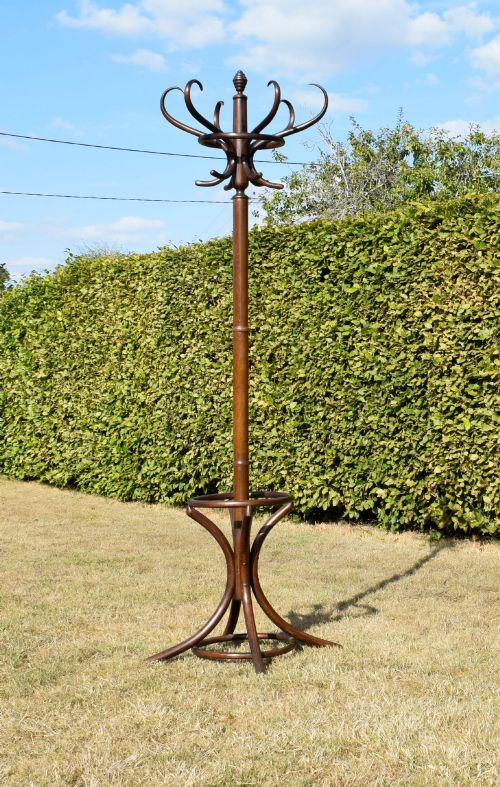
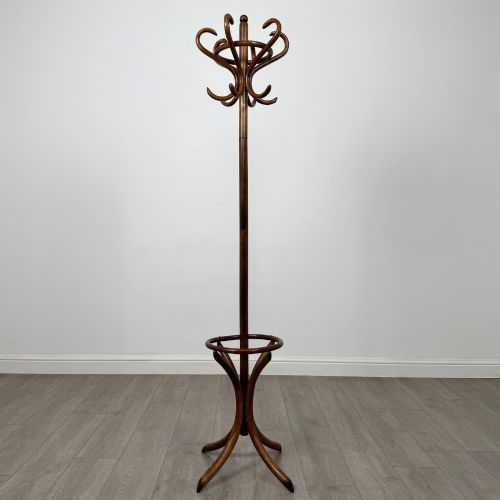
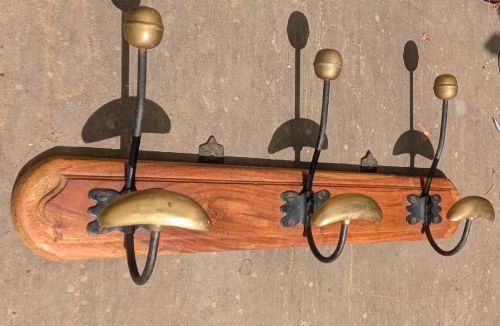
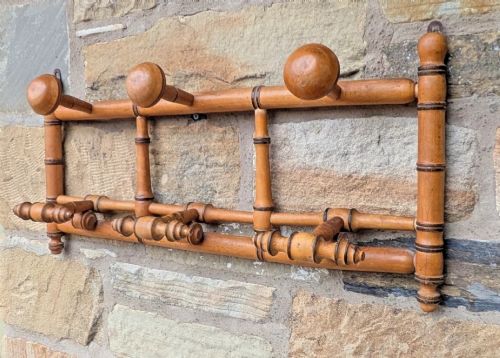
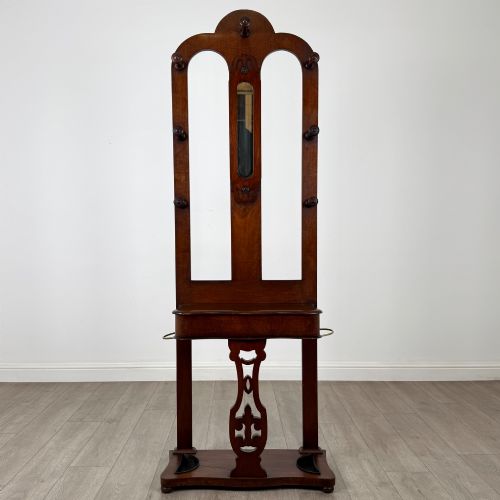
When searching for a hat and coat rack, buyers encounter everything from wall-mounted timbers fitted with brass hooks to freestanding bentwood poles and substantial Victorian hall stands. The selection spans the nineteenth century through to the art deco era, incorporating oak, mahogany, beech, and cast iron alongside specialised pieces like French simulated bamboo.
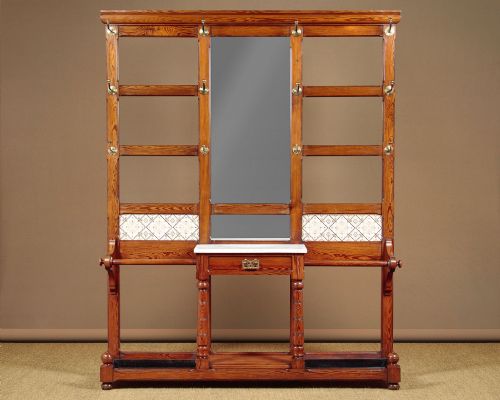
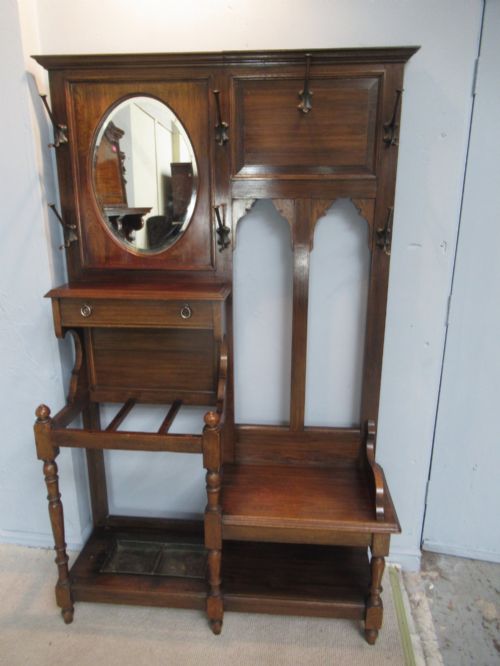
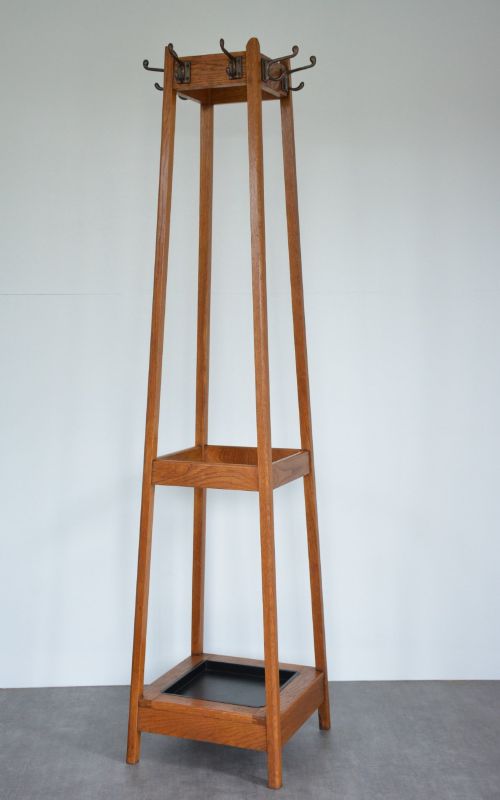
Freestanding versions often integrate umbrella holders and drip trays, while wall-mounted variants utilise brass, ceramic, or iron hooks fixed to oak, pine, or mahogany backboards. Examples from the Arts and Crafts movement sit alongside Gothic revival designs and Thonet bentwood creations, reflecting diverse domestic requirements across Britain and France.
Materials and Construction
Cabinet makers utilised solid hardwoods such as oak, mahogany, and walnut for wall-mounted backboards and architectural hall stands, often incorporating bevelled mirrors and carved detailing. Beech served as the primary material for steam-bent bentwood items, allowing craftsmen to shape flowing curves for umbrella rings and hat crowns.
Metal components added functional strength through cast iron frames, brass hooks, and ceramic fittings. French workshops popularised faux bamboo effects on turned wood and cast iron, while others applied twisted rope carvings and wrought iron brackets to secure the framework.
Stags' horn hall stands bring an unexpected touch of country house taxidermy directly into the hallway.
Evaluating Craftsmanship
Quality rests in the integrity of the timber selection and the robustness of the structural joints, particularly on freestanding bentwood poles that bear daily weight. Superior examples display crisp hand-carving, original brass or ceramic hooks firmly seated in the wood, and intact drip trays.
Finer wall-mounted racks feature well-figured grain in the oak or mahogany backboard alongside securely mounted mirrors. Lesser pieces show signs of replaced hooks, loose steam-bent segments, or split timbers where damp umbrellas once rested.
Thonet·J Parker of Woodstock
The Hat and Coat Rack Glossary
- Bentwood
- Furniture formed by steaming wood until pliable and bending it into rounded shapes. This technique produced lightweight yet resilient coat stands popular from the nineteenth century onward.
- Hall Stand
- A large freestanding hallway piece combining a coat rack, umbrella holders, and frequently a mirror and glove box. These dominated grand Victorian and Edwardian entranceways.
- Faux Bamboo
- Wood or metal carved, turned, or painted to imitate natural bamboo stalks. French makers utilised this decorative style extensively during the nineteenth century.
- Drip Tray
- A metal or ceramic basin positioned at the base of a coat or umbrella stand to catch rainwater. They protect hallway flooring from dampness.
- Japonisme
- The influence of Japanese art on European design during the late nineteenth century. This aesthetic appears on specialised maple and bamboo-styled hall furniture.
Hat and Coat Rack: Frequently Asked Questions
How do I mount a wall rack safely?
Wall-mounted racks require sturdy fixings screwed directly into wall studs or masonry to support heavy winter garments. Distributing weight evenly across multiple hooks prevents strain on the timber backboard.
Ensure the height accommodates longer coats while remaining accessible for everyday use in the hallway.
What is the difference between a hall stand and a coat rack?
A hall stand is a large freestanding piece of furniture that often includes a mirror, umbrella storage, and a small compartment for keys or gloves. A coat rack is typically a simpler wall-mounted board or a slender pole designed strictly for hanging outerwear.
Both serve the same primary function but occupy very different footprints in an entrance hall.
How do I date an oak coat rack?
Dating relies on examining construction techniques, timber types, and hardware styles such as brass or ceramic hooks. Victorian and Gothic revival pieces often display heavier proportions and hand-carved details, whereas Edwardian and later examples tend toward simpler geometric lines.
Makers' marks or stamps can sometimes provide a precise point of origin.
Are bentwood stands stable enough for daily use?
Steam-bent beech stands are remarkably resilient when the original construction joints remain tight and secure. Placing heavier winter coats evenly around the circumference maintains balance on freestanding models.
Checking that the base remains firm prevents wobbling during routine use.