





Hardwood Display Unit
A hardwood display unit brings structured presence to a room, offering compartments and shelves designed to showcase objects.
Hardwood Display Unit
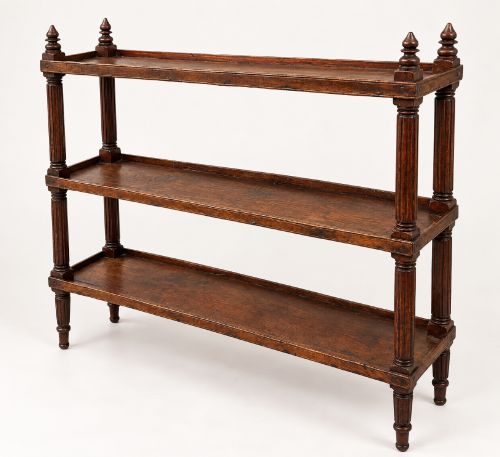
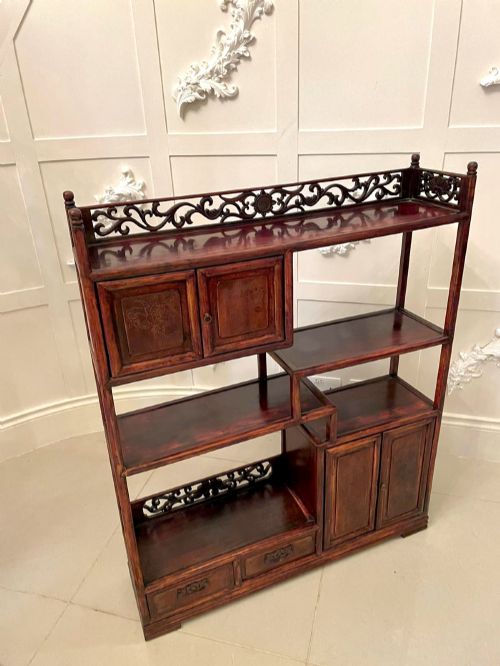
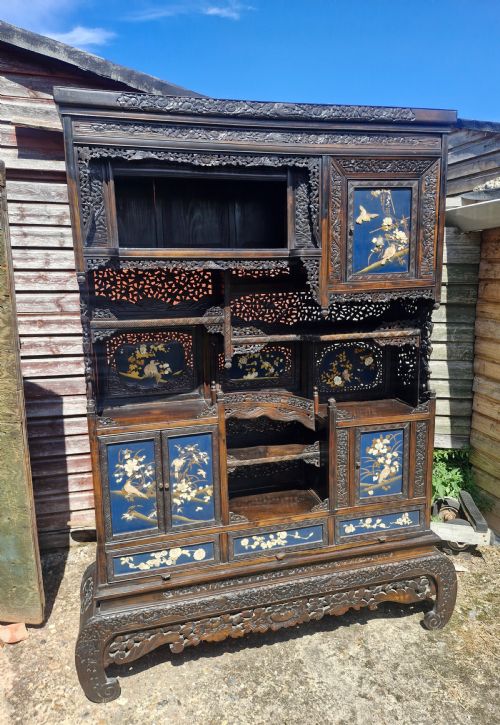
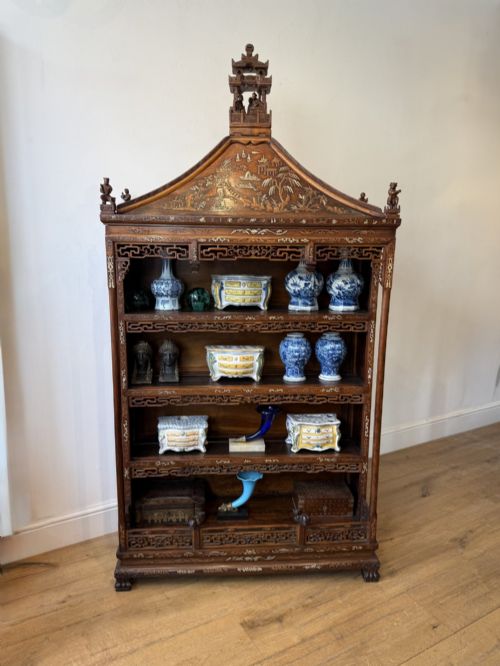
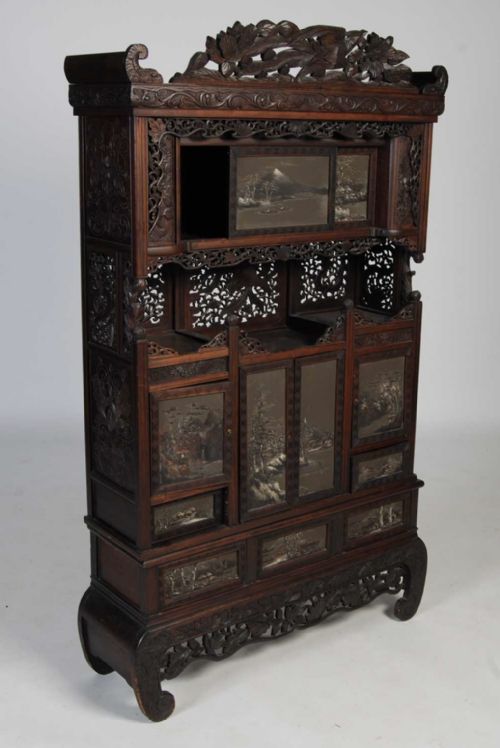
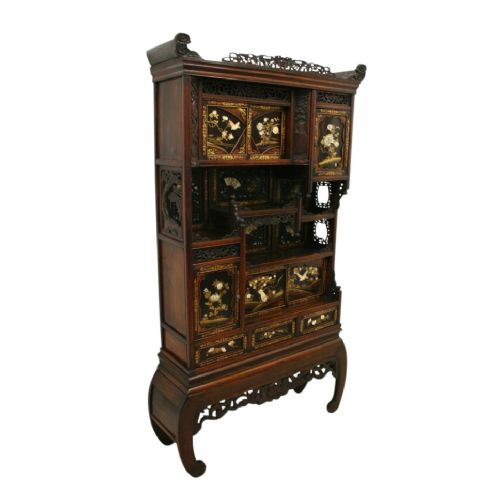
A hardwood display unit encompasses cabinets, shelves, and whatnot stands originating primarily from Chinese and Japanese workshops during the nineteenth and early twentieth centuries. These furnishings range from diminutive dwarf side-cabinets and intricate shodana cabinets to pagoda-form cases and larger display cabinets.
The pieces appearing on this page span the Meiji period, Qing dynasty, and Chinoiserie styles, reflecting traditional East Asian woodworking and decorative arts. Buyers encounter various forms on this page, notably carved cabinets on stands and asymmetrical display shelving designed for curated collections.
How they were made
The construction relies heavily on dense hardwoods, frequently complemented by brass hardware, lacquer, mother of pearl, bone inlay, and additional metal elements. Artisans utilised sophisticated joinery techniques to support complex shelving layouts and structural frames without relying on modern fasteners.
Surface decoration involves profuse carving, inlay work, and lacquer finishes that define the aesthetic of the period. Individual elements such as bone and mother of pearl are set directly into the hardwood surfaces to create contrasting patterns and pictorial scenes.
Intricate bone inlay and mother of pearl details catch the lamplight, rewarding close inspection with hidden floral motifs.
What varies in quality
Quality differences lie in the depth and precision of the carving, the complexity of the internal shelving architecture, and the condition of delicate inlays. Superior examples exhibit crisply detailed surface carving and robust structural integrity across multiple tiers and compartments.
The selection of materials and the integration of decorative elements such as bone or mother of pearl determine the refinement of a piece. Finer cabinets display harmonious proportions and meticulous attention to detail in every assembled section.
The Hardwood Display Unit Glossary
- Shodana
- A traditional Japanese cabinet or shelving unit featuring staggered compartments for displaying decorative objects. These pieces often originate from the Meiji period.
- Pagoda display cabinet
- A cabinet style influenced by traditional East Asian architectural forms, characterised by tiered roofs and decorative cornices. These structures serve to house porcelain and curiosities.
- Chinoiserie
- The European interpretation and imitation of Chinese and East Asian artistic traditions, expressed through decorative motifs and furniture design. This style appears across various nineteenth-century decorative pieces.
- Whatnot
- A piece of furniture consisting of a set of open shelves for displaying small objects or ornaments. These stands often incorporate carved wooden framing.
Hardwood Display Unit: Frequently Asked Questions
How do I identify a Qing Dynasty cabinet?
Qing dynasty cabinets are distinguished by dense hardwood construction and profuse, deep carving. They often incorporate traditional motifs and substantial structural framing.
Many examples feature specialised compartments or display surfaces designed for specific cultural artefacts. Their weight and joinery reflect traditional workshop practices of the period.
Where should I place a display unit?
These cabinets suit reception rooms, studies, or hallways where collections can be viewed safely. Their enclosed shelves and compartments protect delicate items from dust.
Positioning them away from direct sunlight preserves the wood finish and any bone or mother of pearl inlay. Adequate clearance allows the carved details to be appreciated from multiple angles.
What distinguishes Japanese from Chinese cabinets?
Japanese cabinets of this era frequently utilise the shodana form with staggered, asymmetrical shelving configurations. Chinese examples often lean towards symmetrical layouts, pagoda-inspired roofs, and deeply carved panels.
Both traditions employ dense hardwoods and complex joinery but express distinct decorative vocabularies. Examining the carving style and shelf arrangement helps differentiate the regional origins.