




Hardwood Bookcase
These hardwood bookcase examples bring dense carving and rich timber grain to domestic spaces, offering solid housing for a lifetime of volumes.
Hardwood Bookcase
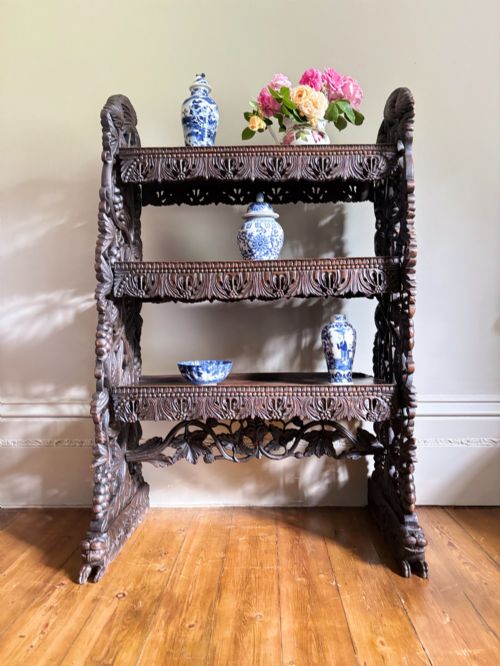
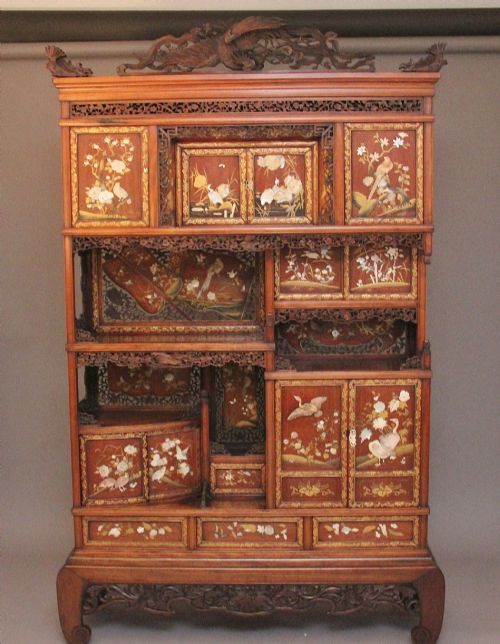
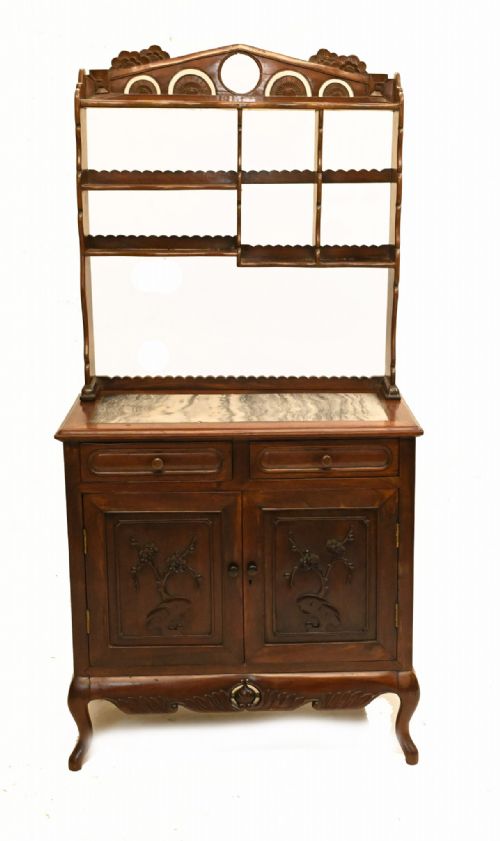
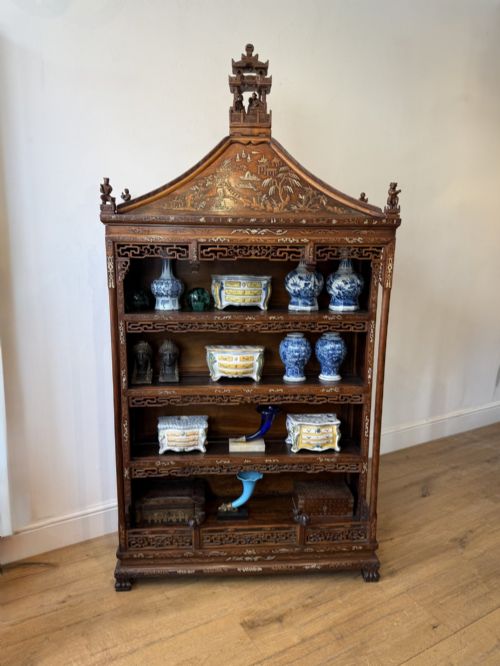
A hardwood bookcase represents a sturdy intersection of utilitarian storage and intricate woodworking, spanning nineteenth-century origins through to early twentieth-century examples. The pieces found here lean heavily towards Asian export forms, featuring Chinese and Japanese designs that double as display cabinets and open shelving units.
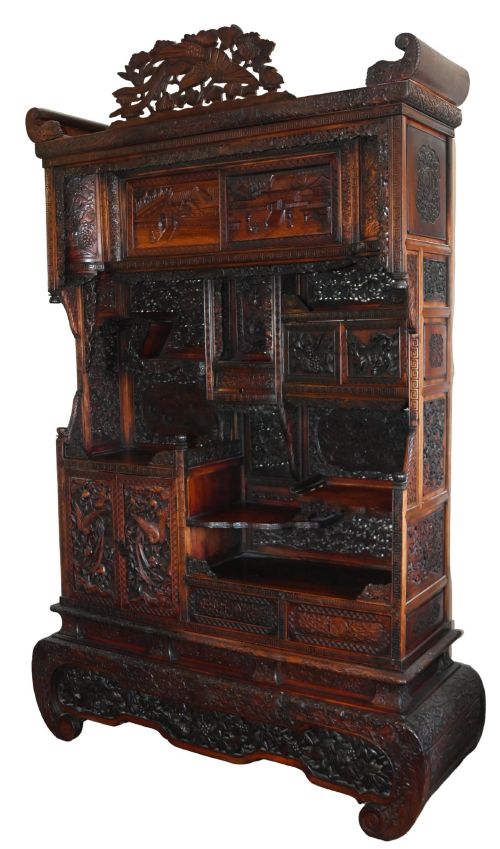
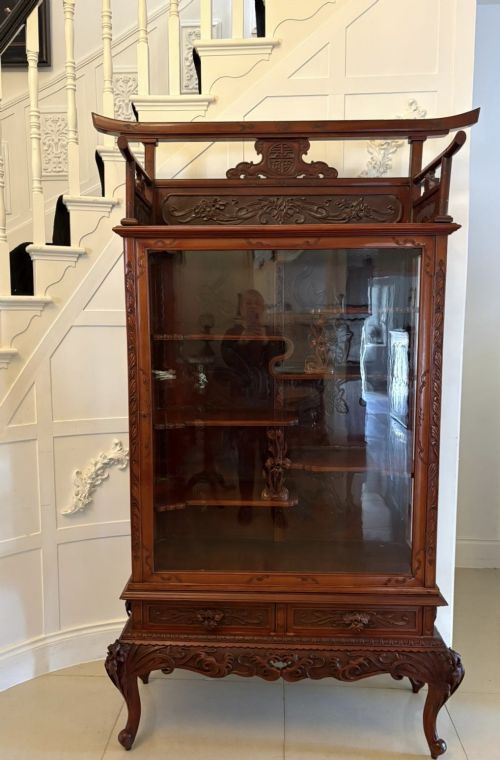
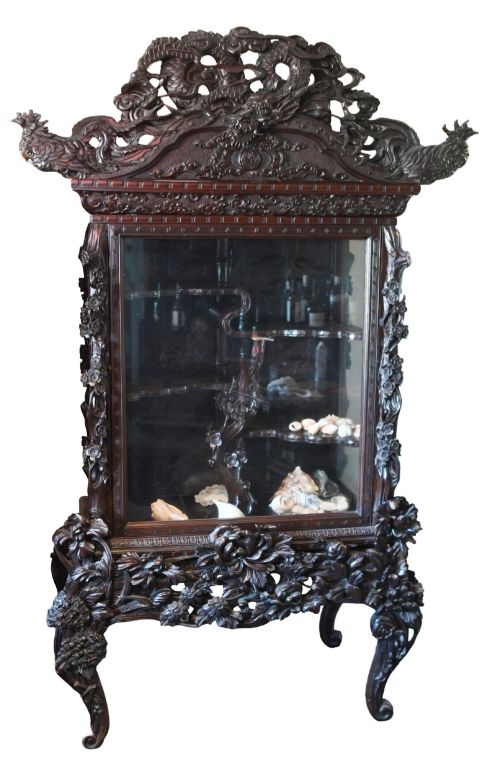
Buyers will encounter varied configurations, from glazed display cupboards and open freestanding party wood bookcases to diminutive side cabinets known as shodanas. These forms reflect diverse regional aesthetics, encompassing Qing Dynasty craftsmanship, Japanese Meiji period carving, and Chinese export traditions.
The primary forms on this page balance structural timber integrity with decorative apertures, glass panels, and tiered shelving. Such furniture serves both as functional book storage and as a formal showcase for prized objects.
Materials and construction methods
Construction relies upon dense hardwoods such as rosewood, padauk, Hongmu, and cherrywood, providing substantial weight and structural longevity. These timbers are frequently finished with detailed surface carving or complemented by decorative red lacquer.
Joinery integrates traditional framing techniques to support heavy shelves and glazed doors without warping over decades of use. Artisans often embellished the structural timber with delicate bone inlay, mother-of-pearl accents, and brass hardware.
Glazing and open fretwork are standard across many configurations, requiring precise carpentry to house glass panels securely within heavy hardwood doors and surrounds.
Hardwood Bookcase Retail Price Guide 2026
Typical asking prices for hardwood bookcase among the pieces listed under this phrase on Sellingantiques today, from the lower quarter to the upper quarter. They describe what is for sale here now, not the wider market.
Listings feature items dated across the nineteenth and early twentieth centuries, spanning the Meiji and Qing Dynasty periods.
Measures of quality and distinction
Quality rests in the depth and crispness of the carved ornamentation, where fluid motifs and balanced asymmetry distinguish master workshops from standard production. Dense, heavy timber with uniform graining elevates a piece above simpler, lighter constructions.
The condition of intricate elements like bone inlay, lacquer, and original brass fittings plays a decisive role in overall merit. Well-preserved glazing and robust, unaltered joinery indicate superior original manufacturing and careful stewardship.
The Hardwood Bookcase Glossary
- Shodana
- A Japanese tiered display cabinet featuring asymmetrical shelving and sliding doors. These pieces are designed for exhibiting small ornaments and art objects.
- Hongmu
- A category of dense, dark Asian hardwoods translating to red wood. It is prized by cabinetmakers for its strength and rich natural colour.
- Padauk
- A durable tropical timber known for its deep reddish-brown tone and strong grain patterns. It provides a stable foundation for nineteenth-century case furniture.
- Partridge wood
- A decorative timber displaying distinct speckled grain patterns resembling bird plumage. Cabinetmakers select it for high-status open bookcases and small furniture.
- Meiji Period
- The era in Japanese history spanning from 1868 to 1912, characterised by intricate carving and increased export of decorative arts to the West.
Hardwood Bookcase: Frequently Asked Questions
How do I care for a hardwood bookcase?
Keep the timber away from direct heat sources and sudden humidity shifts to prevent the wood from splitting or warping.
Dust regularly with a dry cloth and apply a quality furniture wax sparingly only when the timber appears dry.
Can these bookcases hold heavy modern books?
Most antique hardwood bookcases feature sturdy shelves designed to support substantial weight over long periods.
However, check the thickness of individual shelves and their support battens before loading very large modern volumes.
What is the difference between a shodana and a bookcase?
A shodana is an asymmetrical Japanese display cabinet featuring varied tiers and compartments intended for decorative objects rather than bulk storage.
A standard bookcase prioritises uniform vertical shelving for holding bound volumes upright.
How do I identify Chinese export furniture?
Chinese export pieces typically combine traditional Asian joinery and motifs with forms tailored for Western domestic interiors.
Look for characteristic timbers like Hongmu or padauk alongside deep relief carvings depicting landscapes and figures.
Are the glass doors original?
Original glass panes often display minor surface bubbles, waviness, and slight thickness variations consistent with historic manufacturing methods.
Inspect the putty or wooden glazing bars to ensure the doors retain their authentic period configuration.