

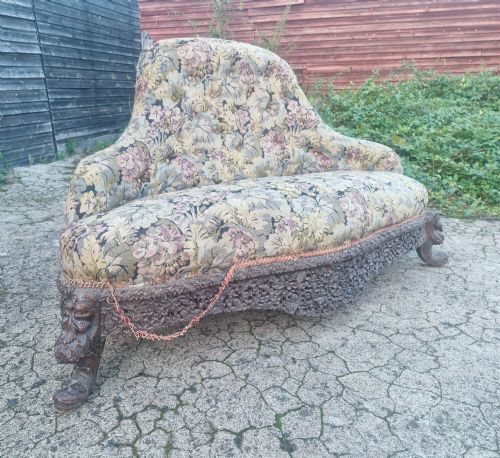
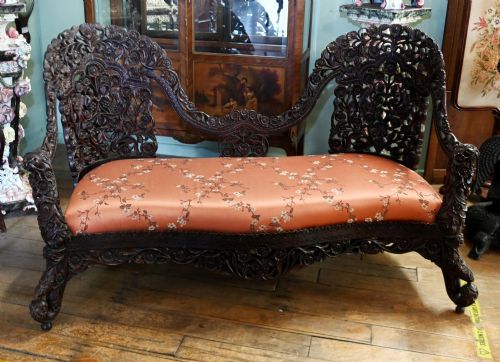

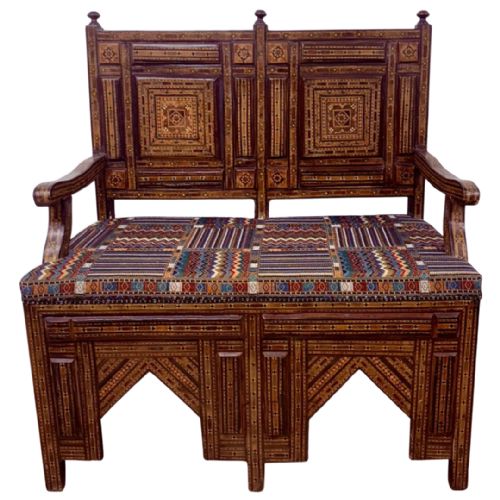
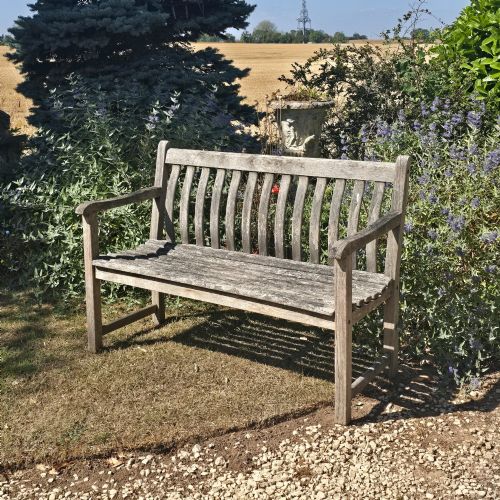



Hardwood Bench Seating
Hardwood bench seating offers solid timber construction and diverse regional forms, bringing architectural presence and practical utility to hallways, gardens, and conservatories.
Hardwood Bench Seating
Hardwood bench seating encompasses durable timber benches, settles, and window seats originating from diverse global traditions including Chinese Qing Dynasty workshops, colonial outposts, and English gardens. Buyers navigating this selection encounter everything from rustic courtyard stools to large ceremonial hall benches.
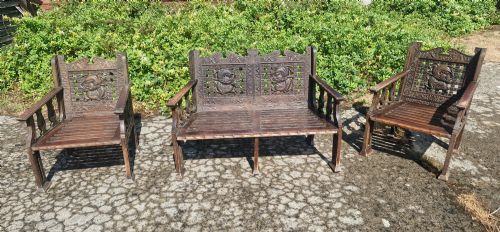
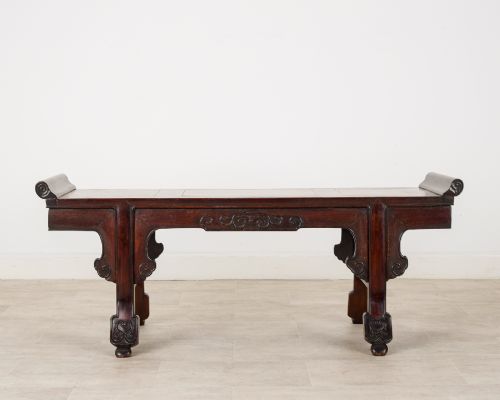
The Chinese export and domestic pieces form the most prominent grouping on this page, often rendered in dense hardwoods like huali and huanghuali with intricate carved panels. Alongside these sit Anglo-Indian box settles, Syrian inlaid furniture, and weathered garden benches designed for outdoor endurance.
Materials and Construction
Construction relies heavily on dense timbers such as teak, mahogany, and various Asian hardwoods that withstand heavy use and outdoor weathering. Artisans shaped these robust materials using traditional joinery, often incorporating hinged storage compartments or deep structural frames.
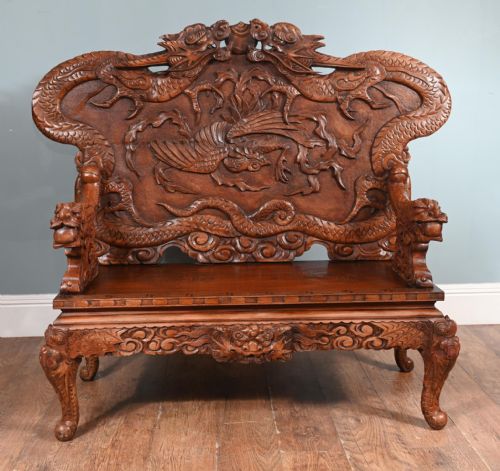
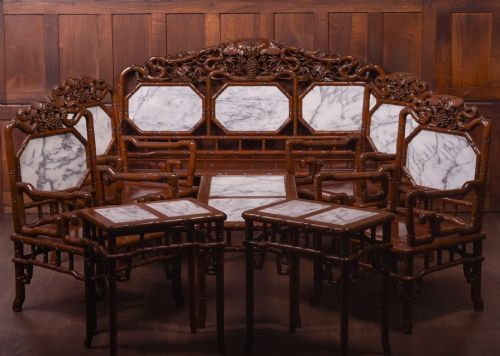
Surface ornamentation ranges from deep relief carving of dragons and floral motifs to delicate inlay work utilising mother of pearl, brass, and marble. Lacquer finishes and cinnabar applications appear on specific regional forms, while garden variants often display a natural weathered silver patina.
Hardwood Bench Seating Retail Price Guide 2026
Typical asking prices for hardwood bench seating among the pieces listed under this phrase on Sellingantiques today, from the lower quarter to the upper quarter. They describe what is for sale here now, not the wider market.
Several pieces double as secret compartments, reminding us that Victorian and colonial households loved stashing their belongings inside a dragon's reach.
Evaluating Quality
Quality reveals itself in the crispness of the carved detail and the natural integrity of the timber rather than superficial polish. Pieces featuring complex inlay work or deeply carved figurative motifs demonstrate superior artisan skill compared to plainer utility items.
The structural stability of the joints and the preservation of original surfaces, such as weathered teak patina or undisturbed lacquer, dictate the standing of an individual bench. Regional authenticity and the complexity of form, such as integrated storage boxes or coordinated seating suites, further distinguish the examples.
The Hardwood Bench Seating Glossary
- Huali
- A traditional Chinese hardwood category encompassing various dense rosewoods favoured by Qing Dynasty cabinetmakers for seating and stools.
- Settle
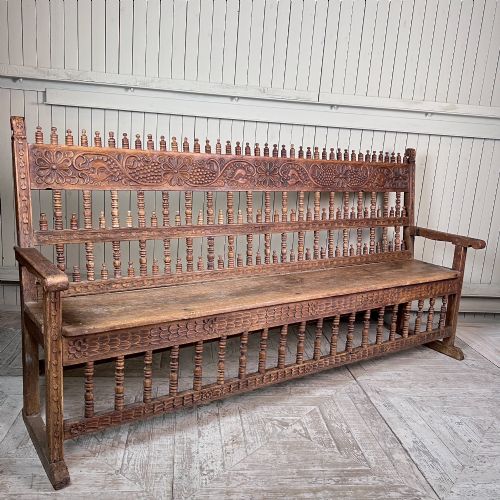
- A wooden bench featuring a high back to block draughts, often incorporating a hinged seat that opens to reveal storage space underneath.
- Cinnabar lacquer
- A decorative surface treatment created by applying numerous layers of red lacquer which are subsequently carved with intricate designs.
- Anglo-Indian
- A stylistic classification describing furniture produced in India during the colonial period, blending local craftsmanship with British forms.
Hardwood Bench Seating: Frequently Asked Questions
How do I care for a hardwood garden bench?
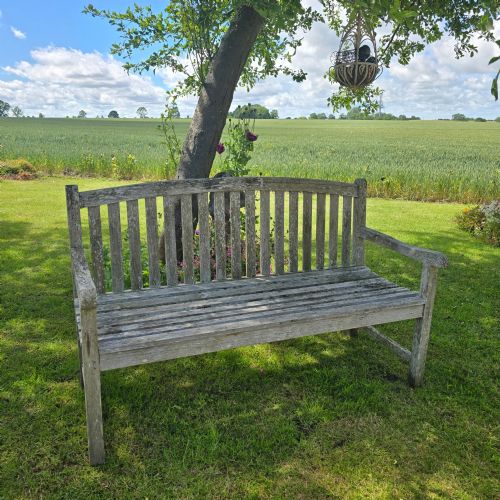
Weathered teak and hardwood benches intended for outdoor use naturally develop a silvery grey patina when exposed to the elements. Regular gentle cleaning removes surface debris and maintains the timber's structural integrity.
For indoor pieces featuring lacquer, mother of pearl inlay, or delicate carving, keep them away from direct heat sources and sunlight to prevent timber movement or finish cracking.
What is the difference between a settle and a hall bench?
A settle traditionally incorporates a solid high back designed to shield occupants from draughts, frequently including enclosed storage beneath a hinged seat. These pieces offer a substantial, protective presence in an entranceway.
Standard hall benches and window seats generally present open backs or low profiles, prioritising decorative carving and transitional placement in corridors or reception spaces.
How do I identify Chinese Qing Dynasty seating?
Qing Dynasty hardwood benches and stools often display characteristic dense timbers such as huali, alongside deep relief carvings depicting dragons, floral motifs, or symbolic figures. The joinery is typically executed without modern fasteners.
Proportions tend to be robust and balanced, reflecting traditional domestic and ceremonial interior arrangements from the period.
Can I use an antique window seat in a modern hallway?
Antique window seats and altar benches adapt readily to contemporary hallways, offering a slim profile that fits narrow architectural spaces. Their varied regional origins bring texture and historical contrast to neutral modern interiors.
Ensure you measure the depth and length of the specific piece against your hallway dimensions before placement.