





Hanging Wall Clock
A hanging wall clock keeps time while anchoring a room, drawing the eye with rich mahogany, walnut or gleaming giltwood cases.
Hanging Wall Clock
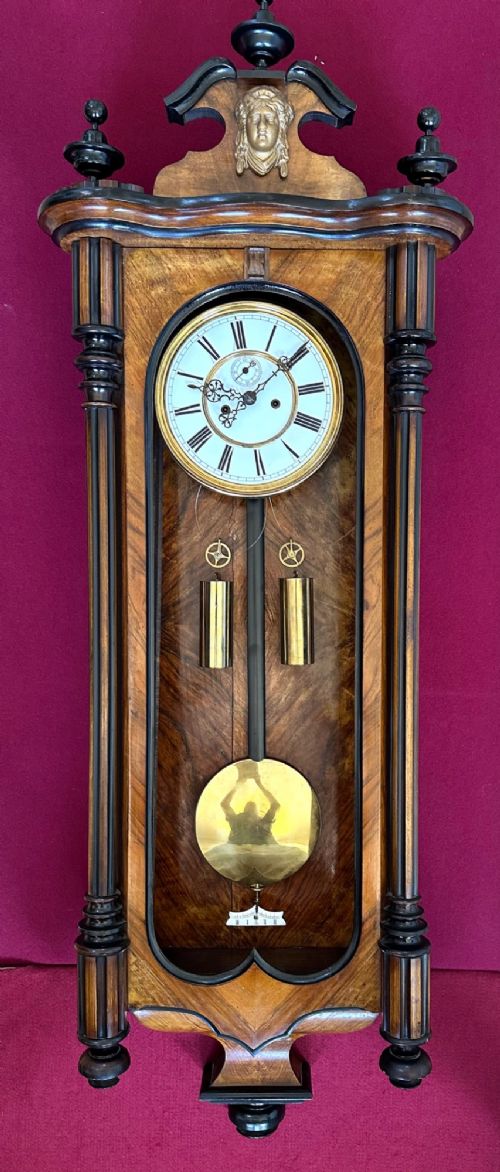
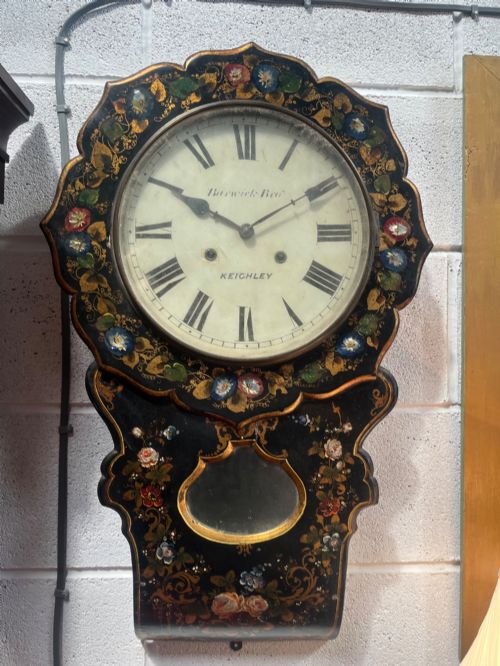
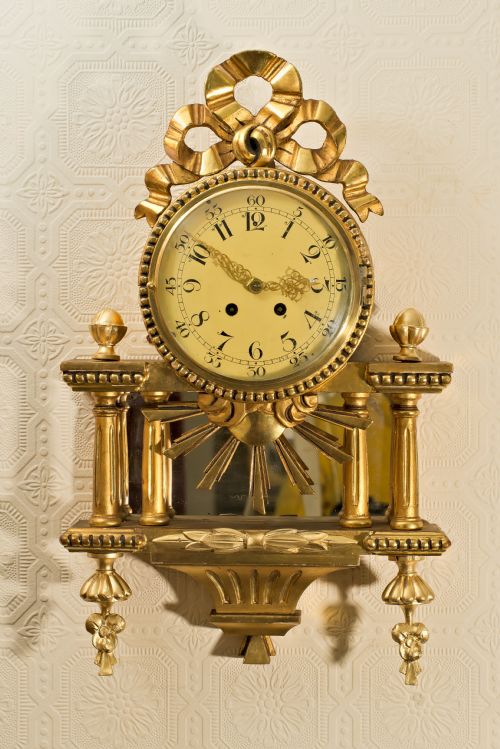
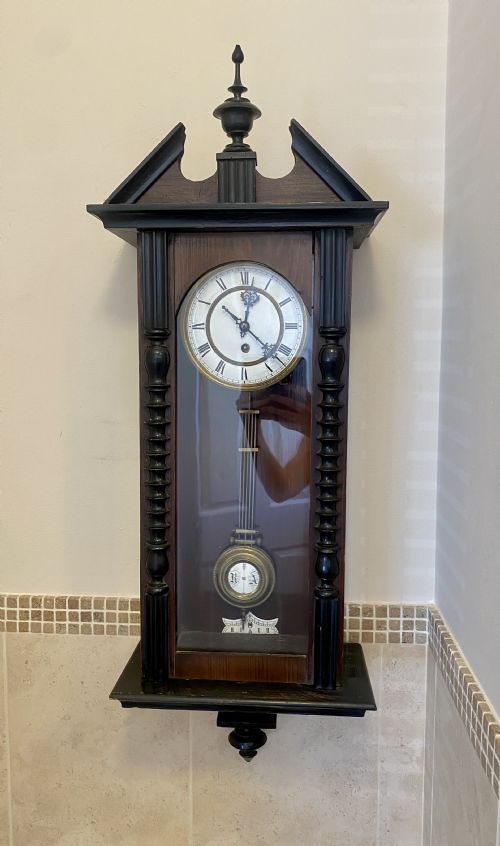
When you search for a hanging wall clock, you uncover timepieces designed to mount directly on domestic or institutional walls, moving beyond simple utility to serve as prominent interior fixtures. These objects span periods from the Victorian era through the early twentieth century, taking forms such as Vienna regulators, drop-dial pieces, school clocks, and ornate French cartel clocks.
The selections on this page range from robust English mahogany and walnut designs to decorative giltwood pieces and Art Deco French oak models. Alongside traditional striking or fusee mechanisms, you encounter variations including Comtoise clocks, combination barometer-thermometers, and large trade signs styled as pocket watches.
Originating predominantly from British, French, and Viennese workshops, these clocks reflect the domestic and commercial demands of the nineteenth and twentieth centuries. Whether housing an eight-day striking movement in a rich timber case or displaying painted decoration on a paper sign, each hanging wall clock offers a direct connection to period horology.
How They Were Made
Cases utilise solid timbers such as mahogany, walnut, oak, and ebonised wood, frequently paired with cast brass bezels, glass dials, and enamel faceplates. Giltwood and ormolu finishes provide decorative brilliance on French cartel styles, while carved details shape the surfaces of nineteenth-century oak and rosewood models.
Mechanisms rely on brass gears and iron components, encompassing fusee movements, eight-day striking trains, and pendulum regulation. Dials feature painted numerals or enamel chapters protected behind glazed doors, while trade signs and paper notices incorporate printed elements and framed wooden supports.
Hanging Wall Clock Retail Price Guide 2026
Typical asking prices for hanging wall clock among the pieces listed under this phrase on Sellingantiques today, from the lower quarter to the upper quarter. They describe what is for sale here now, not the wider market.
Listings feature hanging wall clocks from the nineteenth and twentieth centuries, utilising mahogany, walnut, oak, giltwood, brass, and glass.
What Varies in Quality
The standard of a hanging wall clock rests on the crispness of its case carving, the depth of timber grain in woods like walnut and mahogany, and the precision of its metalwork. Finer examples display meticulous joinery and carefully gilded surfaces, whereas simpler utility pieces prioritise basic legibility and robust construction.
Movement sophistication also divides the range, separating standard timepieces from complex eight-day striking mechanisms and specialised fusee configurations. The integration of quality materials, from heavy brass bezels to clear enamel dials, determines the distinction between standard production and exceptional workshop output.
WETTERSTRANDS·Josef Herzog·JOHANN BAPTIST BEHA·Perivale of England
The Hanging Wall Clock Glossary
- Cartel clock
- A wall clock housed in an ornate frame made of metal, carved wood, or giltwood, originating prominently in France. These pieces are designed to mount flat against a wall.
- Fusee mechanism
- A conical pulley device inside a clock that equalises the diminishing power of the mainspring as it unwinds. This system helps maintain consistent timekeeping.
- Drop-dial clock
- A wall clock featuring an extended wooden case below the dial, often enclosing a visible pendulum. This form became popular in public spaces and domestic halls during the Victorian period.
- Vienna regulator
- A precision pendulum clock developed in Austria, celebrated for its tall glazed case and accurate movement. Collectors prize these for their elegant proportions and visible internal weights.
- Comtoise clock
- A traditional weight-driven clock originating from the Jura region of France, often adapted for wall hanging with distinctive pressed brass surrounds.
Hanging Wall Clock: Frequently Asked Questions
What is a fusee wall clock?
A fusee wall clock uses a special conical pulley system to ensure the mainspring delivers even power to the gears as it runs down.
This mechanical refinement allowed nineteenth-century timepieces to achieve greater accuracy than standard spring-driven alternatives.
How do I identify a Vienna wall clock?
Vienna wall clocks feature tall glass-panelled wooden cases that showcase the pendulum and weights inside.
Originating in the nineteenth century, they typically house refined movements designed for precision timekeeping.
Where were cartel clocks placed?
Cartel clocks were traditionally hung in formal reception rooms and parlours across France and Europe.
Their decorative giltwood or metal frames allowed them to function as ornamental wall art alongside their timekeeping duties.
What defines a school clock?
A school clock is a sturdy, legible wall timepiece originally designed for classrooms, offices, and railway stations.
These pieces feature simple wooden surrounds, clear enamel dials, and reliable movements built for heavy daily use.