





Hanging Pendulum Clock
A hanging pendulum clock brings mechanical rhythm and traditional craftsmanship to the wall, offering both precise timekeeping and striking interior presence.
Hanging Pendulum Clock
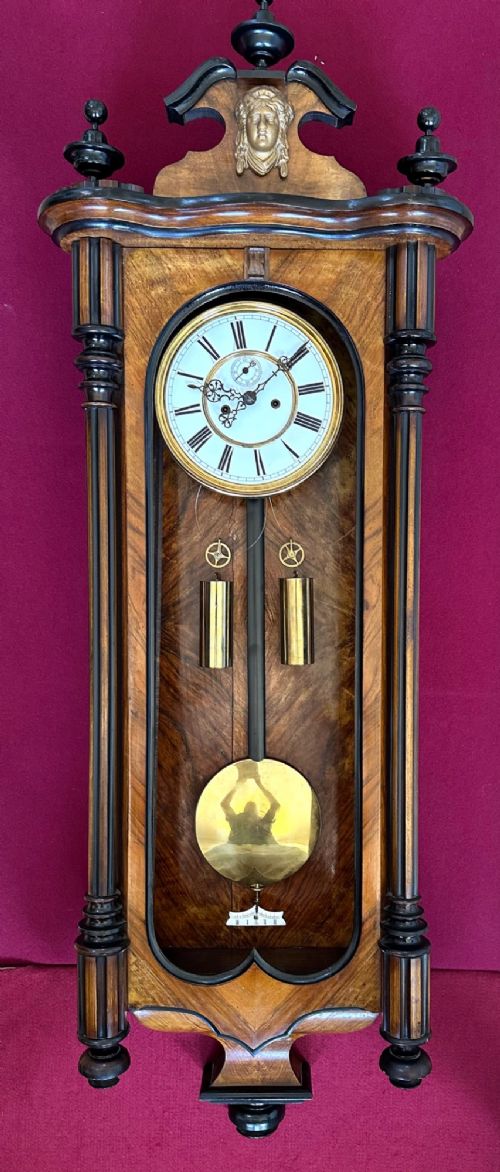
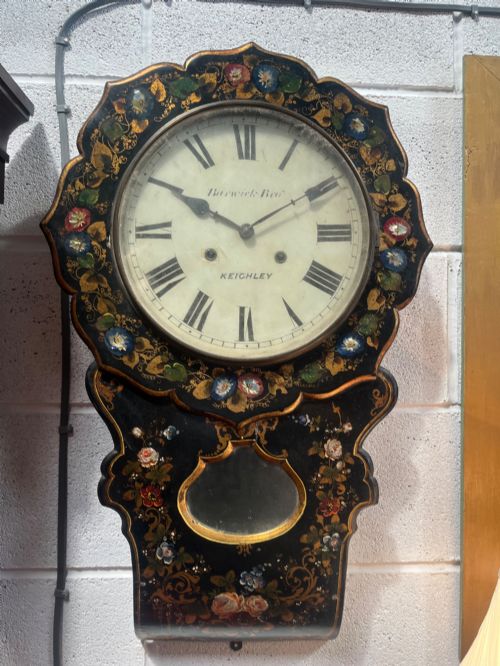
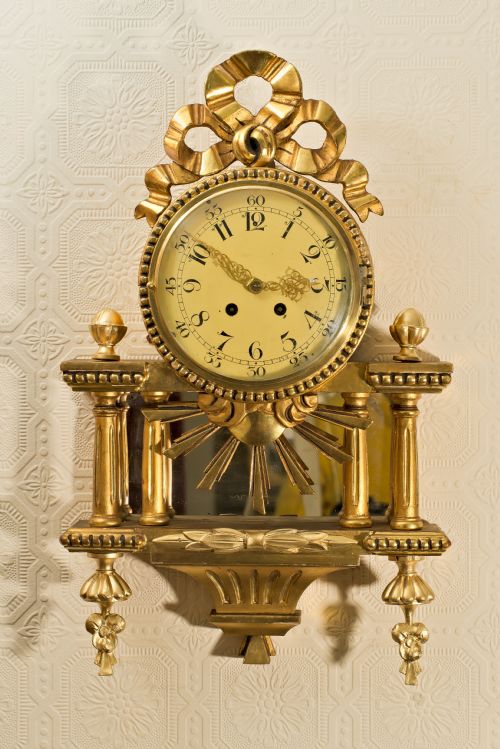
A hanging pendulum clock combines functional timekeeping with wall-mounted display, ranging from traditional mahogany drop-dial designs to ornate giltwood cartel clocks. These pieces emerge predominantly from the nineteenth and early twentieth centuries, spanning Victorian, Art Deco, and French neoclassical styles.
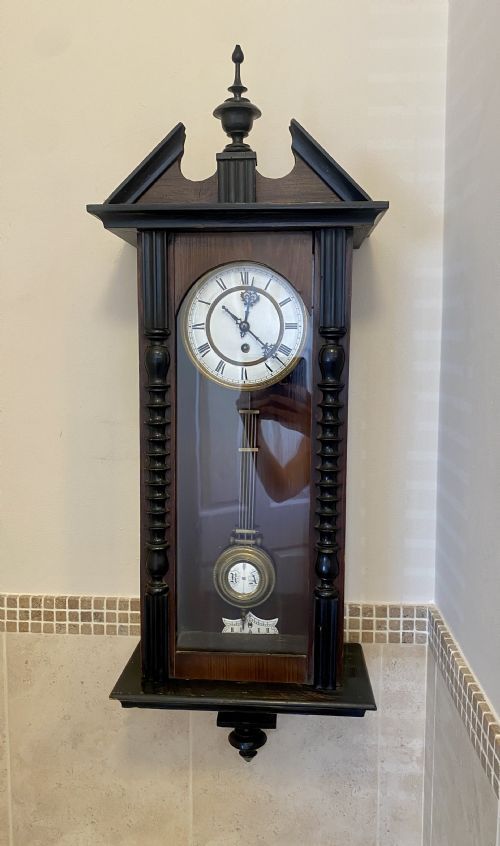
The most frequent variations encountered on this page are walnut Vienna wall clocks and French cartel timepieces. Enclosed in polished wood, ebonised cases, or gilt metal frames, they secure directly to the wall while the pendulum regulates the movement below.
Originating across Britain and continental Europe, particularly France and Germany, these clocks demonstrate diverse regional cabinet-making and horological traditions. Buyers find everything from robust oak timepieces to delicate ormolu and bronze decorative statements.
How they were made
Cabinet makers built the housing using dense timbers such as mahogany, walnut, oak, and rosewood, frequently applying ebonised finishes or intricate carved decorations. Giltwood and gilt metal cartel clocks relied on shaped wooden or metallic frames designed to catch the light.
Clockmakers housed mechanical movements inside these cases, pairing brass gears with swinging pendulums and enamelled dials. Painted decorations and glass panels protected the face while revealing the movement of the hands and the swing of the pendulum.
Hanging Pendulum Clock Retail Price Guide 2026
Typical asking prices for hanging pendulum clock among the pieces listed under this phrase on Sellingantiques today, from the lower quarter to the upper quarter. They describe what is for sale here now, not the wider market.
Some nineteenth-century French mystery clocks suspend the pendulum inside a transparent globe, creating the delightful illusion that the hands move entirely by magic.
What varies in quality
The distinction between standard and exceptional pieces rests upon the precision of the movement and the depth of the case carving. Elaborate giltwood cartel frames and detailed ormolu mounts demand greater artisan skill than plain wooden surrounds.
Material selection and finish integrity dictate the overall calibre of the clock. Selected walnut and mahogany veneers, crisp dial numerals, and finely proportioned wooden cases separate ordinary timepieces from masterwork examples.
WETTERSTRANDS·JOHANN BAPTIST BEHA·Perivale of England
The Hanging Pendulum Clock Glossary
- Cartel clock
- A wall clock housed in an ornamental frame made of giltwood, bronze, or ormolu. Originating in France, these decorative timepieces often feature elaborate scrollwork and floral motifs.
- Vienna regulator
- A precision wall clock developed in nineteenth-century Austria, notable for its long glass door and weight-driven movement. These clocks prioritise strict timekeeping accuracy and clear dial visibility.
- Drop-dial clock
- A wall clock featuring a circular dial face positioned above an extended wooden box that houses the pendulum. This British form allows the pendulum ample room to swing while maintaining a compact upper profile.
- Comtoise clock
- A traditional pendulum clock originating from the Jura region of France, recognised for its large dimensions and pressed brass surround. They often served as domestic timekeepers in rural farmhouses.
- Ormolu
- Finely ground high-carat gold applied to a bronze base object through mercury amalgamation. This decorative technique creates a rich golden finish on antique French clock cases.
Hanging Pendulum Clock: Frequently Asked Questions
How do I wind a hanging pendulum clock?
Winding requires inserting a key into the dial holes and turning gently until resistance is felt. Care must be taken not to overwind the mainspring or damage the internal brass teeth.
Most eight-day movements need attention once a week. Keeping a regular winding schedule maintains consistent tension and accurate timekeeping.
Where should I hang a pendulum clock?
Select an interior wall that remains stable and free from excessive vibrations or heavy slamming doors. Plasterboard requires secure fixings anchored directly into wall studs to support the weight of wooden cases.
Ensure the wall is entirely flat so the clock hangs plumb. A crooked case interferes with the symmetrical swing of the pendulum and causes the mechanism to stop.
Why does my pendulum clock keep stopping?
Stoppages usually occur when the clock is out of beat, meaning the anchor escapement does not release the gear teeth evenly. Adjusting the crutch wire or leveling the case corrects this imbalance.
Accumulated dust in the brass movement or dried oil can also halt the pendulum. Professional cleaning restores smooth operation to vintage mechanisms.
How do I tell a Vienna regulator from a drop-dial clock?
A Vienna regulator typically displays a tall, slender walnut case with glass side panels and a visible weight-driven pendulum. These pieces originate from nineteenth-century central Europe and emphasise mechanical refinement.
In contrast, a drop-dial clock uses a spring-driven movement inside a shorter mahogany or oak body. The dial sits at the top with a distinct lower box enclosing the swinging bob.