



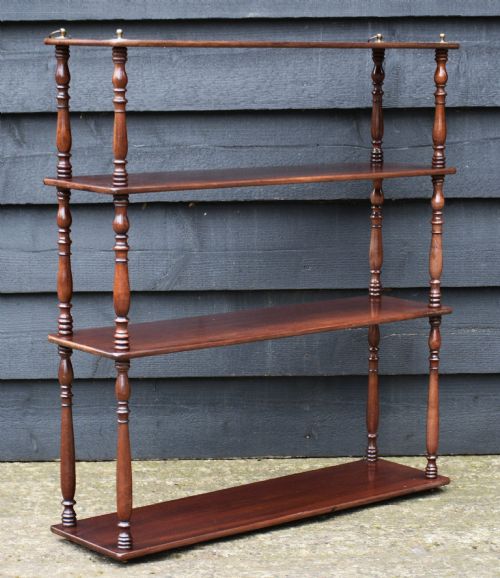
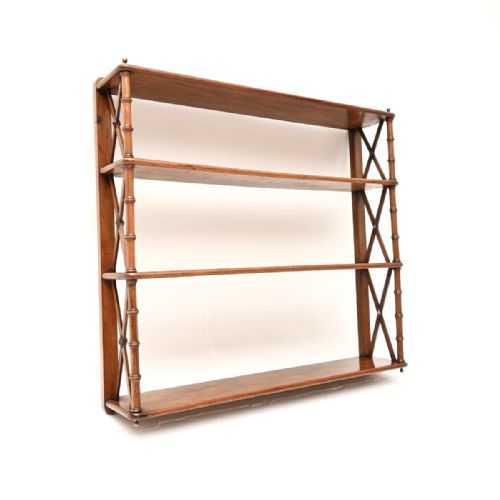

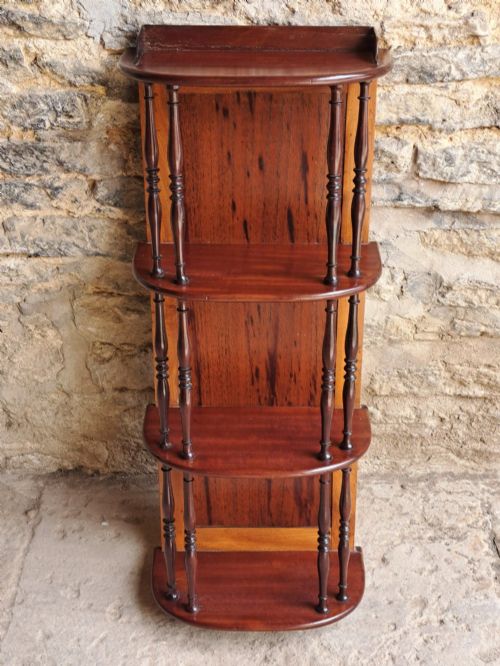
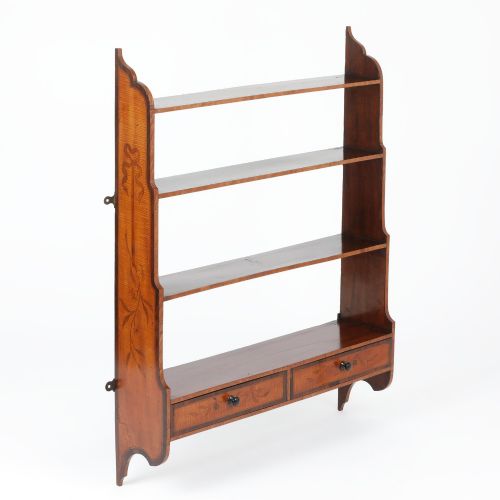
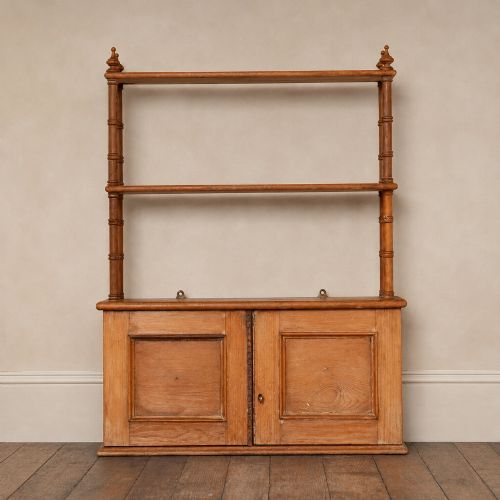
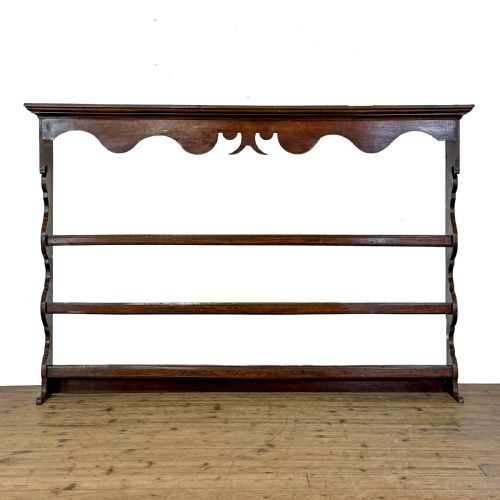


Hanging Open Shelves
Hanging open shelves provide practical wall storage with period character, offering accessible display space for books, ceramics and ornaments.
Hanging Open Shelves
Hanging open shelves comprise wall-mounted tiers designed to display books, plates and decorative objects without doors or enclosures. They serve as functional wall furniture originating across Georgian, Victorian and Edwardian periods.
The pieces on this page appear predominantly in mahogany, walnut and oak, alongside painted timber, satinwood and pine. Formats range from simple wall racks and corner shelves to waterfall bookcases and display tiers.
Originating in English country houses and town residences, these items adapt easily to modern rooms for vertical storage. They combine utilitarian purpose with decorative architectural presence.
Materials and construction methods
Cabinetmakers constructed hanging open shelves using dense hardwoods like mahogany and walnut, alongside regional timbers such as oak, pine and cherry. Fine examples integrate contrasting veneers, satinwood details or ebonised timber.
Joinery techniques involve secure wall-mounting brackets, dovetailed joints and shaped side supports designed to bear the weight of books and heavy ceramics. Painted finishes and hand-applied glazes appear on decorative folk art and country pieces.
Hanging Open Shelves Retail Price Guide 2026
Typical asking prices for hanging open shelves among the pieces listed under this phrase on Sellingantiques today, from the lower quarter to the upper quarter. They describe what is for sale here now, not the wider market.
Materials represented include mahogany, oak, walnut, rosewood, satin birch, cherry, pine and ebonised timber.
Judging quality and proportion
Superior quality rests on the selection of timber grain, the crispness of shaped bracket supports and the integrity of the original hanging fixings. Finer pieces demonstrate thoughtful proportions where shelf depth tapers gracefully upwards.
Simpler provincial variants utilise pine or oak with straightforward pegged joints, whilst formal Regency and Georgian iterations exhibit refined mouldings and cabinet-grade mahogany.
George Edmund Street
The Hanging Open Shelves Glossary
- Waterfall bookshelves
- Tiers that step back progressively from bottom to top, creating a cascading profile popular in the 19th century. This design reduces visual weight on the wall.
- Whatnot
- A moveable or wall-mounted set of open shelves used for displaying bric-a-brac and small ornaments. They became popular during the Victorian period.
- Plate rack
- A wall-mounted rack featuring grooves or rails specifically designed to hold plates upright. They often form part of traditional dresser furniture.
- Gothic Revival
- A 19th-century style drawing inspiration from medieval architecture, characterised by pointed arches and ebonised finishes. It appears on architectural bookcases.
- Satinwood
- A pale, lustrous timber imported from the tropics, utilised for fine cabinetmaking and decorative inlays during the Georgian and Edwardian eras.
Hanging Open Shelves: Frequently Asked Questions
How do I hang antique shelves safely?
Antique wall shelves require solid fixings into wall studs or masonry using appropriate screws and brackets. The weight of books and ceramics places significant strain on vintage timber and original hanging points.
Distributing weight evenly across the shelves prevents distortion. Professional installation ensures the piece remains secure against the wall surface.
What is the difference between a whatnot and a bookcase?
A whatnot is specifically built for display, featuring multiple open tiers for ornaments, curiosities and small collections. Bookcases prioritise structural depth and shelf height to accommodate bound volumes.
Many wall-mounted pieces bridge both categories, serving as narrow bookshelves that double as display ledges for decorative objects.
Are these shelves suitable for heavy books?
Smaller Georgian and Victorian shelves work best for paperbacks, small volumes and decorative objects rather than heavy folios. The shelf depth and timber thickness determine capacity.
Pine and mahogany variants from the 19th century offer sturdy support when mounted correctly, but shallow waterfall shelves suit lighter items.
How do I date antique wall shelves?
Dating relies on timber selection, nail construction types, edge mouldings and decorative styles like Gothic Revival or Sheraton. Mahogany and walnut indicate Georgian or Victorian periods, whilst pine points towards country workshops.
Hardware fixings and backboards provide additional clues to the manufacturing decade.