



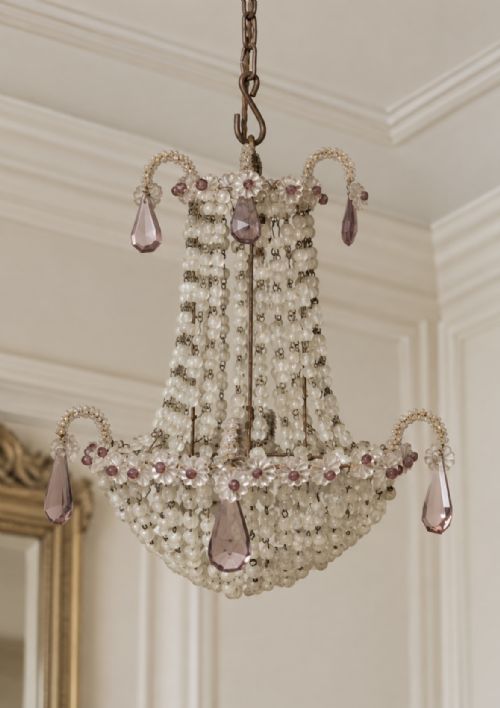


Hanging Glass Drops
Hanging glass drops bring movement and refracted light to period chandeliers and candelabras, offering a tactile focal point for traditional interiors.
Hanging Glass Drops
Hanging glass drops appear suspended from chandeliers, pendant lights, wall sconces, and candelabras across various periods. When searching for hanging glass drops, buyers encounter components typically sourced from lighting fixtures spanning the nineteenth century through the 1930s. These decorative elements dangle from metal frameworks to catch and scatter ambient light around a room.
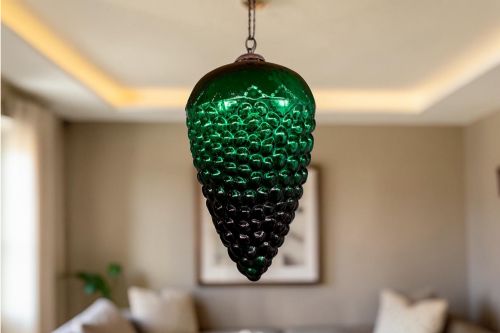
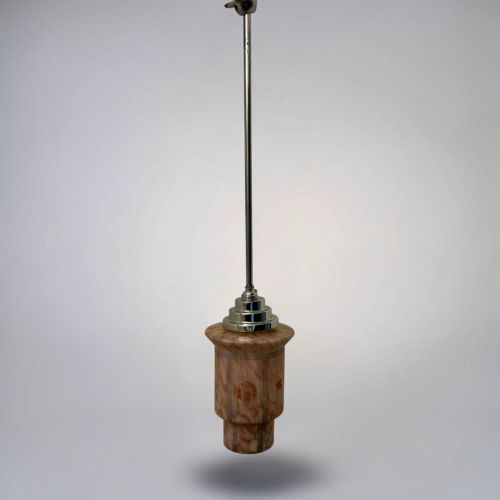
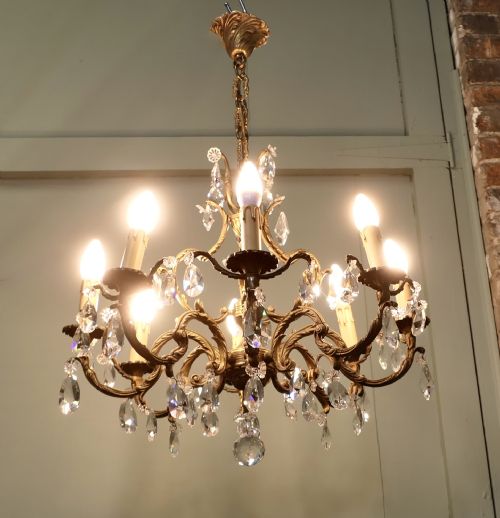
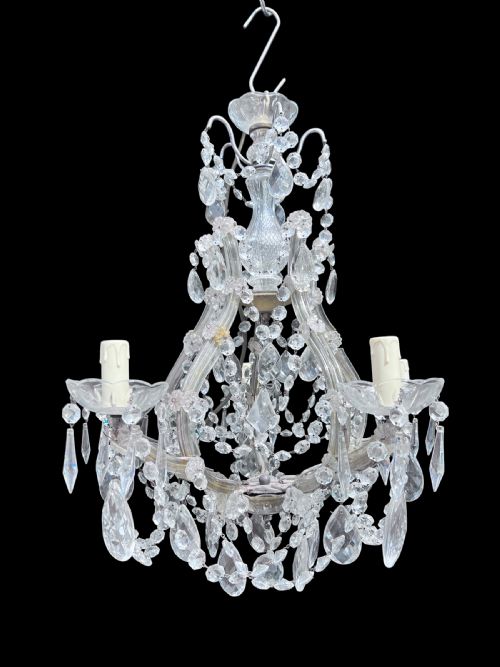
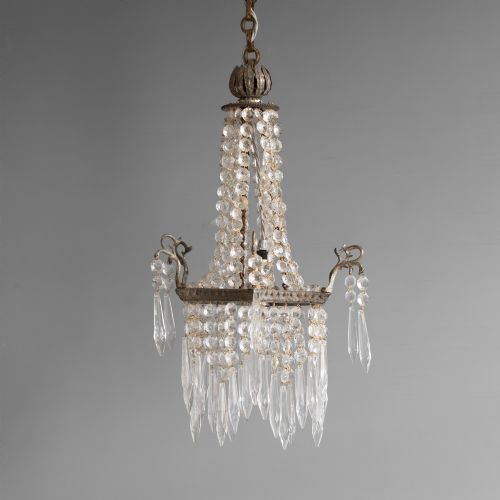
The selections available here emphasise French and Italian chandelier components alongside complete pendant lights fitted with crystal or opaline shades. Common forms range from simple teardrops and cut prisms to elaborate fruit-shaped drops and tent-and-waterfall configurations. Many examples originate from early twentieth-century production, incorporating brass, gilt metal, and chrome structures.
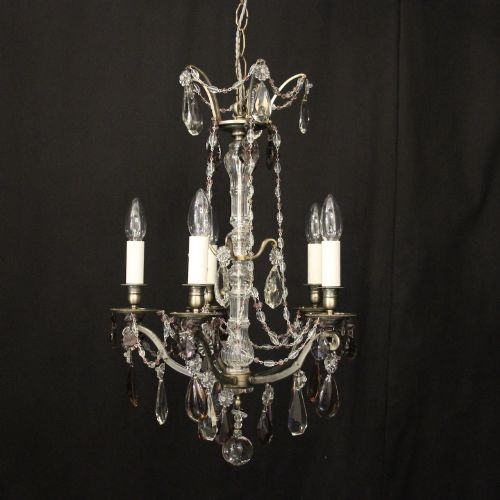
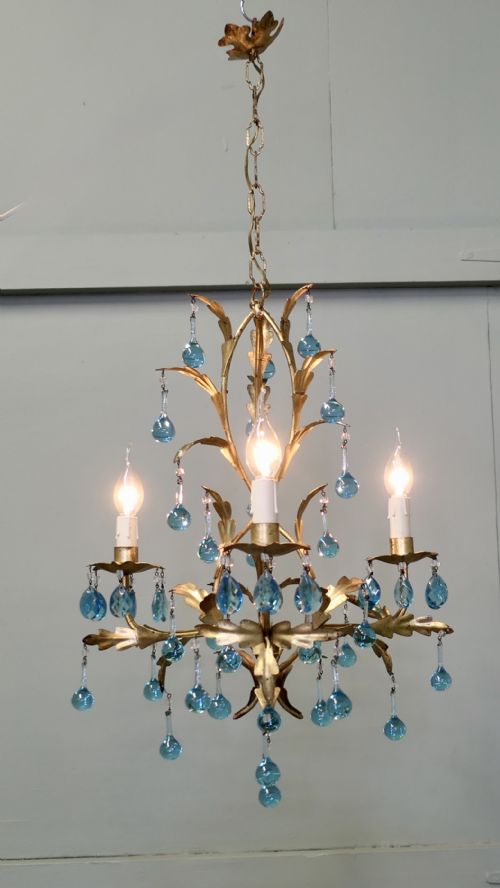
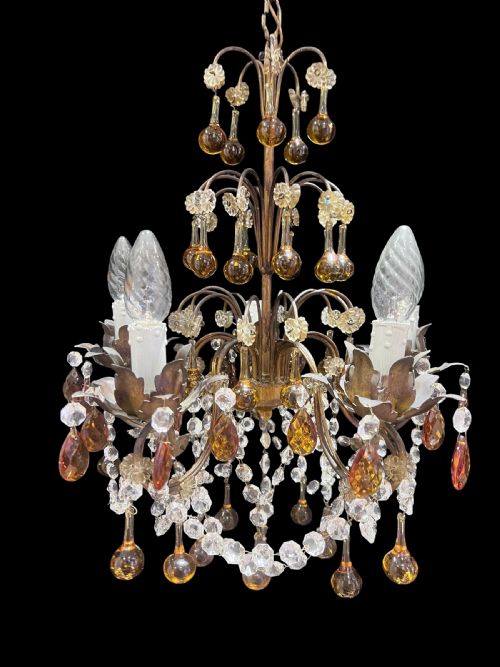
Period pieces often reflect regional lighting traditions, such as French gilded bronze frames or Italian Marie Theresa designs adorned with coloured crystals. Buyers frequently discover individual drops attached to larger assemblies or complete antique fixtures where the glass ornamentation forms the primary decorative feature. These items range from compact Edwardian spike chandeliers to large multi-armed centre lights.
Materials and construction
Makers constructed these lighting elements using a combination of cast or spun metals and manually shaped glass or crystal. Brass, gilded bronze, gilt metal, and chrome provide the structural framework for mounting the suspended glass components securely. Metal elements often receive surface gilding or plating to enhance their visual weight and complement the reflective properties of the glass.
Glass elements rely on mould-blowing, hand-cutting, and polishing techniques to achieve sharp facets and smooth, rounded profiles. Workers drilled or pierced individual glass drops to allow wire or pin attachment to the surrounding metal frames. This integration of cut glass and metal creates stable hanging assemblies designed to withstand the gentle movement and heat of interior spaces.
Hanging Glass Drops Retail Price Guide 2026
Typical asking prices for hanging glass drops among the pieces listed under this phrase on Sellingantiques today, from the lower quarter to the upper quarter. They describe what is for sale here now, not the wider market.
Current selections span from nineteenth-century cut glass and brass designs through to 1930s opaline and chrome pendant lights.
Assessing quality and craftsmanship
Quality in these lighting components rests upon the clarity of the glass and the precision of its cutting. Superior examples exhibit high lead crystal or clear glass with sharp, uniform facets that refract light cleanly without distortion. Lesser pieces may use softer moulded glass with rounded edges and minor surface bubbles that diffuse light rather than scatter it.
The refinement of the supporting metalwork also distinguishes better examples from standard production. Finely chased or gilded bronze frames and secure, period-appropriate wire connections indicate higher tier manufacturing. The depth and saturation of coloured crystals, from amber and mauve to turquoise and green, further separate exceptional decorative items from basic utilitarian lighting.
The Hanging Glass Drops Glossary
- Lustre
- A hanging glass pendant or drop attached to a candelabra, lamp, or chandelier to reflect light. These pieces swing freely from metal pins or wire loops.
- Tent and waterfall
- A specific chandelier arrangement where strings of beads form an upper tent shape that cascades down into a wider waterfall of hanging drops. This style maximises light refraction across multiple tiers.
- Opaline glass
- A type of semi-opaque, milky glass developed in the nineteenth century and widely used for pendant light shades. It softens direct bulb illumination into a gentle, diffused glow.
- Holophane shade
- A ribbed or prismatic glass shade designed to direct and diffuse light efficiently while reducing glare. These industrial and domestic shades appear frequently on early twentieth-century pendants.
Hanging Glass Drops: Frequently Asked Questions
What are hanging glass drops used for?
Hanging glass drops serve primarily as decorative refractors on chandeliers, wall sconces, and candelabras. They catch natural and artificial light to brighten dark corners and add visual sparkle to a room.
Collectors also source loose drops to restore incomplete antique lighting fixtures to their original appearance. Their faceted surfaces transform static illumination into dynamic patterns of light.
How do I clean antique crystal drops?
Cleaning requires a gentle solution of warm water and mild dish soap applied with a soft, lint-free cloth. Technicians advise against harsh chemical cleaners that can damage vintage metal mounts or dull the glass surface.
Many keepers wash delicate drops individually while leaving them attached to the fixture if the metalwork is secure. Thorough drying prevents water spots from forming on the polished facets.
How do I date a glass drop chandelier?
Dating relies on examining the metal framework, wiring methods, and the specific cut or tint of the glass drops. Edwardian and 1920s pieces often feature gilt brass or bronze frames with distinct crystal shapes like pears or teardrops.
Industrial pieces from the 1930s typically incorporate chrome, opaline glass, or prismatic shades rather than hanging crystal lustres. Comparing the mounting style to documented period pieces helps narrow down the decade of manufacture.
Can these lights be rewired for modern homes?
Most antique pendant lights and chandeliers can be rewired to meet modern electrical safety standards. Professional electricians replace old cloth or rubber wiring with contemporary cable while preserving the original sockets and metal bodies.
Rewiring ensures the fixture operates safely without altering the historic exterior appearance of the brass or crystal components. Buyers should consult a qualified specialist to check internal fixings before installation.