




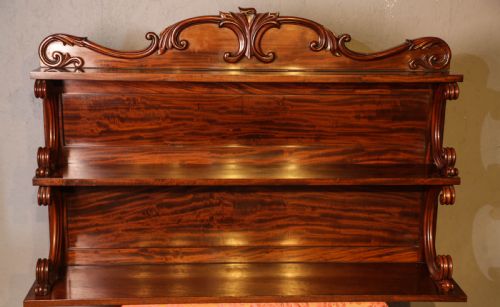

Hanging Bookshelves
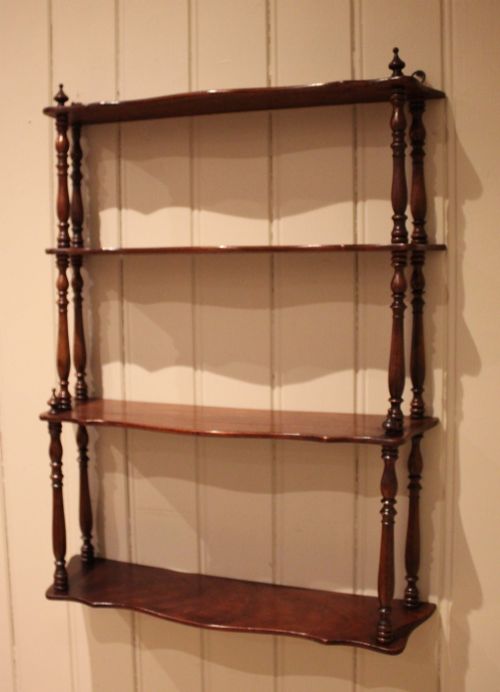
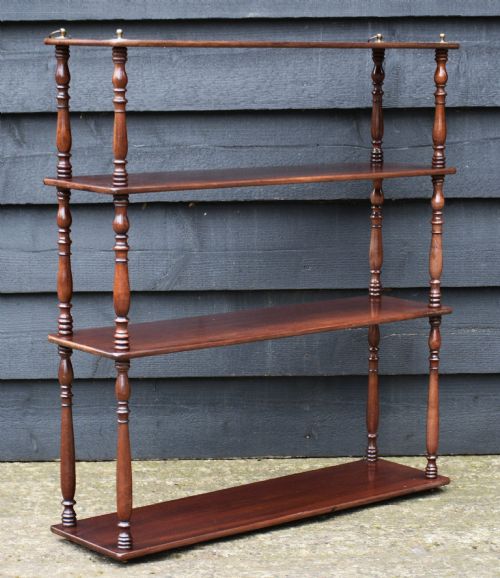
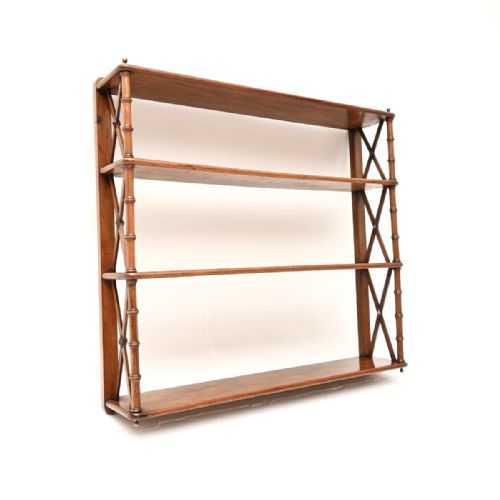
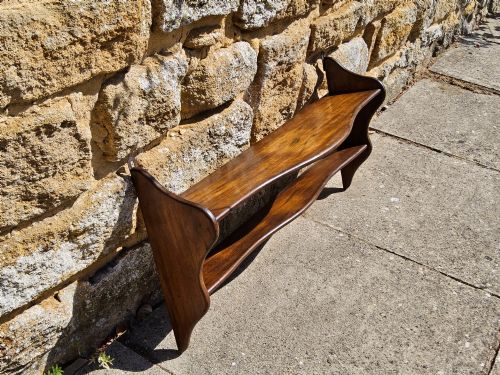
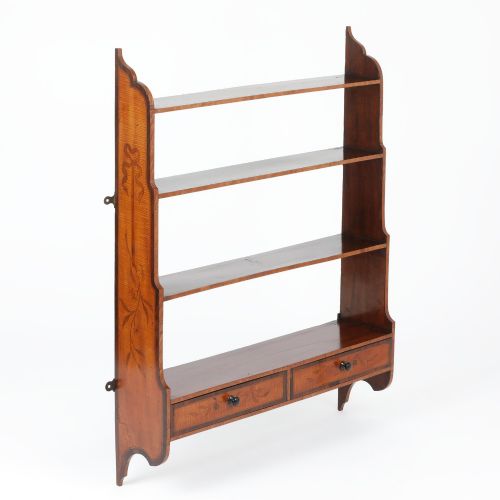
These hanging bookshelves are wall-mounted wooden display units designed to hold volumes while saving floor space.
Hanging Bookshelves
Hanging bookshelves provide compact vertical storage for volumes across domestic interiors. These wall-mounted units lift books off the floor, making them practical for smaller rooms or tighter spaces.
The selections span multiple periods, featuring examples from the eighteenth century, the Regency era, the Victorian period, and the Edwardian era. Forms range from simple wall shelves and plate racks to elaborate waterfall bookshelves and display units.
Mahogany forms the primary timber across the inventory, accompanied by walnut, oak, satin birch, and ebonised wood. Pieces appear in various regional styles, including Georgian, Sheraton, and Victorian Gothic Revival.
Materials and construction methods
Cabinet makers utilised dense hardwoods like mahogany, walnut, and oak to ensure the shelves could support the substantial weight of bound books without sagging. Secondary timbers such as beech sometimes reinforce structural elements.
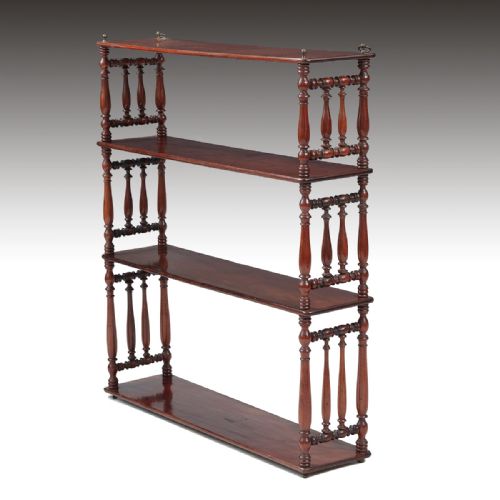
Joinery methods involve precise dovetailing and secure wall-mounting brackets to anchor the loaded shelves safely against plaster or wood-panelled walls. Decorative flourishes incorporate brass fittings, ebonised timber accents, and turned bobbin details.
Hanging Bookshelves Retail Price Guide 2026
Typical asking prices for hanging bookshelves among the pieces listed under this phrase on Sellingantiques today, from the lower quarter to the upper quarter. They describe what is for sale here now, not the wider market.
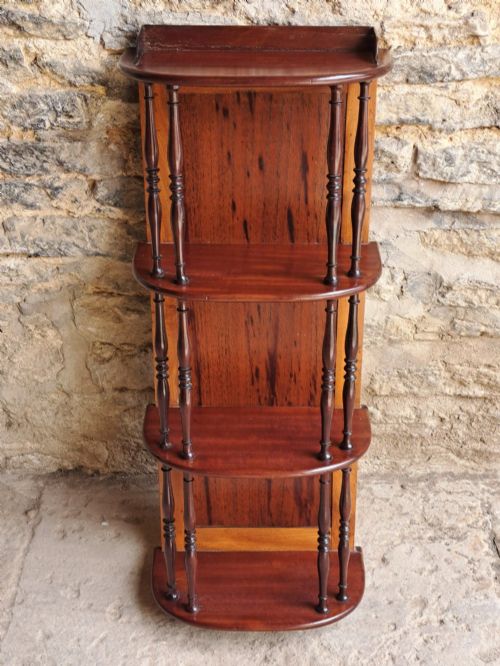
Some nineteenth-century makers used turned wooden bobbins to hold up the books, giving sturdy oak a surprisingly playful, spool-like silhouette.
Distinctions in craftsmanship
Quality rests in the selection of figured timber veneers, the tightness of the structural joints, and the crispness of any carved or turned ornamentation. Superior examples display balanced proportions and harmonious grain matching across the visible tiers.
Lesser pieces exhibit simpler construction with utilitarian softwood backs or heavy, unsympathetic repairs that compromise the original profile. The presence of integrated hanging brackets and intact original brass work distinguishes the finer items.
George Edmund Street
The Hanging Bookshelves Glossary
- Waterfall bookshelves
- Tiers that step back progressively from bottom to top, creating a cascading profile popular in the nineteenth century.
- Plate rack
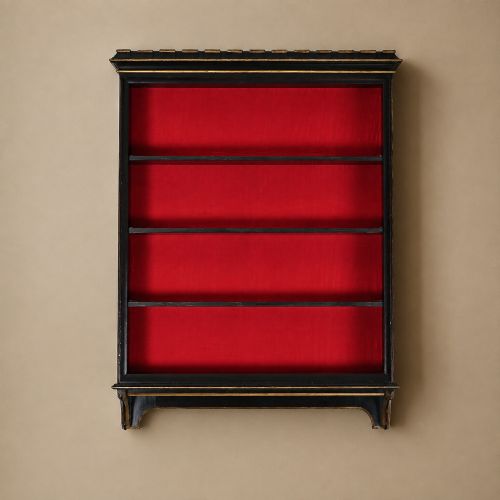
- A wall-mounted shelving tier fitted with a narrow groove or retaining rail to keep upright items secure.
- Bobbin shelves
- Wall units featuring turned wooden spindles shaped like bobbins or spools as decorative structural supports.
- Ebonised wood
- Timber treated with a dark stain or finish to imitate the dense appearance of ebony.
- George III
- The stylistic period spanning the reign of the third British monarch, noted for refined classical proportions.
Hanging Bookshelves: Frequently Asked Questions
How do hanging bookshelves mount securely to walls?
These units typically use integrated wooden battens, brass screw eyes, or heavy-duty wall brackets screwed directly into structural studs or masonry.
Ensuring proper anchoring into solid wall fixings is essential to safely bear the heavy weight of collected books.
What periods do these wall shelves date from?
The pieces span from the eighteenth century through the Regency era, the Victorian period, and into Edwardian times.
Design characteristics shift from restrained Georgian lines to ornate Victorian Gothic Revival and simpler Edwardian forms.
Can these shelves hold heavy hardback books?
Most antique hardwood shelves handle standard octavo volumes easily, provided the wall fixings are secure and the timber remains sound.
Heavier folios and dense reference books require careful consideration of shelf depth and overall structural rigidity.
How do I distinguish Regency from Victorian shelves?
Regency pieces often feature clean neoclassical lines, lighter mahogany grains, and restrained classical brass details.
Victorian variants frequently display heavier mouldings, darker finishes, ebonised highlights, or Gothic architectural motifs.