







Hand Woven Mahal Carpet
A hand woven mahal carpet brings room-filling Persian warmth to a floor through enduring natural materials and large-scale traditional floral patterns.
Hand Woven Mahal Carpet
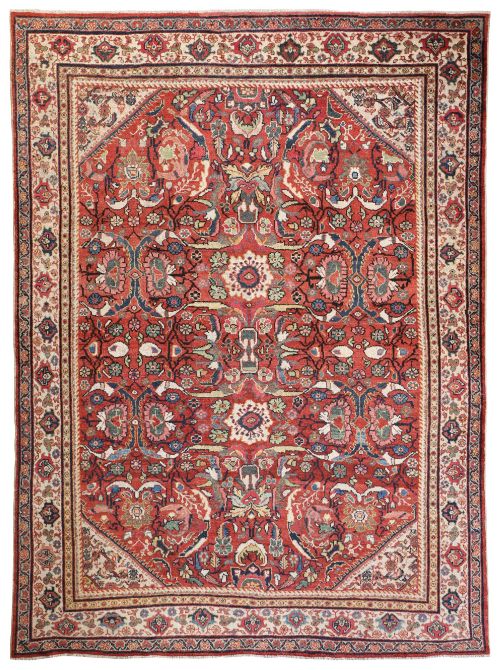
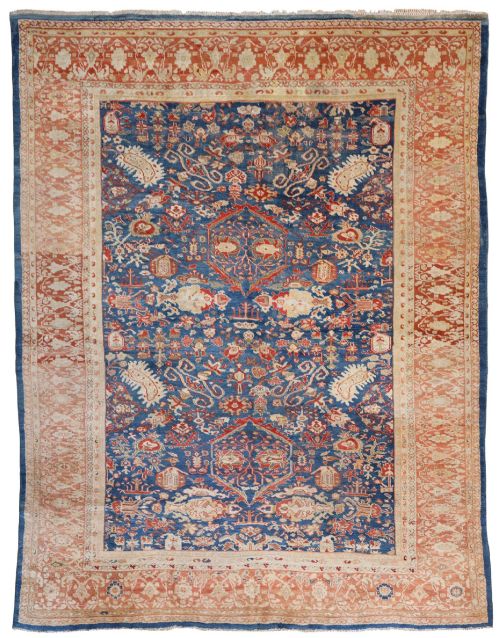
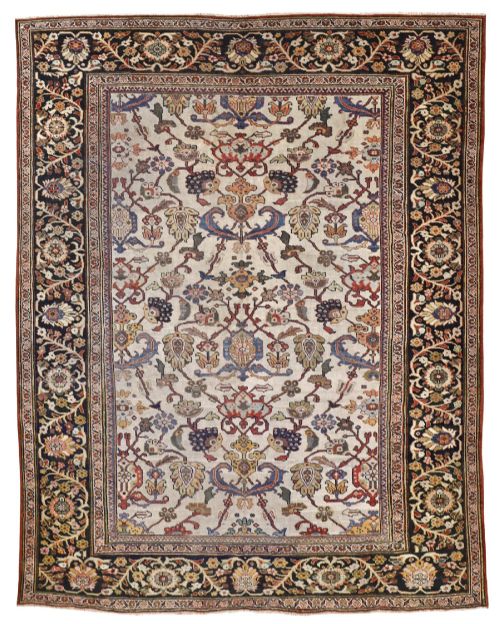
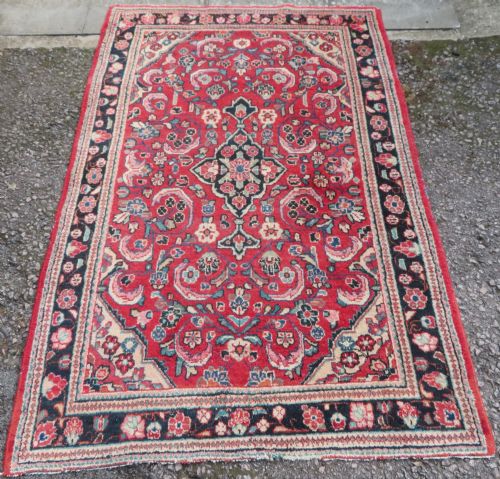
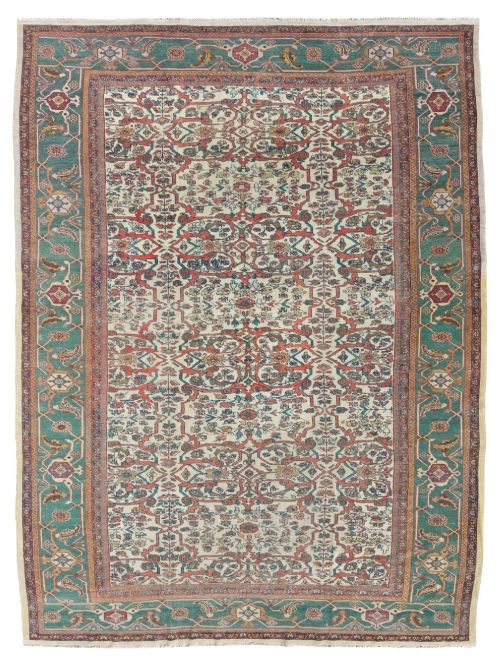
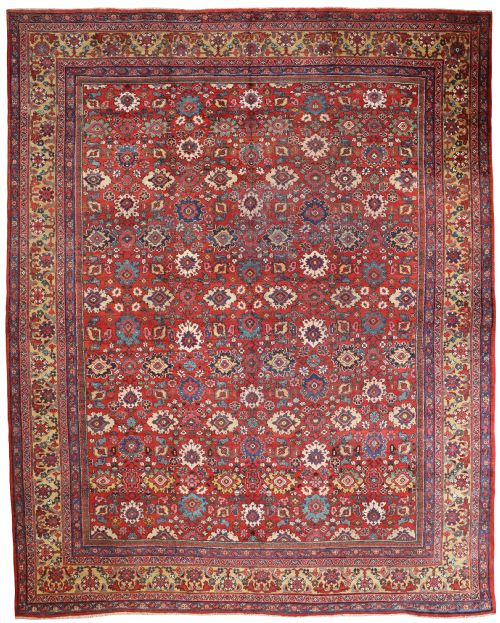
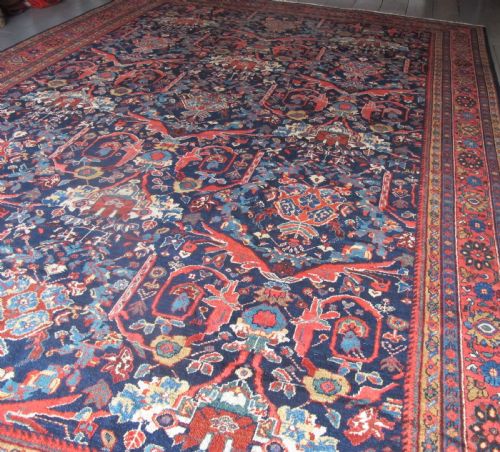
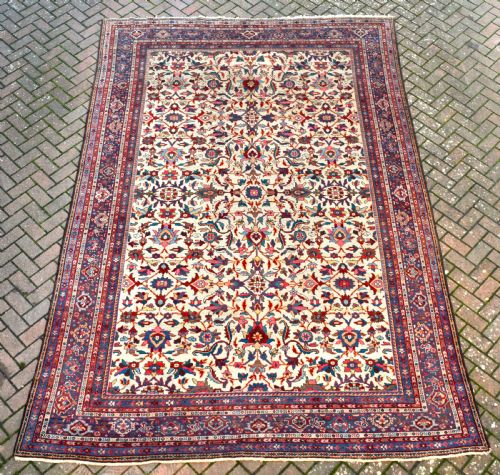
When you examine a hand woven mahal carpet, you are looking at floor coverings originating from West Persia that span the late Victorian era through the early twentieth century. The selection ranges from room-sized carpets down to village rugs, produced across decades including the 1880s, 1890s, and 1900s.
You will most frequently encounter Persian Mahal and Sultanabad formats featuring traditional regional designs, often carrying ivory or terracotta grounds. These pieces include specific stylistic variations such as Ziegler and Mustafi patterns woven on room-scale dimensions.
The objects serve as functional floor textiles designed to anchor large spaces, distinguished by their origin in Persian weaving centres. They bridge the gap between grand formal salon carpets and rustic village productions.
How they were made
The construction of a hand woven mahal carpet relies fundamentally on wool piles knotted onto cotton foundations. This pairing provides the structural stability needed for large room-size dimensions while maintaining a flexible handle.
Weavers utilised traditional hand-knotting techniques characteristic of West Persian production, creating dense textile surfaces capable of enduring generations of foot traffic. The materials reflect regional availability, prioritising durable spun wool and strong cotton warps and wefts.
Hand Woven Mahal Carpet Retail Price Guide 2026
Typical asking prices for hand woven mahal carpet among the pieces listed under this phrase on Sellingantiques today, from the lower quarter to the upper quarter. They describe what is for sale here now, not the wider market.
Some nineteenth-century weavers managed to hide small asymmetrical motifs in the corners, as if leaving a secret signature behind.
What varies in quality
The standard of a hand woven mahal carpet is determined by the fineness of the knotting and the precision of the drawing within the Persian design. Higher grade examples display crisper floral motifs and more balanced proportions across large fields.
Quality also rests in the integrity of the wool and the depth of the natural dyes, which dictates how the pile wears over time. Superior room-size specimens maintain structural firmness and retain rich terracotta or ivory ground tones without heavy restoration.
The Hand Woven Mahal Carpet Glossary
- Mahal
- A type of Persian carpet originating from the Arak region, known for large-scale floral patterns and room-sized formats. These pieces date predominantly from the late nineteenth and early twentieth centuries.
- Sultanabad
- A designation closely related to Mahal carpets, often applied to nineteenth-century West Persian weaving featuring bold, monumental designs. They share similar wool and cotton material structures.
- Ziegler
- A style of Persian carpet produced for the Western market, distinguished by softer palettes and large open fields. They represent a commercial adaptation of traditional Mahal aesthetics.
- Mustafi
- A classic repeating floral and trellis pattern found on select Persian carpets. The layout creates an interconnected network across the ground of the textile.
- Arak
- The central Persian district encompassing the villages and workshops where Mahal and Sultanabad carpets were woven. It serves as the geographical origin for these regional styles.
Hand Woven Mahal Carpet: Frequently Asked Questions
How do I clean a hand woven mahal carpet?
Maintenance requires gentle vacuuming without the use of a rotating brush bar to protect the wool pile and cotton foundations. Professional textile conservators should handle wet washing or deep cleaning.
Avoid chemical spot treatments that can alter the natural dyes. Regular rotation ensures even wear across rooms with high foot traffic.
Where were these carpets made?
These textiles were produced in West Persia, specifically in and around the district of Arak. Local workshops and villages created them for both domestic use and export.
The production methods reflect traditional regional weaving practices handed down through generations of artisans.
How can I tell a Mahal from a Ziegler carpet?
Ziegler carpets generally exhibit softer, more muted colour palettes and more open fields designed specifically for Western interiors of the late nineteenth century. Standard Mahal pieces often feature bolder field colours such as terracotta or deep ivory.
Both share West Persian origins and similar wool-on-cotton construction techniques.
Can I use an antique carpet in a modern room?
These carpets suit contemporary interiors by grounding minimalist spaces with organic textures and historic patterns. Their large room-size dimensions help define seating areas in open-plan living spaces.
The enduring palette of terracotta, ivory, and soft field tones complements diverse interior design schemes.