


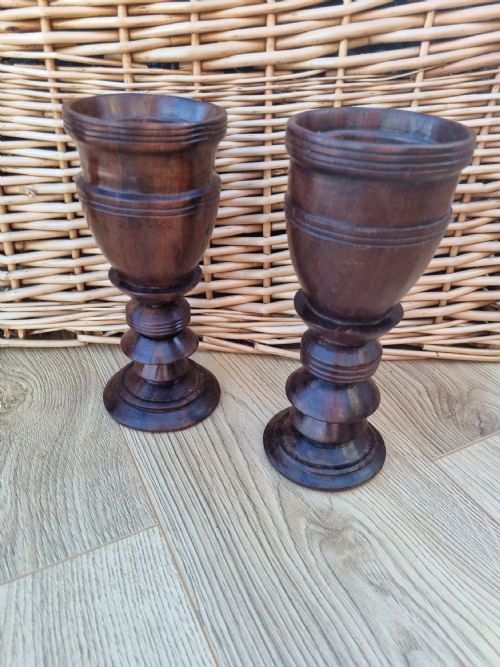


Hand Turned Treen
Hand turned treen brings together centuries of utility and domestic craft, shaped on a lathe from dense native hardwoods.
Hand Turned Treen
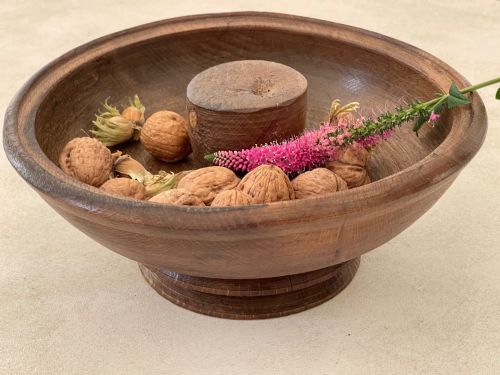
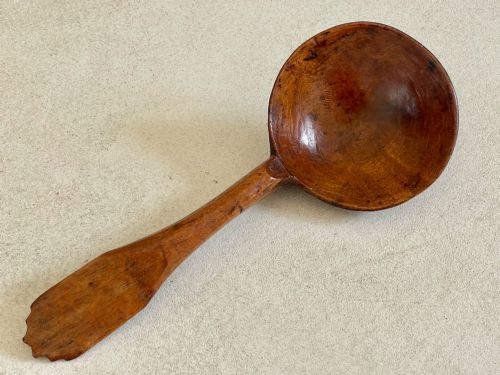
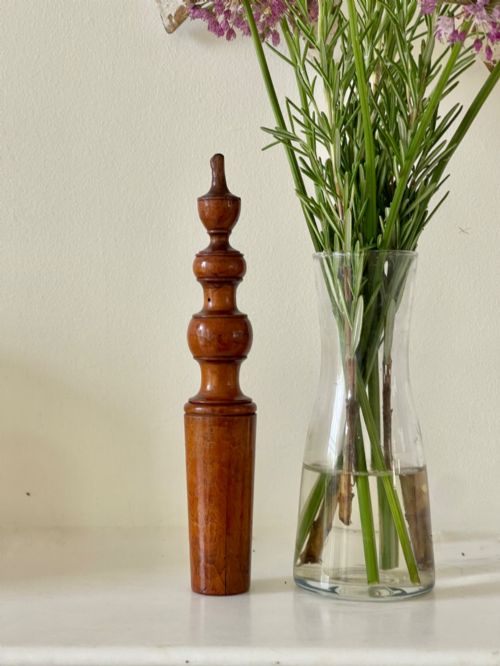
Hand turned treen encompasses a wide variety of domestic and decorative wooden objects produced across the eighteenth and nineteenth centuries. Buyers searching for hand turned treen encounter everything from substantial dairy bowls and mortar and pestle sets to diminutive items like snuff spoons, children's rattles, and nutcrackers.
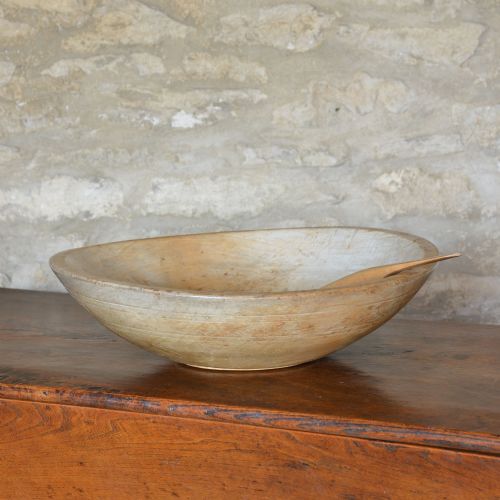
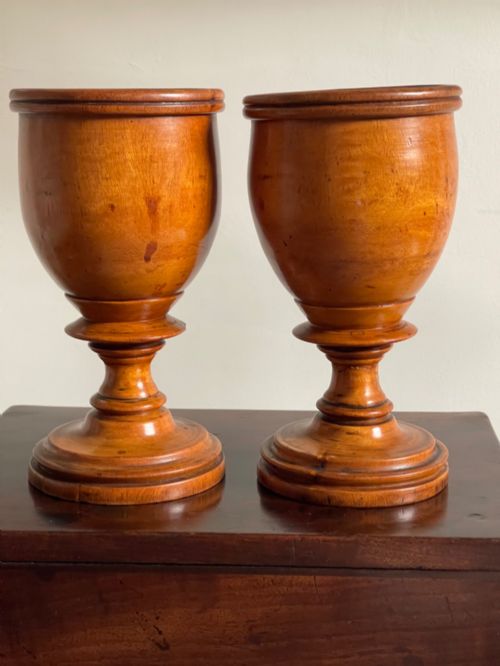
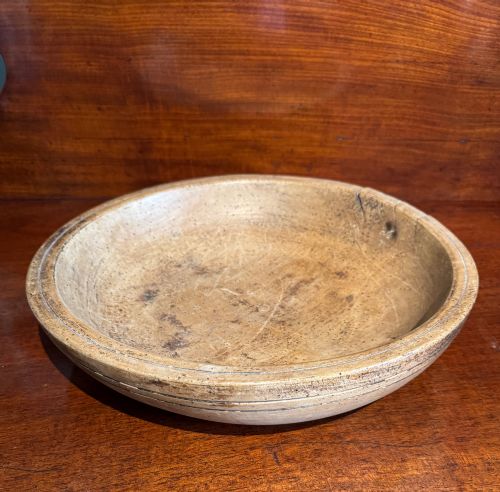
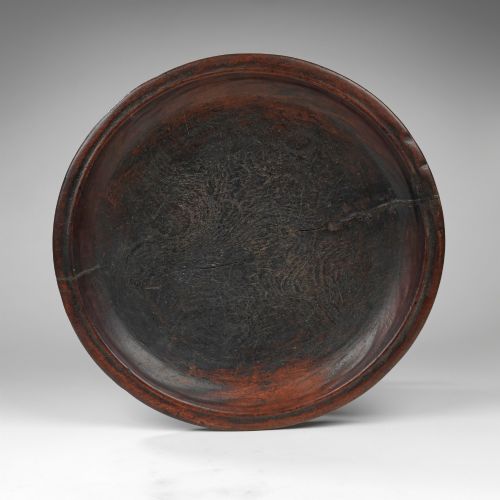
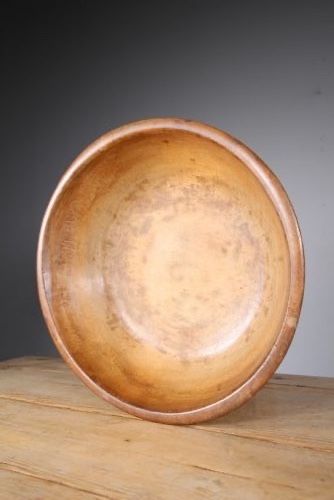
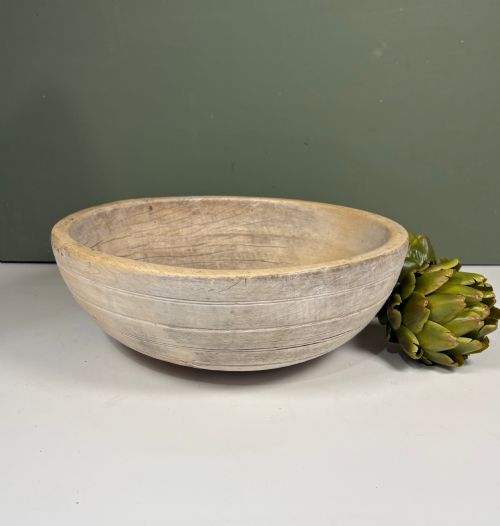
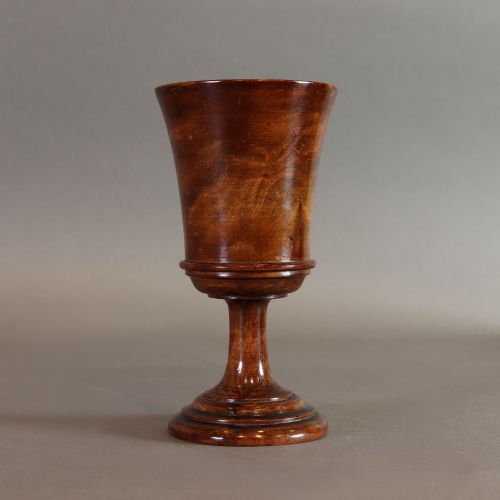
The most common forms on this page are large sycamore dairy bowls and fruitwood drinking vessels originating from English, French, and Welsh workshops. These pieces span Georgian, Victorian, and folk art traditions, reflecting how rural households relied on turned wood for daily tasks before mass production.
How they were made
Craftsmen shaped these objects on a lathe using dense, resilient hardwoods such as sycamore, fruitwood, walnut, ash, and lignum vitae. Turning green or seasoned timber allowed makers to achieve perfectly round vessels, balanced goblets, and hollow forms with thin, uniform walls.
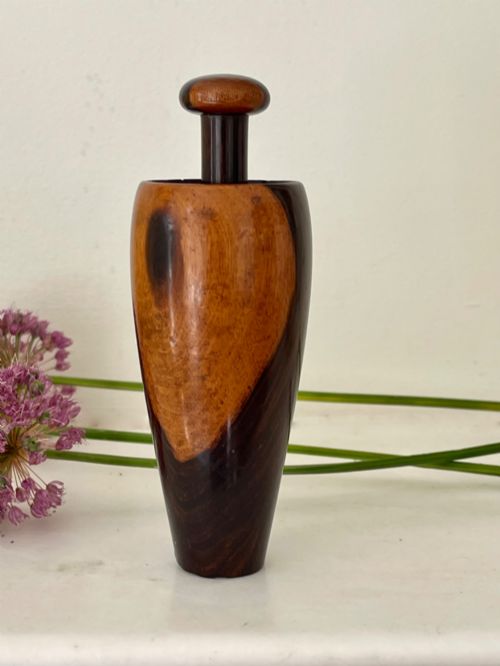
Makers selected specific timbers for their functional qualities, utilising heavy lignum vitae for mallets and mortars that required durability, and light sycamore for dairy bowls that needed to resist splitting and remain clean. Tool marks and lathe centres often remain visible, recording the direct interaction between the turner and the wood.
Listings feature 19th Century, Georgian, and 1850 periods alongside materials like sycamore, walnut, lignum vitae, and fruitwood.
What varies in quality
Quality in hand turned treen rests upon the purity of the timber selection, the crispness of the original turning, and the survival of an honest surface. Superior examples display balanced proportions, clean wall thickness, and tight grain alignment that resisted warping over centuries of use.
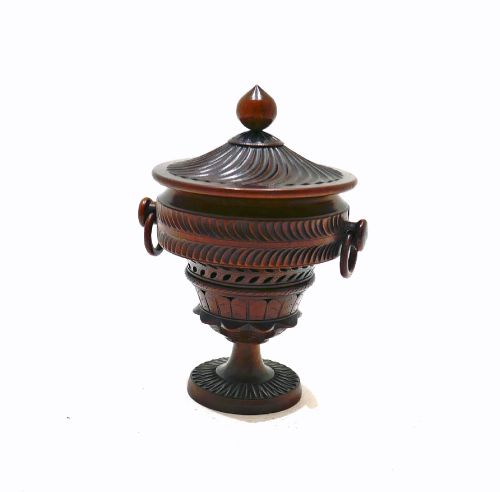
The desirability of a piece often hinges on its depth of tone and tactile wear rather than a pristine factory finish. Objects that retain their original function, such as lidded pomanders, spice grinders, or bird calls, command attention for their inventive mechanics and scarcity.
The Hand Turned Treen Glossary
- Treen
- Small domestic wooden objects made by turning, carving, or joining. The term derives from old English and encompasses items ranging from kitchenware to personal accessories.
- Sycamore
- A pale, close-grained hardwood favoured by turners for dairy bowls and kitchen utensils because it does not impart odours or flavours to food.
- Lignum Vitae
- An exceptionally heavy and dense exotic hardwood used for items requiring high impact resistance, such as mallets and pharmaceutical mortars.
- Dairy Bowl
- A wide, shallow wooden vessel used historically for setting milk and skimming cream. These are typically turned from a single piece of sycamore.
- Bilboquet
- A traditional cup and ball game consisting of a turned wooden handle and a ball attached by a cord. Players attempt to catch the ball in the cup.
- Pomander
- A small lidded container designed to hold aromatic substances or spices. These turned wooden vessels often feature pierced bodies for scent diffusion.
Hand Turned Treen: Frequently Asked Questions
What is hand turned treen?
Hand turned treen refers to small utilitarian and decorative wooden objects shaped on a lathe by historical woodturners. The category covers kitchen items, games, drinking vessels, and personal accessories.
These pieces were made for everyday domestic life before the arrival of modern plastics and mass-produced ceramics. Their survival depends on the durability of the hardwoods used and how carefully previous generations maintained them.
How do I care for treen?
Living with hand turned treen requires keeping pieces away from direct heat sources and sudden temperature fluctuations that cause timber to split. Gentle cleaning with a dry or barely damp cloth preserves the historical surface.
Applying occasional natural wax helps maintain the dry lustre of the wood without sealing the grain. The goal is to protect the natural patina built up through decades of handling and use.
How do I date a turned wooden bowl?
Dating a turned wooden bowl involves examining the tool marks left by the lathe, the species of timber, and the overall form. Georgian and nineteenth-century bowls often show distinct chatter marks from pole lathes or early mechanical lathes.
Wear patterns around the rim and base also indicate age, alongside the gradual darkening of the wood through oxidation and grease absorption. Comparing proportions and timber choices with dated examples helps narrow down the period.
What were dairy bowls used for?
Dairy bowls were essential vessels in nineteenth-century dairies for setting raw milk to let the cream rise to the top. Their wide, shallow shape maximised the surface area for skimming.
Made primarily from sycamore because of its clean, non-porous qualities, these bowls saw heavy daily scrubbing with sand or stone. This intensive cleaning process gives surviving examples their characteristic pale, scoured interior surfaces.