




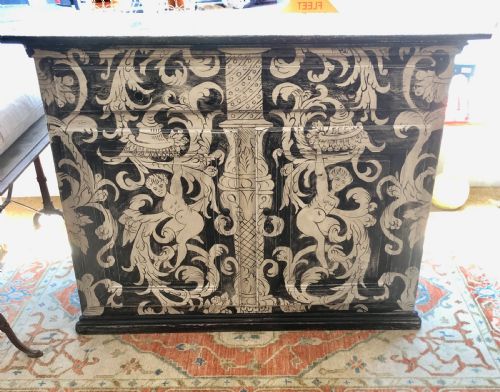

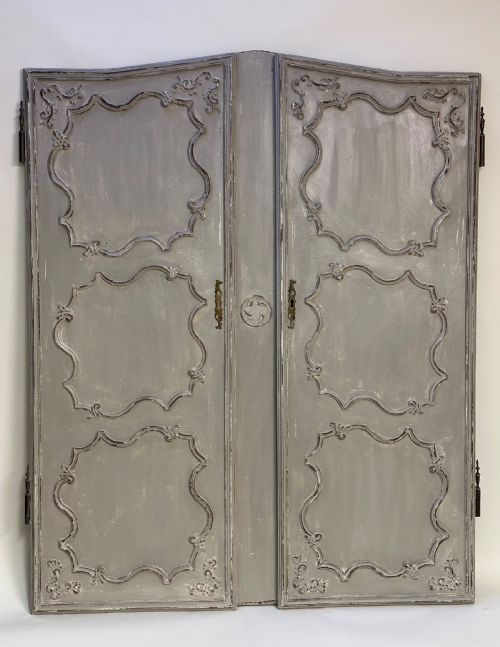
Hand Painted Wooden Doors
These hand painted wooden doors bring rich architectural character and colour into a room, offering immediate texture and history.

Hand Painted Wooden Doors
When you search for hand painted wooden doors, you encounter architectural salvage repurposed from various global traditions, including Indian, French, and Chinese origins. These items range from large structural cart doors and room entries to cupboard doors and wall art installations framed for modern interiors.
The pieces on this page span several distinct periods, notably the eighteenth, nineteenth, and early twentieth centuries. You will find traditional Indian painted panels alongside French carved designs and Asian lacquered storage elements.
Many examples retain their original frames, while others function as decorative wall hangings or structural partitions. Their primary appeal lies in the combination of aged timber and weathered polychrome decoration.
How they were made
Construction relies on solid timbers such as pine, teak, and various heavy hardwoods suited to structural joinery and daily architectural use. Carpenters utilised traditional framing and panel techniques to ensure stability across large surface areas.
Surfaces were prepared with ground layers before artisans applied natural pigments, oils, or lacquer by hand. Iron and brass hardware, including strap hinges and latches, completed the assembly of these functional barriers.
Hand Painted Wooden Doors Retail Price Guide 2026
Typical asking prices for hand painted wooden doors among the pieces listed under this phrase on Sellingantiques today, from the lower quarter to the upper quarter. They describe what is for sale here now, not the wider market.
Some doors arrive bearing the cheerful scars of daily village life, occasional livestock nudges, and centuries of cheerful local redecorating.
What varies in quality
The distinction between ordinary and superior examples rests in the preservation of the original hand-applied pigments and the integrity of the underlying timber. Pieces that retain their authentic surface patination without excessive modern repainting command greater interest from collectors.
The complexity of the carving and the quality of the original iron or brass fittings also elevate a piece. Balanced proportions and the survival of matching pairs or complete original frames set the finest specimens apart.
Melissa White
The Hand Painted Wooden Doors Glossary
- Architectural salvage
- Building elements rescued from structures slated for demolition or renovation, preserved for decorative or practical reuse.
- Polychrome
- The practice of decorating architectural elements or furniture in multiple colours using hand-applied pigments.
- Lacquer
- A durable resin finish applied in thin coats to wood, offering a hard, smooth surface often seen on Asian furniture.
- Pelmet
- A decorative framework placed above a window or door opening to conceal fixtures and frame the upper section.
- Cart door
- A heavy timber panel originally constructed for agricultural or transport vehicles, often repurposed as decorative wall art due to its robust scale.
Hand Painted Wooden Doors: Frequently Asked Questions
How do I hang heavy wooden doors on a wall?
Heavy architectural panels require secure load-bearing fixings attached directly to wall studs or masonry using appropriate heavy-duty brackets.
Consult a professional installer to ensure the weight of the timber and frame is safely supported.
Can these doors be used as actual room dividers?
Many examples function well as functional room entries or sliding partitions depending on their original construction and thickness.
Check the depth and weight of the specific timber frame before attempting standard architectural installation.
How should I clean hand painted wooden surfaces?
Dust the timber gently with a dry, soft cloth to remove surface particles without disturbing fragile historic pigments.
Avoid liquid cleaners, chemical solvents, or abrasive polishes that might strip the original paint layers.
How can I tell the age of these doors?
Age is determined by the tool marks on the timber, the style of the joinery, and the composition of the paint layers.
Nineteenth-century and older pieces typically display hand- forged iron hardware and aged patina consistent with historical use.