

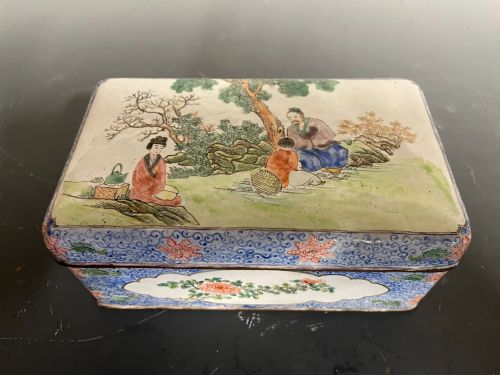
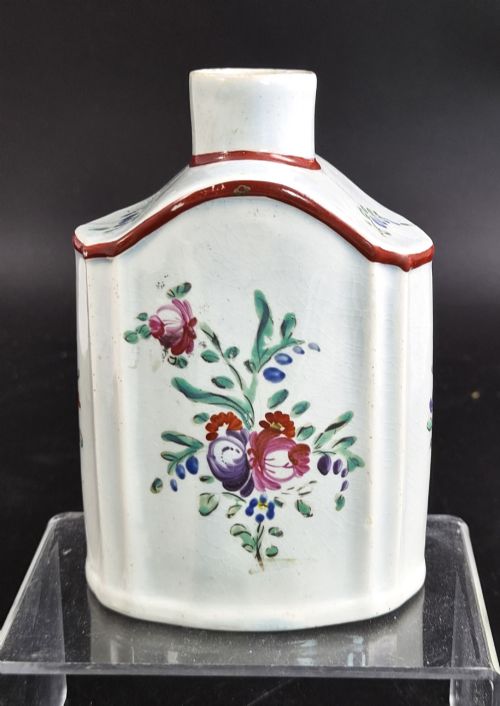
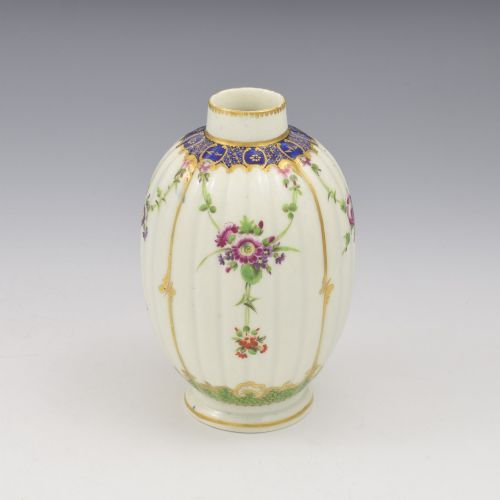
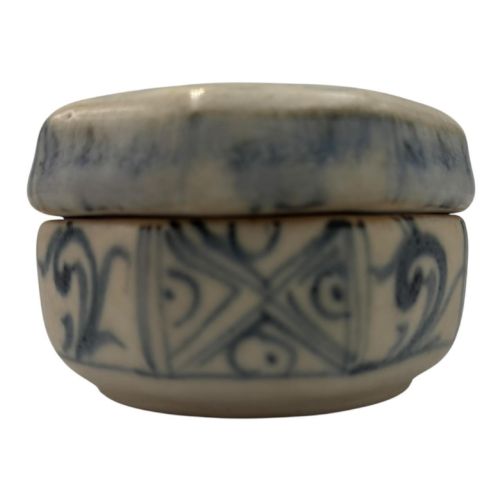
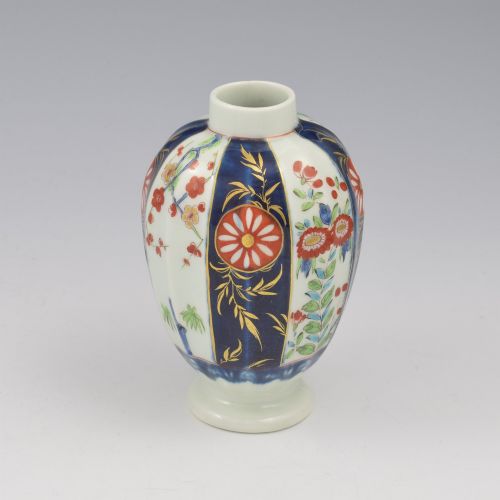

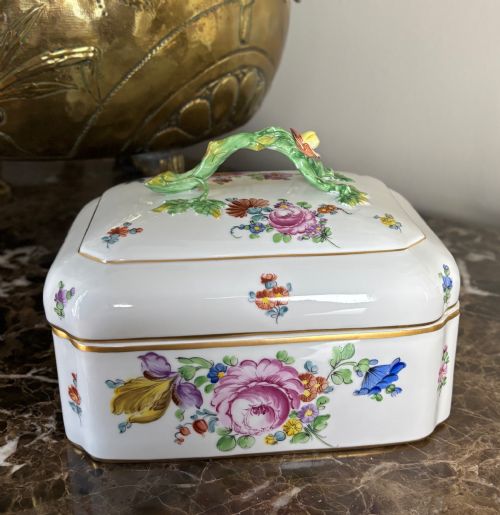
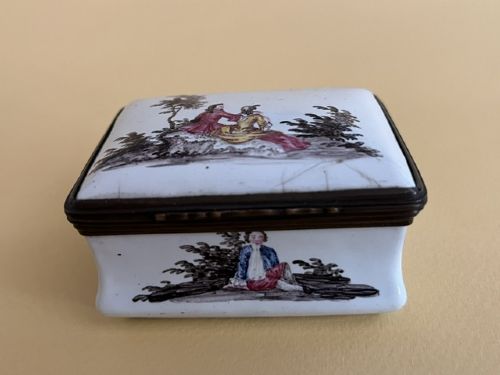
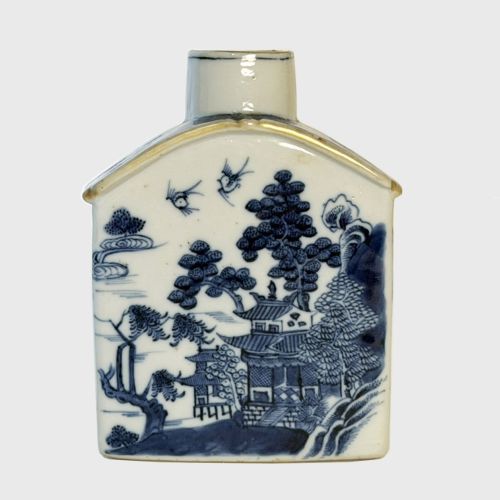


Hand Painted Caddy
These hand painted caddy pieces are decorated boxes and tea canisters created to hold leaf tea or treasures, bringing painted artistry into period interiors.
Hand Painted Caddy
When searching for a hand painted caddy, buyers encounter a variety of decorated storage vessels, from Georgian mahogany tea caddies to porcelain canisters and lacquer boxes. The pieces on this page span several centuries, with 18th century porcelain and Regency wooden boxes appearing alongside later Victorian and 20th century items.
Tea caddies and canisters form the core of these listings, though the selection also extends to sugar boxes, trinket boxes, and occasional larger storage pieces. Origins range widely across English makers, Chinese Export wares, European porcelain factories, and Scandinavian country workshops.
Materials and methods
Makers utilised timber such as mahogany, satinwood, and burr walnut, often shaping them into boxes or canisters before applying painted or lacquered surfaces. Gold leaf and fine pigments decorate both wood and porcelain substrates.
Ceramic examples rely on porcelain, earthenware, and faience, shaped into octagonal or fluted forms and decorated with floral enamels or hand-painted motifs.
Hand Painted Caddy Retail Price Guide 2026
Typical asking prices for hand painted caddy among the pieces listed under this phrase on Sellingantiques today, from the lower quarter to the upper quarter. They describe what is for sale here now, not the wider market.
Several boxes double as musical or games companions, proving that past generations liked their storage with a side of entertainment.
Distinctions in quality
The standard of a hand painted caddy rests on the precision of the brushwork and the preservation of the original painted or gilt decoration. Finer pieces display crisp, detailed enamel work or carefully executed chinoiserie scenes that retain their depth.
Construction quality also sets examples apart, seen in the choice of cabinet woods like mahogany or burr walnut, the stability of the box structure, and the integration of porcelain plaques or panels.
Leeds Pottery·Dr Wall Worcester·Kizan
The Hand Painted Caddy Glossary
- Tea caddy
- A small box or jar originally used for storing tea leaves securely. They often featured internal compartments or lids.
- Chinoiserie
- European decorative style reflecting Chinese artistic influences, frequently seen in painted lacquer and gilt motifs on boxes.
- Faience
- Tinsmith-glazed earthenware produced in various European centres, particularly France.
- Enamel
- Opaque glassy substance applied to metal, porcelain, or pottery surfaces and fired for decoration.
- Satsuma
- Japanese earthenware pottery typically decorated with intricate enamel and gilt designs over a crackle glaze.
Hand Painted Caddy: Frequently Asked Questions
What were tea caddies used for?
Tea caddies served to store expensive tea leaves securely under lock and key in wealthy households.
Servants or the master of the house would measure out the leaves for each pot, keeping the contents safe from damp and pilfering.
How do I date a painted wooden box?
Dating relies on examining the timber species, construction joints, and the style of the painted decoration.
Georgian and Regency pieces often utilise solid mahogany or satinwood with specific hinge types, while later Victorian boxes show different interior linings and manufacturing methods.
Can I use these boxes for modern storage?
These decorative containers adapt well to holding small keepsakes, jewellery, or modern trinkets on a desk or dressing table.
Care should be taken to protect delicate painted surfaces and interior linings from heavy or sharp items.
What is Chinese Export porcelain?
Chinese Export porcelain refers to ceramics manufactured in China specifically for the European and Western markets.
These pieces often combined traditional Chinese ceramic techniques with decorative shapes and motifs requested by foreign buyers.