
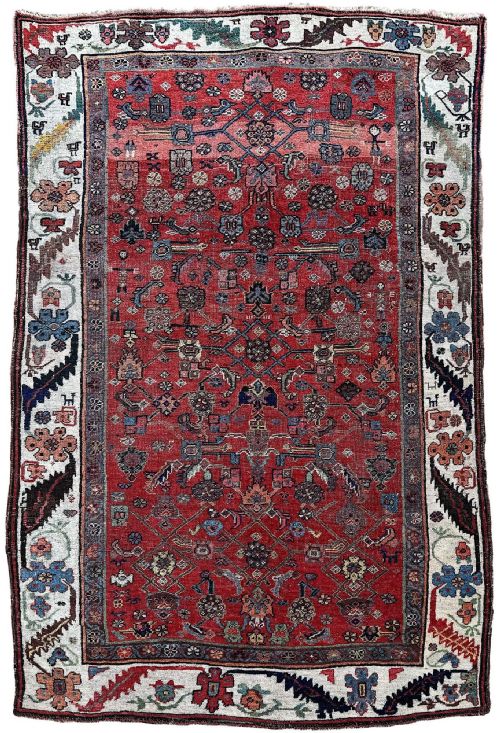
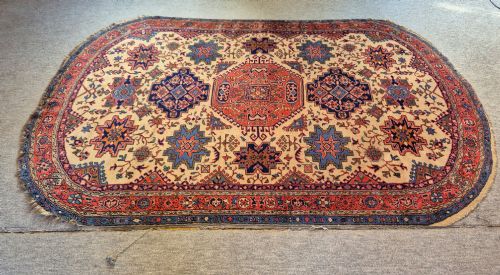
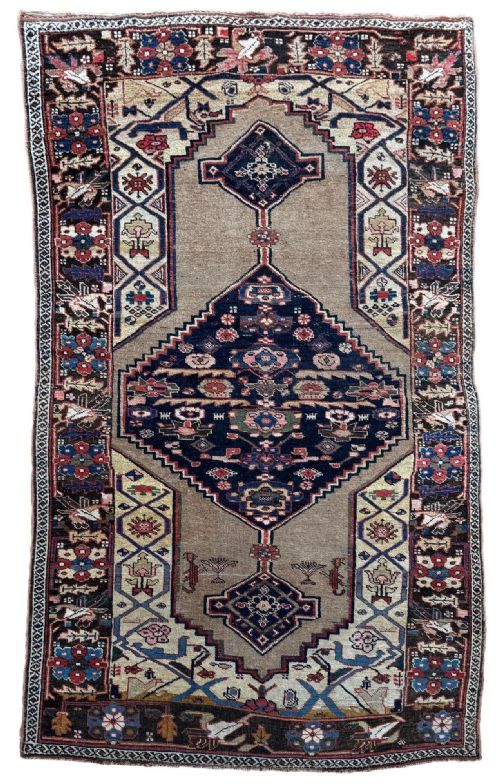
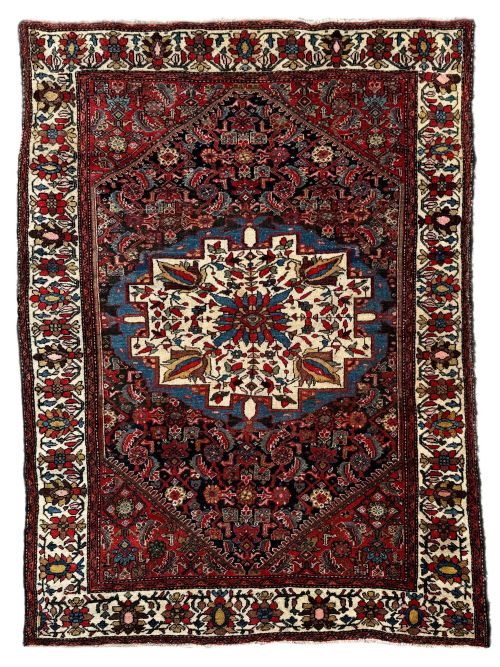


Hand Knotted Bidjar Carpet
A hand knotted bidjar carpet brings dense Persian craftsmanship and durable wool into a room with striking traditional patterns.
Hand Knotted Bidjar Carpet
A hand knotted bidjar carpet represents heavy Persian and Kurdish village weaving traditions produced across the nineteenth and early twentieth centuries. These pieces appear in forms ranging from small bag faces and scatter rugs to large kelleh carpets and oversized room formats.
Most examples encountered here date from the late nineteenth century through to the 1930s, reflecting traditional Persian styles. Buyers mostly encounter standard rugs, long runners, and substantial carpets woven by Kurdish tribes in the Bidjar region.
The distinct formats available include compact area rugs alongside grand carpets measuring over five metres in length. Each piece carries the characteristic structure associated with Persian tribal workshops of the period.
Materials and construction
These carpets rely entirely upon durable wool for the pile and cotton for the foundational warps and wefts. The dense knotting technique creates a rigid, heavy structure that resists wear across generations of use.
Weavers in the Persian Bidjar region utilised traditional upright looms to pack the wool foundation tightly together. This method ensures the characteristic heavy handle and dense pile defining the group.
Judging quality and character
Quality rests upon the tightness of the weave and the precision of the traditional Persian design execution. Denser packing of the wool pile creates greater resilience and sharper pattern definition.
Proportion and scale also dictate distinction, particularly in larger kelleh formats and oversized carpets where uniform knotting requires immense labour. Colour variation, such as unusual lemon ground tones, adds distinctive character to individual village pieces.
The Hand Knotted Bidjar Carpet Glossary
- Bidjar
- A town and region in western Iran known for producing exceptionally dense, durable Kurdish carpets.
- Kelleh
- A long, rectangular format of Persian carpet traditionally suited for narrow reception rooms.
- Kurdish
- Pertaining to the tribal weavers of western Iran who produced these heavy village rugs.
- Bag face
- The decorative front portion of a nomadic storage bag, woven in the same techniques as larger carpets.
- Garrus
- A sub-style of Persian carpet design featuring Herati patterns and bold medallion layouts.
Hand Knotted Bidjar Carpet: Frequently Asked Questions
How do I clean a hand knotted bidjar carpet?
Regular gentle vacuuming without a beater bar keeps surface dust from settling into the dense wool pile. Professional specialist cleaning is essential for washing older natural-dyed carpets safely.
Avoid harsh chemical treatments or excessive water soaking, which can damage the cotton foundation and bleed traditional dyes.
Where were these carpets made?
These pieces originate from the town of Bidjar and the surrounding Kurdish villages in western Persia. Local weavers developed a reputation for creating some of the sturdiest rugs in the Middle East.
The regional style combines Persian design traditions with robust Kurdish tribal weaving methods.
Are these carpets suitable for hallways?
The dense wool pile and sturdy cotton foundation make runner formats ideal for high-traffic areas like hallways. Their heavy structure withstands constant footfall while maintaining its traditional appearance.
Placing an appropriate underlay beneath the rug prevents slipping and reduces friction against the floorboards.
How do I identify a nineteenth century piece?
Nineteenth-century examples typically display softer vegetable dye palettes and hand-spun wool with subtle variations in tone. Structural examination reveals irregularities in the weave characteristic of traditional village production.
Comparing the knot density and fringe construction against dated benchmarks helps confirm the production era.