



Hand Forged Iron Lighting
These hand forged iron lighting pieces are utilitarian ironwork and early candle holders that bring robust metalcraft and genuine history into a room.
Hand Forged Iron Lighting
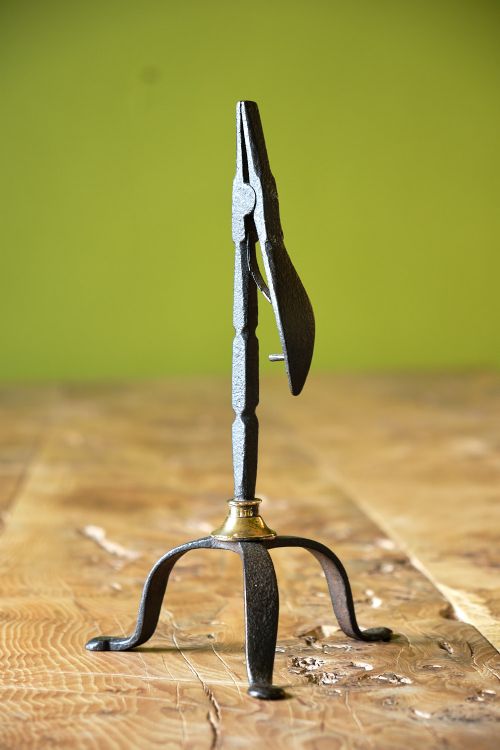
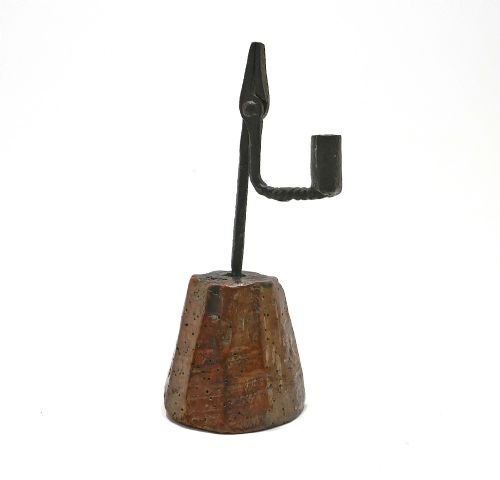
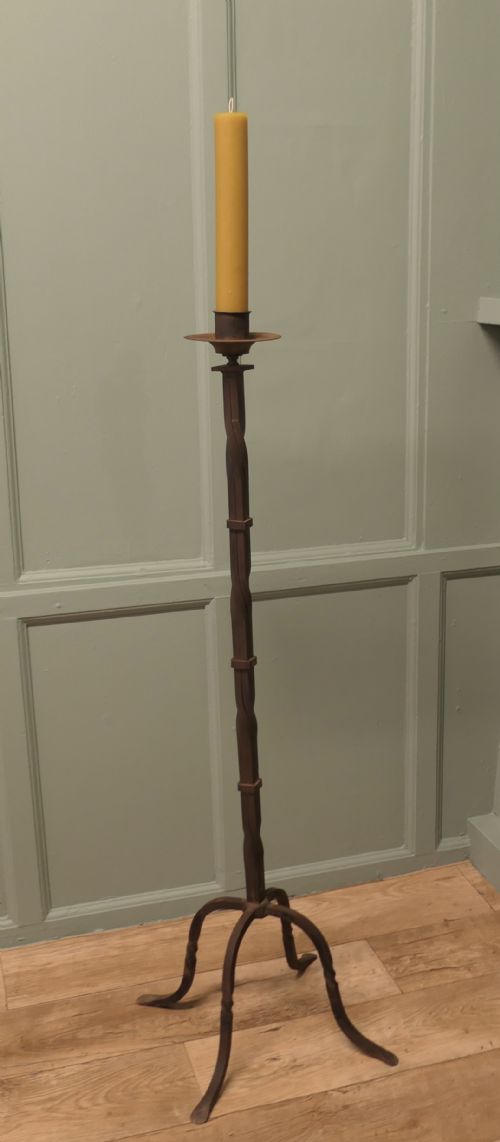
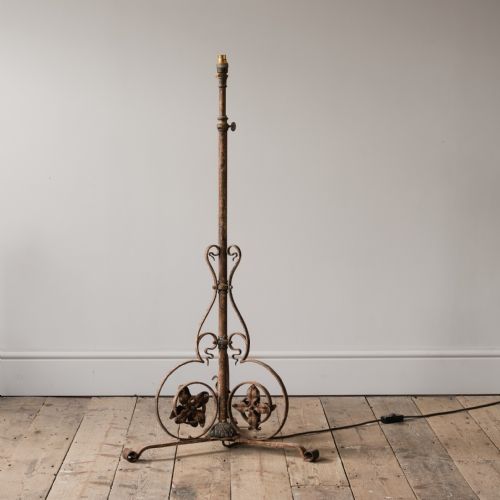
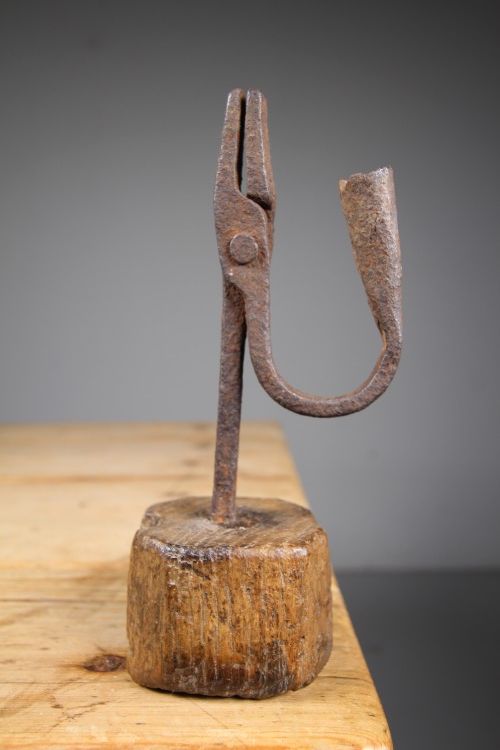
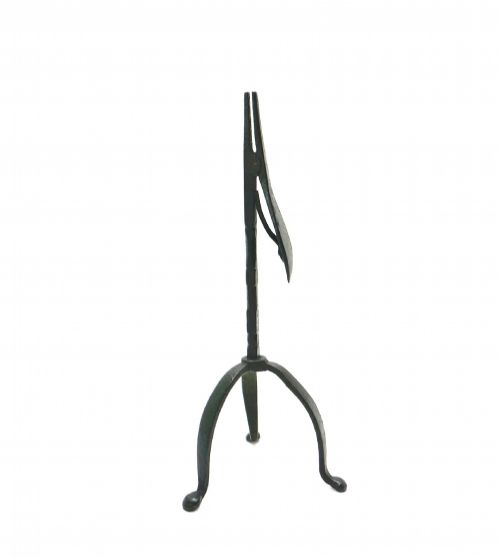
When you search for hand forged iron lighting, you encounter utilitarian ironwork designed to hold rushlights, candles, and tapers for daily illumination. These pieces range from simple rush nips mounted on wooden bases to tall blacksmith-made floor stands and adjustable floor lamps.
You are most likely to meet 18th century vernacular rushlight holders and 19th century candle stands on this page. These items originate from Welsh and English workshops, utilising durable materials shaped by hands over open forges.
The selection includes specialised forms such as cruciform base rushlight holders, tripod base spring action designs, and pairs of lanterns and candlesticks. Each object displays the straightforward construction typical of early domestic metalware.
Materials and construction
Blacksmiths shaped these items primarily from wrought iron and steel using manual heating and hammering techniques. This process produced sturdy stems, spring-action nips, and stable tripod or cruciform bases designed to withstand heavy use.
Certain domestic pieces incorporate secondary materials such as original pine bases or wood supports to anchor the ironwork securely. Elements of brass, glass, and trench art also appear across later Victorian, Arts and Crafts, and Secessionist examples.
Hand Forged Iron Lighting Retail Price Guide 2026
Typical asking prices for hand forged iron lighting among the pieces listed under this phrase on Sellingantiques today, from the lower quarter to the upper quarter. They describe what is for sale here now, not the wider market.
Listings feature wrought iron and brass alongside pine and wood, spanning 18th century vernacular to Arts and Crafts and Secessionist styles.
Judging quality and character
The distinction between standard utility items and finer examples lies in the complexity of the blacksmith's forge work and the integrity of the surviving mechanisms. Pieces featuring spring-action jaws, adjustable stems, or complex tripod and cruciform bases demonstrate higher levels of artisanal skill.
Originality of components dictates the standing of a piece within this category. Surviving wooden bases, untouched patinated metal surfaces, and complete holding mechanisms elevate domestic ironwork far above altered or heavily restored alternatives.
Hugo Berger Goberg
The Hand Forged Iron Lighting Glossary
- Rushlight holder
- A weighted or base-mounted iron clamp designed to grip a dried rush dipped in animal fat for illumination. These domestic implements represent some of the earliest portable lighting devices.
- Rush nip
- The spring-loaded or counterweighted jaws at the top of a rushlight holder that squeeze the rush securely in place. The mechanism relies on the natural tension of forged iron.
- Floor candlestick
- A tall stand designed to support a candle at a height suitable for illuminating a room from the floor. These pieces often feature sturdy tripod or cruciform bases for stability.
- Trench art
- Objects fashioned by soldiers, prisoners, or civilians from military scrap material during times of conflict. These items frequently utilise surplus metal casings and hardware.
- Vernacular
- Objects created by local makers using traditional regional designs and accessible materials, prioritising function over academic stylistic rules. This approach defines much early British metalwork.
Hand Forged Iron Lighting: Frequently Asked Questions
What is a rushlight holder?
A rushlight holder is a domestic iron device used to grip dried rushes soaked in fat to provide household illumination. These forged pieces date primarily to the eighteenth century and earlier.
They sit on tables or feature integrated wooden bases and tripod stands to remain stable while holding the burning rush.
How do you date hand forged iron?
Dating relies on observing tool marks, assembly methods, base designs, and associated materials like pine or oak. Eighteenth-century examples often feature simple hand-hammered spring nips and regional Welsh or English vernacular forms.
Later nineteenth-century pieces introduce adjustable mechanisms, while twentieth-century Arts and Crafts or Secessionist items show distinct stylistic flourishes.
Where were these iron lights made?
These items were produced in local smithies across Wales and England by regional blacksmiths working for domestic and agricultural markets. The designs reflect the practical needs of rural homes before widespread modern electricity.
Workshop traditions varied by region, resulting in distinct base configurations like tripod and cruciform styles.
How do I care for antique iron?
Keep antique wrought iron in a dry environment to prevent active corrosion and preserve the dark patinated surface built up over centuries. Dust gently with a dry cloth and avoid applying modern polishes or sealants.
Stable indoor humidity protects any accompanying wooden bases or secondary materials from shrinking or splitting.