




Hand Cut Glass Vase
These hand cut glass vase items bring together period lustre pairs and decorative vessels from the nineteenth century in crystal, ruby glass, and enamel.
Hand Cut Glass Vase
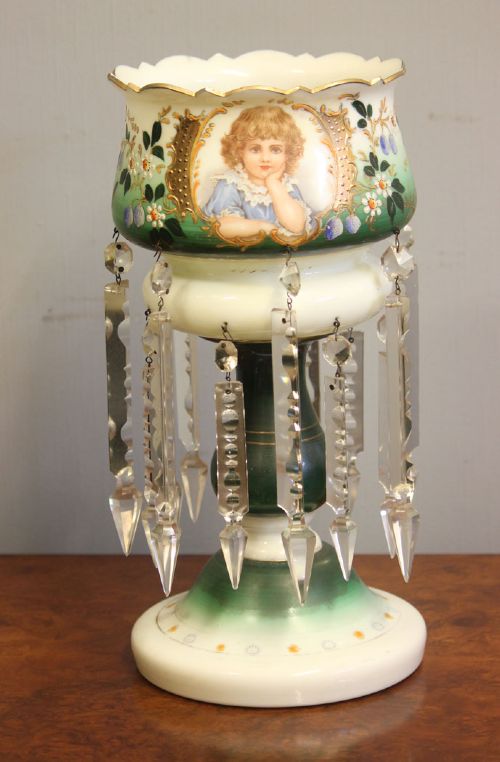
When you search for a hand cut glass vase, you encounter a selection spanning the nineteenth century, including Victorian and Bohemian styles. These objects primarily take the form of mantel lustres, table lustres, and decorative glassware.
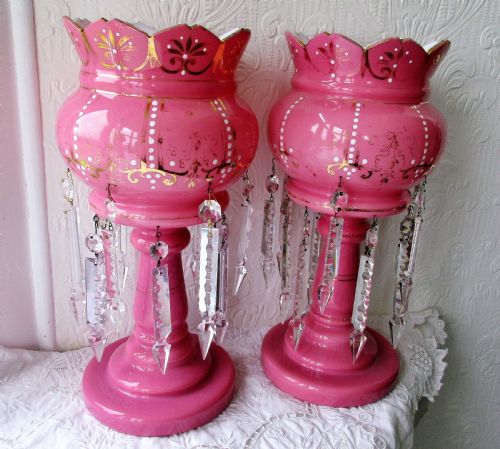
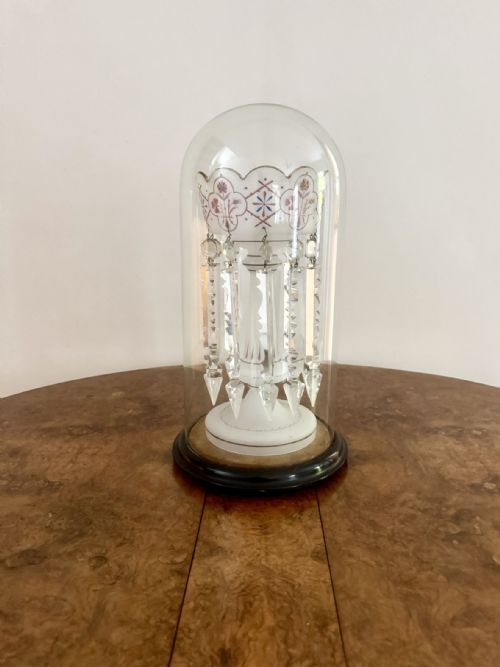
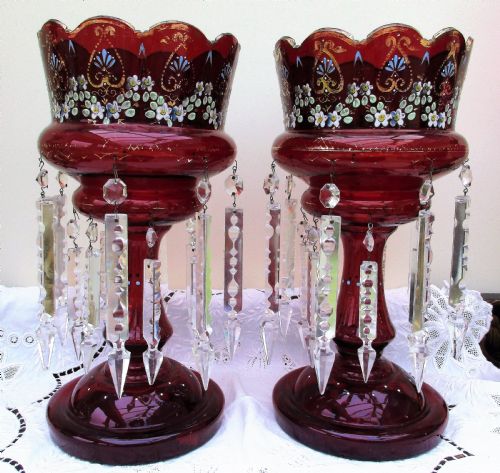
The most common forms on this page are pairs of lustres featuring glass domes and crystal overlays. Pieces appear in various colours such as green, ruby, and pink glass, often complemented by gilt and gold leaf details.
Materials and construction
The listings record construction using crystal, glass, ruby glass, and cranberry glass. Makers utilised enamel and gold leaf to decorate the surfaces of these decorative vessels.
Certain items incorporate wood elements alongside glass components. Bohemian overlay techniques appear across the pieces, combining different layers of glass to create depth.
Hand Cut Glass Vase Retail Price Guide 2026
Typical asking prices for hand cut glass vase among the pieces listed under this phrase on Sellingantiques today, from the lower quarter to the upper quarter. They describe what is for sale here now, not the wider market.
Listings feature items exclusively from the 19th Century, Victorian, 1880, and 1900 periods.
Assessing quality
The standard of craftsmanship separates simpler vessels from elaborate mantle lustres with crystal overlays. The precision of the cutting and the application of gilt or enamel influence the visual depth of the glass.
Pairs show consistency in matching colour saturation and structural proportions between individual pieces. The integration of decorative elements like gold leaf demonstrates the skill applied during manufacture.
The Hand Cut Glass Vase Glossary
- Lustre
- A decorative vase or candlestick fitted with hanging glass prisms. These pendants catch and refract candlelight in nineteenth-century interiors.
- Ruby glass
- A rich red glass created by adding gold chloride to the molten batch. This distinctive colour defines many Victorian and Bohemian pieces.
- Overlay glass
- A technique involving two or more layers of contrasting glass colours fused together. Artisans then cut through the top layer to reveal the contrasting colour beneath.
- Mantel lustre
- A specific type of decorative vase placed on a fireplace mantelpiece. They frequently appear in pairs alongside glass domes.
Hand Cut Glass Vase: Frequently Asked Questions
What is a lustre?
A lustre is a decorative vase or ornamental stand fitted with hanging glass prisms. These prisms are designed to catch and refract light.
They were popular display pieces on nineteenth-century mantelpieces and tables, often created in matched pairs.
How do I identify Bohemian glass?
Bohemian glass is characterised by vibrant colours, heavy crystal overlays, and intricate cutting techniques. The region was renowned for skilled glassmaking during the Victorian era.
Items from this tradition often feature layered glass colours and elaborate enamel work.
Where were these pieces displayed?
These decorative glass items were traditionally placed on mantelpieces, side tables, and chests of drawers in nineteenth-century homes. Pairs often flanked clocks or other central ornaments.
The inclusion of glass domes protected delicate lustre prisms from dust and damage.
What is ruby glass?
Ruby glass is a deep red ornamental glass produced by introducing gold into the glassmaking mixture. It gained immense popularity during the Victorian period.
Items in this material frequently display gilt accents and hand-cut facets.