




Hand Carved Accent Chairs
These hand carved accent chairs bring global artistry and historical form into modern rooms.
Hand Carved Accent Chairs
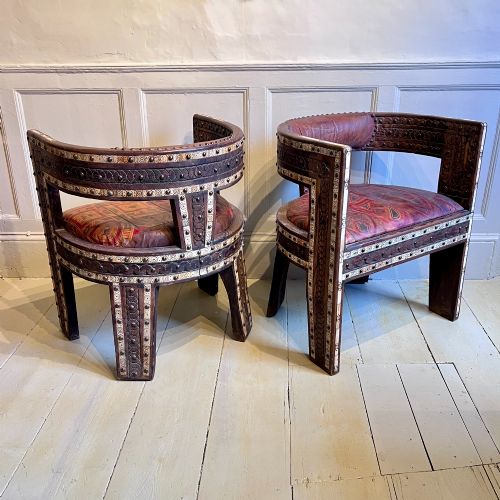
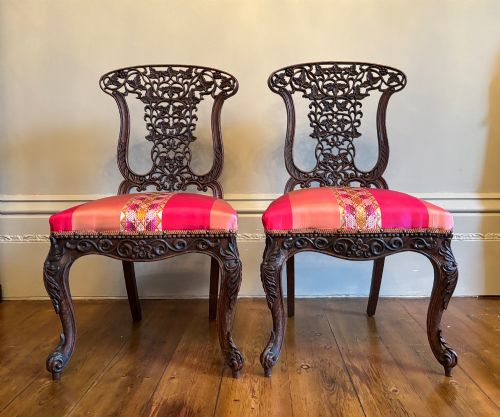
The selection ranges from European revival pieces in mahogany and walnut to heavy hardwood seating from Burma, China, and North Africa. Many incorporate traditional upholstery in leather or fabric alongside intricate surface carving and painted decoration.
How they were made
Carpenters and carvers shaped these seats from solid timbers like oak, mahogany, walnut, teak, elm, padauk, and assorted hardwoods. Working by hand, they utilised traditional joinery and chisels to execute deep relief carving, pierced woodwork, and regional motifs.
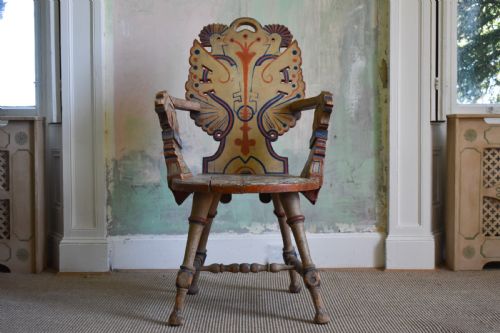
Surfaces were frequently finished with paint, natural wax, or left in the raw timber, while seats were fitted with hand-dyed leather, woven materials, or simple upholstered pads.
Listing forms range from Venetian gondola chairs and Chippendale hall chairs to folding chairs and tree root seats.
What varies in quality
Quality rests upon the depth, crispness, and symmetry of the hand carving, alongside the selection and stability of the timber. Pieces utilising dense woods like padauk, teak, or mahogany often display sharper anatomical and floral details than softer or more rustic alternatives.
The integrity of the original construction and the harmony between the carved frame and its upholstery dictate the standing of an individual chair within its specific regional tradition.
The Hand Carved Accent Chairs Glossary
- Padauk
- A heavy tropical hardwood valued for its rich reddish-brown colour and durability in carved furniture. It appears frequently in Anglo-Indian and Burmese pieces.
- Spinning chair
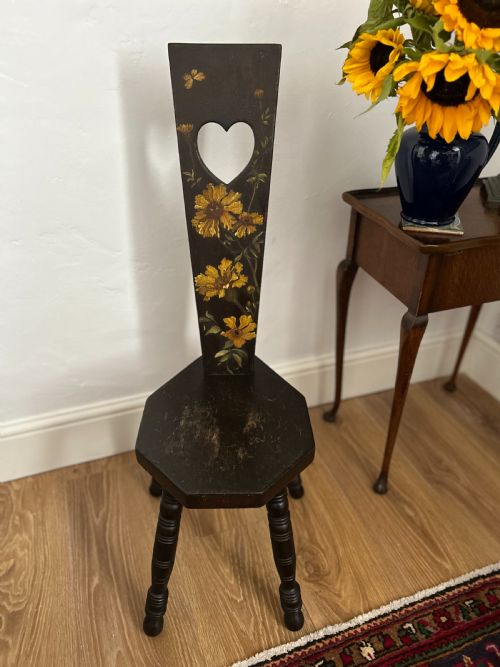
- A small, low-seated chair traditionally used for domestic textile work. Many examples feature elaborately carved wooden backs and compact proportions.
- Hall chair
- A rigid wooden seat traditionally placed in an entrance hall or corridor. These often showcase prominent armorial or carved wooden backs.
- Carver chair
- An armchair designed in a dining or parlour style with open arms. They frequently match a set of smaller side chairs.
- Folk art
- Items created within a regional craft tradition by self-taught or local artisans. This category includes Welsh and Scandinavian pieces made with vernacular tools.
Hand Carved Accent Chairs: Frequently Asked Questions
Where were these chairs placed?
These chairs served various domestic functions depending on their regional form, from low parlor seating to functional hall chairs and spinning chairs.
Today, they suit living rooms and bedrooms as statement pieces that introduce texture and historical character.
How do I identify periods?
Dating relies on observing timber choices, tool marks, and stylistic indicators associated with the eighteenth, nineteenth, and early twentieth centuries.
Revival styles and folk art traditions often carry specific regional markers typical of Victorian or Edwardian production.
Are these chairs comfortable?
Comfort varies significantly because many pieces were built for formal display, spinning, or brief seating rather than lounging.
Upholstered variants with leather or fabric seats offer softer seating, while solid wood frames rely purely on their ergonomic shape.
What woods were utilised?
Makers selected timbers native to their region, resulting in furniture made from oak, mahogany, walnut, teak, elm, and padauk.
Hardwoods provided the structural stability required for intricate, deep relief hand carving.
How should I clean them?
Maintenance involves dusting carved wooden surfaces gently with a dry cloth and feeding exposed timber with appropriate wax.
Leather and fabric upholstery require care suited to their specific textile type to preserve the original finish.