


Hand Blown Vases
These hand blown vases bring rich colour and tactile character to a room, spanning periods from the eighteenth century to Art Deco.
Hand Blown Vases
When buyers search for hand blown vases, they encounter vessels shaped entirely by breath and iron, ranging from modest posy vessels to grand epergnes. The selection spans straightforward cylinders alongside ornate trumpet and jack in the pulpit forms.
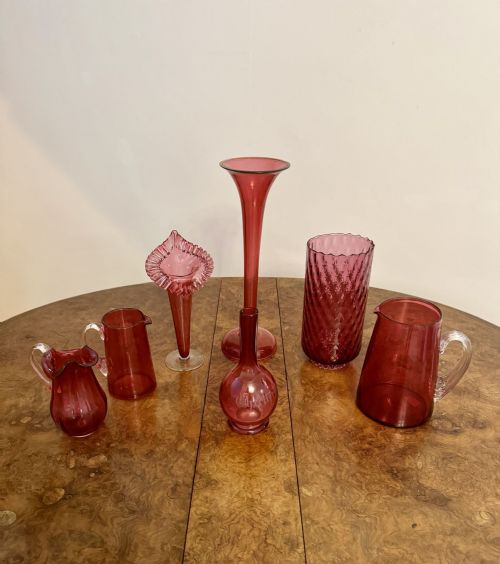
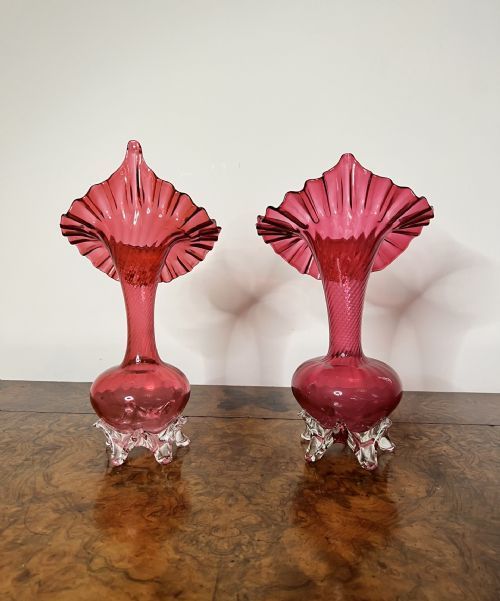
Victorian cranberry glass pieces and vibrant green Bohemian examples dominate the visible selection, alongside earlier eighteenth-century engraved beakers and later Art Deco designs. Buyers frequently select multi-trumpet epergnes or matched pairs intended for nineteenth-century mantel displays.
Origins trace across English, French, and Bohemian workshops, capturing shifts in domestic decoration from Georgian restraint to exuberant Victorian colour. These vessels served both practical functions for cut stems and purely decorative roles within period interiors.
How they were made
Hot molten metal was gathered on a blowpipe and inflated by mouth, often manipulated with simple hand tools to achieve the final silhouette. Pontil marks remaining on the bases confirm this traditional method of hand manipulation.
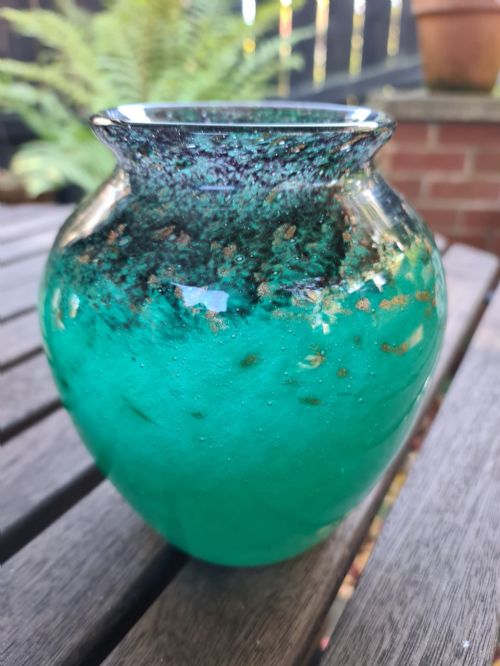
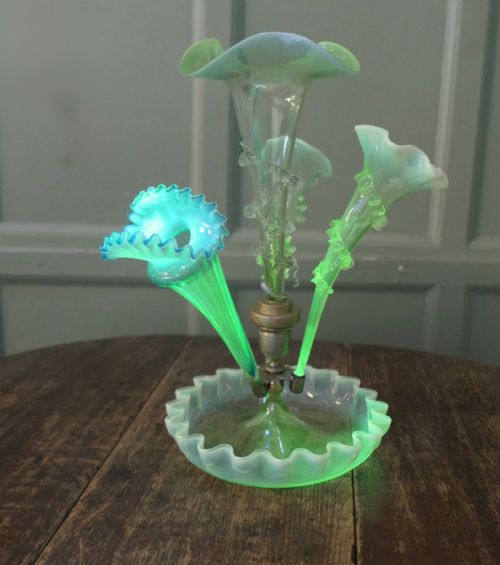
Specialised recipes produced distinctive glass bodies, including uranium glass glowing under ultraviolet light and flashed cranberry layers over clear crystal. Enamel decoration and aventurine inclusions were added during shaping to enrich the visual surface.
The listings span from eighteenth-century engraved beakers and Victorian cranberry epergnes through to Art Deco pieces by Daum and Venini.
What varies in quality
The sophistication of the glass formulation and the depth of colour set finer examples apart from simpler utilitarian wares. Heavier metal and complex multi-layered cased glass indicate skilled manipulation by master gatherers.
Hand-painted enamel detail and controlled bubbling within the glass body demonstrate superior execution. Matched pairs and complete epergnes with all original trumpets intact represent the pinnacle of survival from any given period.
Harry Powell for James Powell·Vittorio Zecchin for Venini·Vasart Glass·Monart
The Hand Blown Vases Glossary
- Pontil mark
- The rough scar left on the base of a vessel where the holding iron was snapped away after blowing. This physical evidence confirms traditional hand fabrication.
- Cranberry glass
- A rich red-pink transparent glass created by adding gold chloride to the molten batch. It became exceptionally popular during the Victorian era for table ornaments.
- Epergne
- A large central table centrepiece featuring multiple detachable trumpets or baskets for holding fruit or flowers. Victorian variants frequently utilise cranberry glass.
- Uranium glass
- Glass containing a small percentage of uranium oxide added as a colourant, resulting in a distinct green hue. These pieces fluoresce brightly under ultraviolet light.
- Aventurine
- Metallic mineral inclusions suspended within the glass body during melting, creating glittering spangles. Vasart and other makers employed this technique for decorative effect.
Hand Blown Vases: Frequently Asked Questions
What is cranberry glass?
Cranberry glass is a pinkish-red transparent material coloured with gold oxide, heavily favoured by Victorian makers for decorative tableware.
It appears frequently in posy vases, epergnes, and matched pairs designed for nineteenth-century display.
How were epergnes used?
Victorian epergnes served as dramatic centrepieces for dining tables, holding fruit in the main bowl and flowers in the surrounding trumpets.
Guests would admire the coloured glass catching the candlelight during formal evening meals.
Are uranium glass vases safe?
Uranium glass contains low levels of radioactive material used to achieve a striking yellow-green colour, but it poses no hazard under normal display conditions.
Collectors handle and display these pieces safely every day without risk.
How do I date antique glass vases?
Dating relies on stylistic markers, colour palettes, and manufacturing techniques characteristic of specific eras like Georgian, Victorian, or Art Deco.
Signatures or attribution to known workshops like Monart or Venini further narrow down the production period.