





Hammered Silver Jewellery
Hammered silver jewellery combines tactile metalwork with the distinct aesthetics of the early twentieth century.
Hammered Silver Jewellery
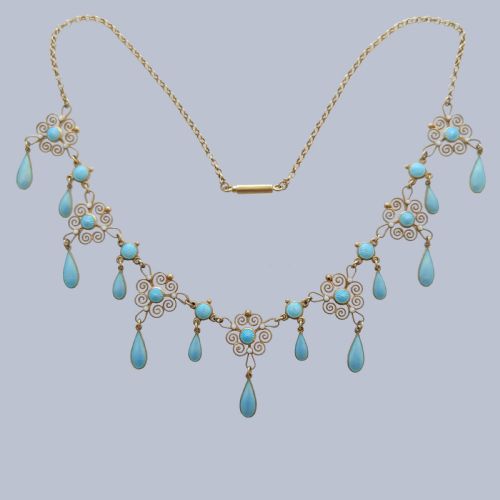
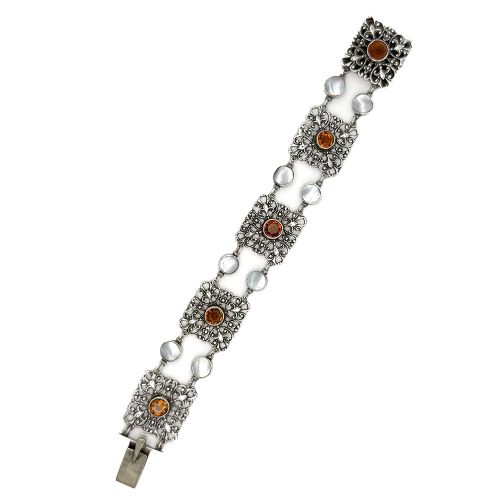
When you search for hammered silver jewellery, you encounter pieces defined by visible manual craft, emerging primarily from the Arts and Crafts, Art Nouveau, and Art Deco movements. These ornaments span the Edwardian period through to the 1930s, encompassing pendants, necklaces, bracelets, brooches, and drop earrings.
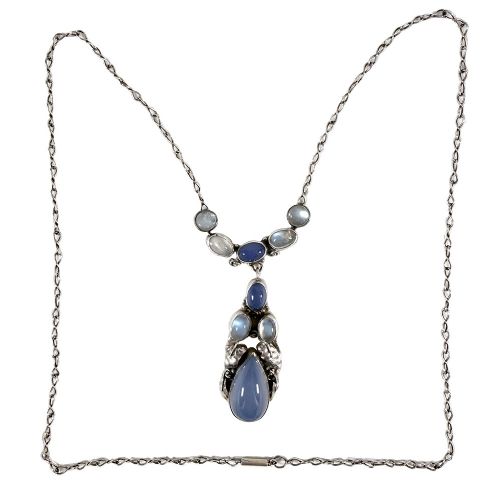
You are most likely to meet silver and sterling silver pendants and boxes on this page, frequently set with moonstones, garnets, pearls, or vibrant enamel panels. The designs often reflect organic forms or geometric modernism characteristic of workshops active in Britain and Scandinavia during the early decades of the twentieth century.
How they were made
Makers shaped these ornaments using traditional metalworking techniques, applying hand-beaten or spot-hammered finishes directly to silver, pewter, and gold surfaces. Rivets, wirework, and bezel settings secure gemstones such as citrine, amethyst, and chalcedony without relying on modern mass-production machinery.
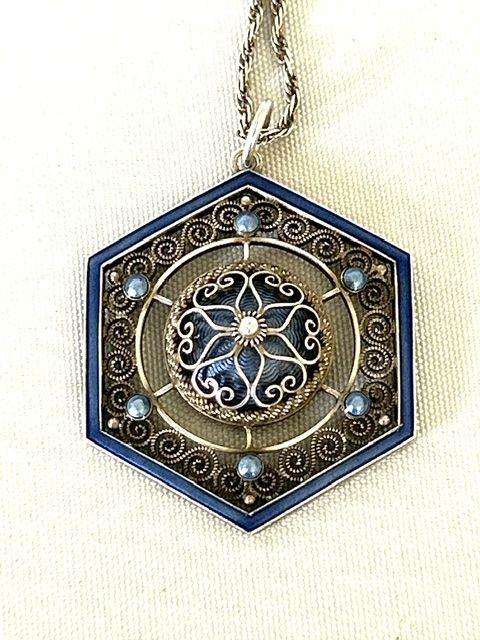
Vitreous enamel, guilloché, and cloisonné techniques add colour and pattern to the metal substrates, often fusing glass powders to silver gilt or base metals under high heat. Blister pearls and moonstones are integrated as cabochons, highlighting the natural textures of the hand-worked mountings.
Hammered Silver Jewellery Retail Price Guide 2026
Typical asking prices for hammered silver jewellery among the pieces listed under this phrase on Sellingantiques today, from the lower quarter to the upper quarter. They describe what is for sale here now, not the wider market.
Some Arts and Crafts boxes feature charming enamel panels depicting children wearing traditional wooden clogs.
What varies in quality
The distinction between ordinary and exceptional hammered silver jewellery rests on the precision and confidence of the manual labour evident in the metal. Master silversmiths controlled the hammer strikes to create uniform, rhythmic facets that catch the light deliberately rather than showing erratic or careless bruising.
Quality also appears in the selection and setting of secondary materials, from the depth of translucent enamel work to the matching of natural gemstones like moonstones and pearls. Pieces bearing clear maker attributions or hallmarks display a higher standard of design integration and structural finishing.
Marius Hammer·Amy Sandheim·Mary Thew·Knox for Liberty·Murrle Bennett·Georg Jensen·Nathan and Hayes·Omar Ramsden and Alwyn Carr·John Paul Cooper
The Hammered Silver Jewellery Glossary
- Guilloché
- A decorative technique where a precise repeating pattern or design is mechanically engraved into a underlying metal surface beneath a translucent enamel layer. This creates shimmering wave or sunburst effects visible through the coloured glass.
- Cabochon
- A gemstone shaped and polished with a smooth, convex domed surface rather than being faceted with flat planes. This style suits stones like moonstones and opals by accentuating their internal glow.
- Festoon necklace
- A decorative neck ornament featuring draped chains or garlands of linked metal elements, often suspended across the chest. Edwardian versions frequently incorporate gem-set drops and delicate wirework.
- Cloisonné
- An ancient enamelling method where thin metal wires are soldered onto a metal base to create compartments for coloured glass pastes. These compartments are fired and polished smooth before final mounting.
- Spot-hammered
- A surface finish characterised by intentional, visible indentations left by a small hammer head to display manual workmanship. It provides texture and light-reflecting properties to the metal.
Hammered Silver Jewellery: Frequently Asked Questions
What is hammered silver jewellery?
Hammered silver jewellery comprises wearable ornaments produced mainly during the Arts and Crafts, Art Nouveau, and Art Deco periods, featuring visibly beaten metal surfaces.
These pieces range from pendants and brooches to bracelets and necklaces, frequently incorporating hand-worked textures alongside enamel or gemstones.
How do I identify Arts and Crafts pieces?
Arts and Crafts items typically display hand-beaten metalwork, riveted construction, and a focus on natural materials rather than machine perfection.
Look for cabochon-set moonstones, garnets, or pearls paired with organic motifs and visible maker craftsmanship.
What is guilloché enamel?
Guilloché enamel involves engraving a precise geometric pattern into a metal base before applying a translucent layer of coloured vitreous enamel.
This technique allows light to pass through the glass and reflect off the patterned metal underneath, creating depth and movement.
How should I care for antique silver jewellery?
Antique silver and enamel pieces require gentle handling, avoiding harsh chemical dips that can damage delicate enamel panels or dissolve natural patinas.
Store them separately in soft pouches to prevent scratching the hand-beaten surfaces and softer stones like pearls.